





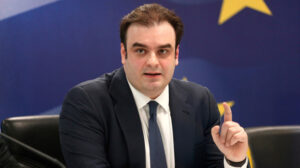
By the end of the day we will know whether Kyriakos Pierrakakis will sit in the chair of the Eurogroup for the next 2.5 years at least. A chair that is not just a symbol. It is an instrument of power, giving access to decisions and a “voice” in the fora of the world’s powerful. And for Greece, it is something else: proof that you can go from the margins to the centre of attention, from crisis to leadership. “Leadership” is also one of the key elements that Europe is looking for today.
For Greece, regardless of the outcome, the mere fact that it is in the “final” is already a success. But winning would mean something much bigger: that the country that was once the weak link in Europe can become the force and inspiration that will drive the Eurozone forward into the next decade. To a Europe as we would like it to be – stronger, more competitive and fairer – rather than as it is.
Why Greece is claiming the position
If we hadn’t lived through the traumatic adventures of the past decade in Greece, we might not even know what the Eurogroup is. But now we do: it is the informal but crucial body that coordinates the 20 eurozone finance ministers. It does not issue binding decisions, but it shapes the Eurozone’s stance on critical issues and situations: budgets, common currency, single market, and international institutions. It is where the country’s bankruptcy bailouts, the pandemic support measures, the Recovery Fund and other decisions were “born”, giving “breathing space” when needed.
Its chairman is not just a meeting manager. He is a coordinator, a bridge-builder, a representative of the governments of the euro states. He organises matters, prepares and ensures balance, chairs, briefs, and announces. And, in addition, he represents the euro area at the G7, G20, IMF, and World Bank meetings. This is where policies are decided that affect the position of the European and Greek economy in the global market.
For Greece, this means “a seat at the table”. Access to discussions and people who define the future. Not just prestige, but a meaningful role.
The Pierrakakis tactic
Greek Pierrakakis’ Belgian rival Vincent van Petegem has “heavy” support from the European north. Against this bloc, Kyriakos Pierrakakis seems to be backed by southern Europe, especially after the withdrawal of the candidate from Spain. He has tried to build a network of support with constant contact. Berlin, London, Rome, Dublin.
But the “key” to success lies in the Greek success story, which Europe needs now: a country that has spent the past decade with one foot out of the euro is now staking a claim to the presidency of an institution at the core of eurozone economic policy. It is no coincidence that for at least the past three or four years, Greece has been projected internationally as the only “positive news” and “pleasant surprise” in the unprecedented situations that Europe is experiencing.
The bottom line is even deeper. Europe is going through enormous difficulties. Germany is stagnating. France is struggling with high deficits. War is threatened. The energy crisis continues. Inflation is under pressure. Competitiveness is being lost to China and America. The old divisions and decades-old stereotypes (North and South, East and West, austerity and flexibility) have collapsed and are creating rather than solving problems.
This is exactly where the Greek experience comes in. Greece has gone through three successive memorandum crises and today is recording surprise primary surpluses, a drastic reduction in public debt and a growth rate of over 2% when the rest of the Eurozone seems stagnant. While again leading the way in investment and new deals, reforms, resilience and fiscal consistency.
The possible election of Pierrakakis would signal that the Union is rewarding resilience, reform and a model that combines fiscal responsibility with social support and growth prospects as an example to follow.
Pierrakakis’ vision for a stronger Eurozone
In the letter he sent to his counterparts, Pierrakakis does not promise miracles. He states his commitment to four specific priorities.
First: the liberalization of European capital. Europe saves as much as America, but invests far less. Money remains locked up in national frameworks that fragment liquidity. The solution is not new borrowing but deepening the Capital Markets Union (“Savings and Investment Union” as it is now called).
Second: completion of the single market. Fragmentation, regulatory barriers and divergences, and administrative burdens limit productivity. The European “Union” remains in titles and on paper, not in substance. Europe has top human resources and world-class businesses, but it loses a lot because a single framework is not working.
Third: the digital euro and technological evolution. Technology is no longer a technical matter. It is a matter of monetary and economic sovereignty. As an expert in modern digital tools, Pierrakakis stresses that the digital euro can strengthen the international role of the euro, ensure the resilience of the financial system and keep Europe at the forefront of innovation.
Fourth: safeguarding the foundations of the economy. Macroeconomic stability, fiscal responsibility, addressing demographic challenges and productivity gaps. Without these, any strategy falls apart.
The historic moment no one imagined has arrived…. The stakes are not only personal for Pierrakakis, nor are they merely a “national reward” for the leaps Greece has achieved under extremely adverse conditions over the past five years. It is of strategic importance for the future of the country, in a Europe that is changing – and must change – in order to become more resilient in the difficult times ahead.
Ask me anything
Explore related questions




