





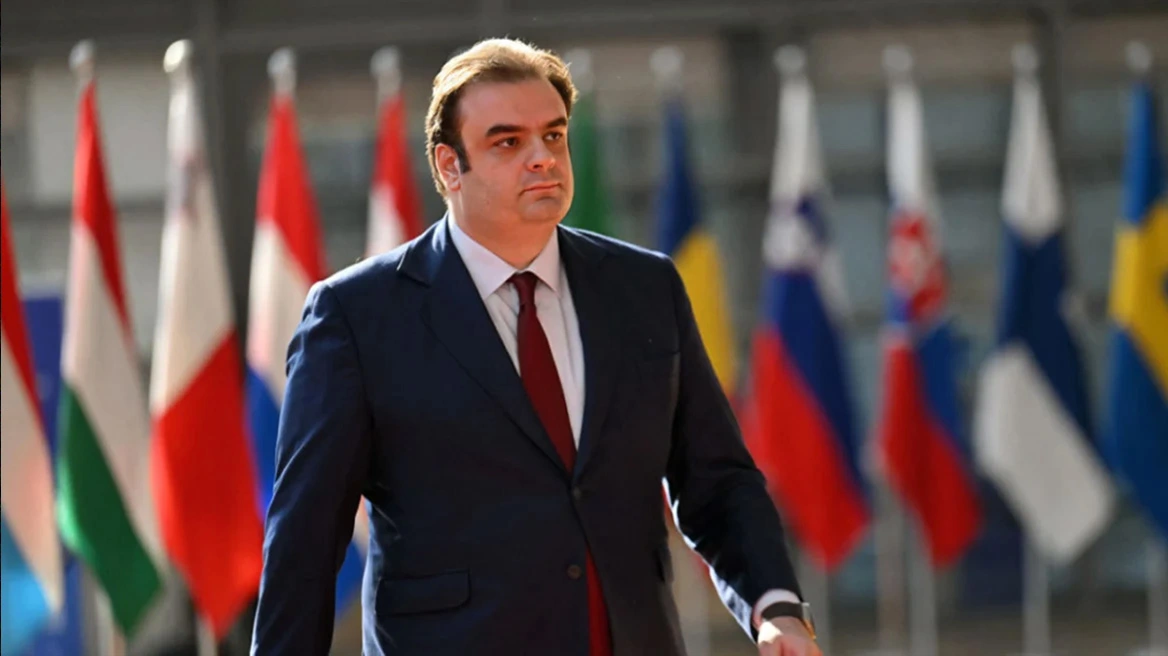
The presidency of the Eurogroup opens the door to yet another critical role for Kyriakos Pierrakakis: that of head of the European Stability Mechanism (ESM), as the two roles are institutionally linked.
This means that the Greek minister is not only taking on the coordination of the eurozone’s economic policies, but is also acquiring institutional control over the mechanism that manages loans and support tools for all member states.
In practical terms, Kyriakos Pierrakakis, as the new head of the ESM, will have a say in issues of financing, debt restructuring, and the monitoring of economic adjustment and stability programs. But symbolically as well, Europe created the ESM a decade ago to save Greece — yet in 2026 Greece will be leading the ESM!
The Greek “lesson”
Greece thus moves from being a recipient of assistance to becoming… an architect of rescues for other states, should and when the need arise.
The “lesson” of the Greek crisis appears to have proven a key criterion in the selection of the Greek candidate Kyriakos Pierrakakis for the presidency of the Council of Eurozone Finance Ministers. As he himself emphasized in his first public statement as President of the Eurogroup, “the lesson is not purely national; it is fundamentally European.”
What is this “lesson”? How does a story of “absolute catastrophe,” in which Greece was the “worst student” of the Memoranda — which it entered first and exited last, exhausted — now turn into Europe’s great “success story”? A story of resilience, flexibility, upgrades, surpluses, debt repayments (and all of this simultaneously with growth, political stability, and benefits) that are visible in our country, at a time when large economies are “buckling” under adverse conditions.
Major creditor of Greece with a Greek President
In practical terms, the election of Pierrakakis to the presidency of the Eurogroup also brings the Greek finance minister to the helm of the mechanism that was “born” because of the Greek crisis and which, together with its predecessor EFSF (the European Financial Stability Facility, of which it is the evolution and with which it is essentially jointly administered), granted Greece loans exceeding €200 billion!
Initially, the EFSF was created for Greece because there was no European Monetary Fund capable of undertaking rescues like the IMF. Soon, however, it evolved into a permanent European support mechanism when — after our country — Cyprus, Spain, Ireland, and Portugal sought assistance. Subsequently, the ESM also took on assistance loans amounting to trillions of euros for all of Europe, following the period of the pandemic and the global recession of 2020–2023.
History thus records one of its most striking reversals. Greece, which for years stood at the center of the European debt crisis as a recipient of support programs worth hundreds of billions of euros, today assumes the leadership of the very mechanism that rescued it. And Kyriakos Pierrakakis will simultaneously be president of the Eurogroup and of the ESM, the body that designs and implements rescue programs for countries and banks in crisis.
What the leadership of the ESM means for Greece
However, Kyriakos Pierrakakis will now also have an institutional role and influence from the creditor’s side, in managing the loans that our country itself received, within the framework of the programs implemented by the European Mechanism for Greece.
The “relationship” between the ESM and Greece remains close and active for the next 45 years (!) until 2070, when Greece must repay what it borrowed — unless it is able to repay early, as it is already gradually attempting to do by prepaying in recent years the most “expensive” portions of its external public debt.
This includes the €61.9 billion that it received in installments during the four-year period 2015–2018, preceded by another €141.8 billion from the EFSF (before it evolved into the ESM) during the second bailout program of 2012–2015 (together with refinancing during the PSI).
These loans were accompanied by harsh reforms in pensions, taxation, and the public sector — measures that marked an entire generation of Greeks.
Today, Greece not only services its loans regularly, but has also proceeded with scheduled early repayments with the approval of the ESM itself. From a recipient of strict conditions, the country is turning into a shaper of conditions for others.
Practical consequences
What seemed unthinkable a decade ago is now reality, but it also carries multiple consequences:
- Upgrading of role: Pierrakakis no longer represents only Greece and will not decide only on the Greek economy. He will coordinate the economic policy of the entire eurozone or shape support programs for other countries, strengthening Greece’s role and voice in the EU, the IMF, the World Bank, and the G7.
- Recognition: Just a few years ago, Greece’s place in the euro was openly questioned, whereas today, after the country’s economic recovery, it stands at the core of the most important bodies for exercising economic policy in the European Union.
- Enhanced trust: The support and vote received by Pierrakakis from powerful partners such as Germany demonstrate confidence in the capabilities of the Greek economy and political system.
- Control over developments: As president, he will participate in setting fiscal policies and investment strategies that directly affect Greek interests.
- Negotiating power: This position gives Greece access to the most critical discussions about the future of the eurozone, allowing it to shape decisions before they are taken.
Ask me anything
Explore related questions




