According to information from newmoney.gr, negotiations with Israel for the acquisition of the weapons systems that will form the multilayer air-defense network (anti-aircraft, anti-ballistic, and anti-drone) — which will constitute the Greek Air Defense Dome, also known as “Achilles’ Shield” — officially begin today at the offices of the General Directorate for Defense Investments and Armaments (GDDIA).
Representatives from the International Defense Cooperation Directorate (SIBAT) of Israel’s Ministry of Defense will begin talks with GDDIA officials at a first level, as the procurement will be carried out through a G2G (Government-to-Government) agreement, as is the case with other armaments programs.
The choice of an intergovernmental agreement will accelerate procedures, since ready-made legal and other required documents already exist from recent, smaller defense programs with Israel — as was also the case with the recent procurement of PULS missiles.

At a second level, and in parallel, three committees will negotiate with Israeli companies, specifically:
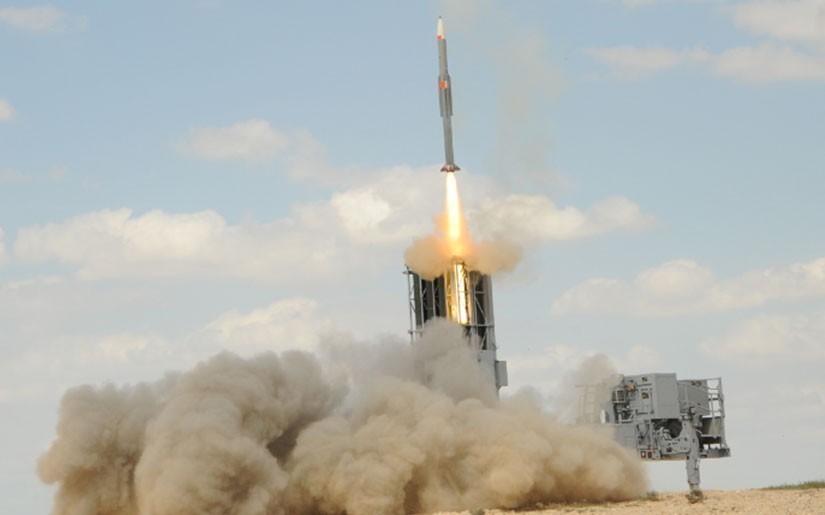
- With Rafael for the SPYDER AiO system, with maximum ranges of 15 km, 20 km, and 40 km, which will replace the Eastern-origin OSA-AK and TOR M1 systems.
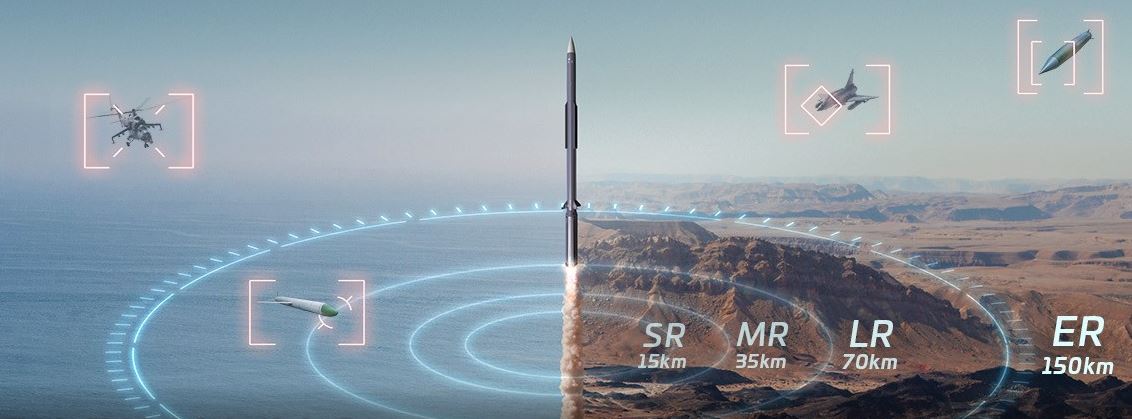
Also included are systems for intercepting ballistic and other long-range missiles, namely David’s Sling, which is planned to replace the S-300. - With IAI for the Barak MX, which consists of three types of missiles with ranges from 35 km to 150 km. These will form the backbone of the Greek defense dome and will replace older HAWK-type systems.
- With ELTA (a subsidiary of IAI) for the EL/M-2084 MMR mobile radars, to cover the needs of the Hellenic Air Force’s Air Surveillance System. These are state-of-the-art radars capable of tracking 1,200 targets at ranges of up to 475 km, and, in the case of weapons, 200 targets at ranges of up to 100 km.
Today’s development was expected, as newmoney.gr recently reported that both the political and military leadership had already decided to proceed with the procurement of Israeli systems. Discussions have been ongoing for a long time, with the cost estimated at around €3 billion.
The war in Gaza delayed procedures, but they were unlocked immediately after the ceasefire was achieved. This was evident in the recent approval by Parliament and the Government Council for Foreign Affairs and Defense (KYSEA) of the acquisition of 36 PULS launcher systems from Elbit. This effectively marked the beginning of the creation of the Greek defense dome, both in preventive and deterrent terms, for full protection of the airspace and the entire territory.
Signatures by the end of March
Procedures will now move quickly, as GDDIA and SIBAT have already exchanged all relevant information on the weapons systems. From the Greek side, there is a complete picture of the costs — considered among the most competitive — the capabilities proven in real combat, and the rapid delivery timelines promised by the Israelis and demonstrated in other countries such as Cyprus.
Finally, a major advantage of the Israelis is their willingness and decision to involve the domestic defense industry to a significant extent, even exceeding 25% participation in each armaments program. This was also evident in the recent PULS agreement, which, according to available information, will exceed 30%. The Israelis do not merely make promises; for geostrategic reasons they are determined to establish production lines in Greece in cooperation with Greek companies.
As is well known, IAI is already present in Greece, having acquired Intracom Defense (IDE), and has long signed Memoranda of Understanding with several Greek companies. It plans to establish production lines in the country, which will serve as IAI’s support hub for the wider region.
There is already close cooperation, according to information, between Hellenic Aerospace Industry and IAI for the further development of the Centaur system, which is proposed to be integrated alongside Barak as a soft-kill solution.
According to sources cited by newmoney.gr, there is considerable optimism that by the end of March all procedures (negotiations, Parliament, KYSEA) will be completed and the relevant contracts will be signed, allowing production of the Greek systems to begin, with delivery within a maximum of 24 months.
Strong interest also in the LORA ballistic missile
According to information, the Greek side has shown strong interest in the LORA (Long-Range Artillery) ballistic missile by IAI, which was publicly presented at the recent DEFEA 2025 defense exhibition in Athens.
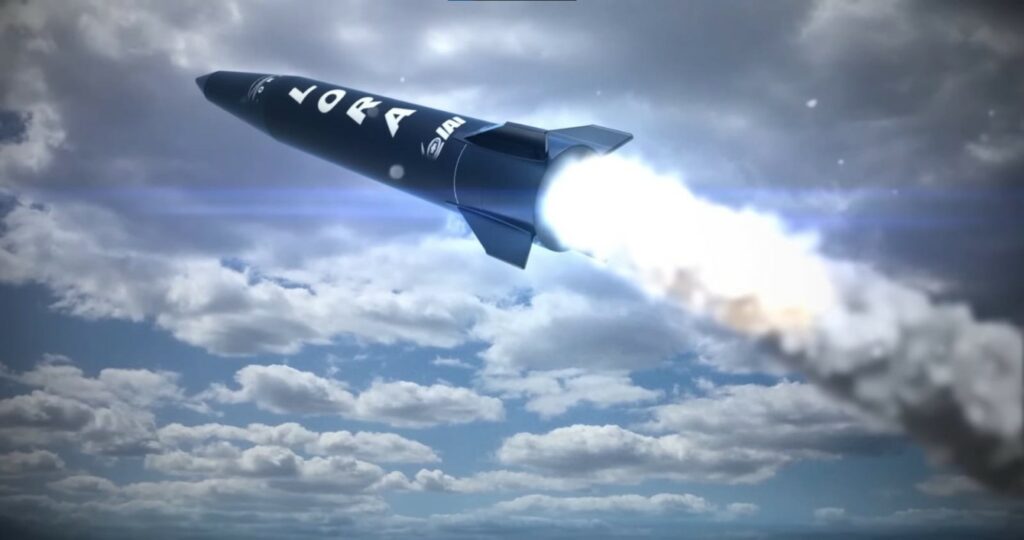
According to the manufacturer, LORA represents a technological leap, combining exceptional accuracy, strategic impact, and operational simplicity. In the event of cooperation, Greece could also gain extensive know-how. With a range of 430 kilometers, high speed, multiple flight trajectories, resistance to GPS jamming, and the ability to evade modern air-defense systems, its acquisition would undoubtedly elevate the country’s capabilities. Designed to penetrate deep into enemy territory, this weapon system provides advantages in both tactical and strategic scenarios.
The Israeli ballistic missile by IAI has been tested under real combat conditions and is ready for immediate operational use.
It essentially constitutes a strategic weapon and a key element of modern defense, designed to meet the demands of today’s complex battlefield with accuracy and reliability.
Ask me anything
Explore related questions