The debate over the elections in Ukraine is not technical. It is not even narrowly political. It is existential. It touches on the relationship between war and democracy, the boundary between popular sovereignty and state survival, and how international balances translate into domestic political pressures.
Today, almost four years after the Russian invasion, the ballot box in Kyiv is not seen as an institutional routine but as a potential new front. This explains why the elections remain both the subject of intense international debate and, at the same time, institutionally “frozen.”
The Legal Framework
Since February 2022, Ukraine has been under martial law. This was a choice based on both the Constitution and a specific legislative framework, aimed at preventing an institutional vacuum amid full-scale war. Martial law is not a general state of emergency. It is a strictly defined regime that alters the functioning of the state, restricts critical peacetime rights, and suspends electoral processes.
The law “On Martial Law Regime” explicitly provides that no presidential, parliamentary, or local elections shall be held while this regime is in force. There is also specific reference to referendums. There is no specific reference to a general state of emergency.
The logic is clear: in conditions of war—with active hostilities, battlefields, mass conscription, millions of displaced persons, and areas under occupation—neither the universality nor the integrity of the vote can be guaranteed. The same framework was incorporated into the 2019 Electoral Code, which automatically freezes electoral processes when martial law is triggered.
The Constitution acts as a second line of defense in Ukraine. For Parliament, there is an explicit provision for continuity of office until the convening of a new Verkhovna Rada (Parliamentary Plenum) after the end of martial law. For the presidency, the constitutional argument is more complex, but the prevailing interpretation is that the executive cannot be left headless in wartime. In other words, the Ukrainian institutional system is designed to favor stability over formal electoral regularity when state survival is at stake.
The crucial point is that this institutional blockade is not a temporary ploy. It is a product of historical experience: state collapse during wartime, civil conflicts triggered by contested elections, and the use of the ballot box as a tool of destabilization. That is why international organizations—even those that are critical—recognize that elections under current conditions would hardly meet basic democratic standards.
Of particular importance is the issue of referendums. The Constitution of Ukraine stipulates that changes in the territory can only be decided through a pan-Ukrainian referendum. At the same time, however, it explicitly prohibits any constitutional amendment under martial law and any change that undermines territorial integrity. This dual provision creates an institutional contradiction: even if there were political will for a referendum, the legal basis would be extremely unstable. The outcome would inevitably be subject to dispute—both domestically and internationally.
The Persons
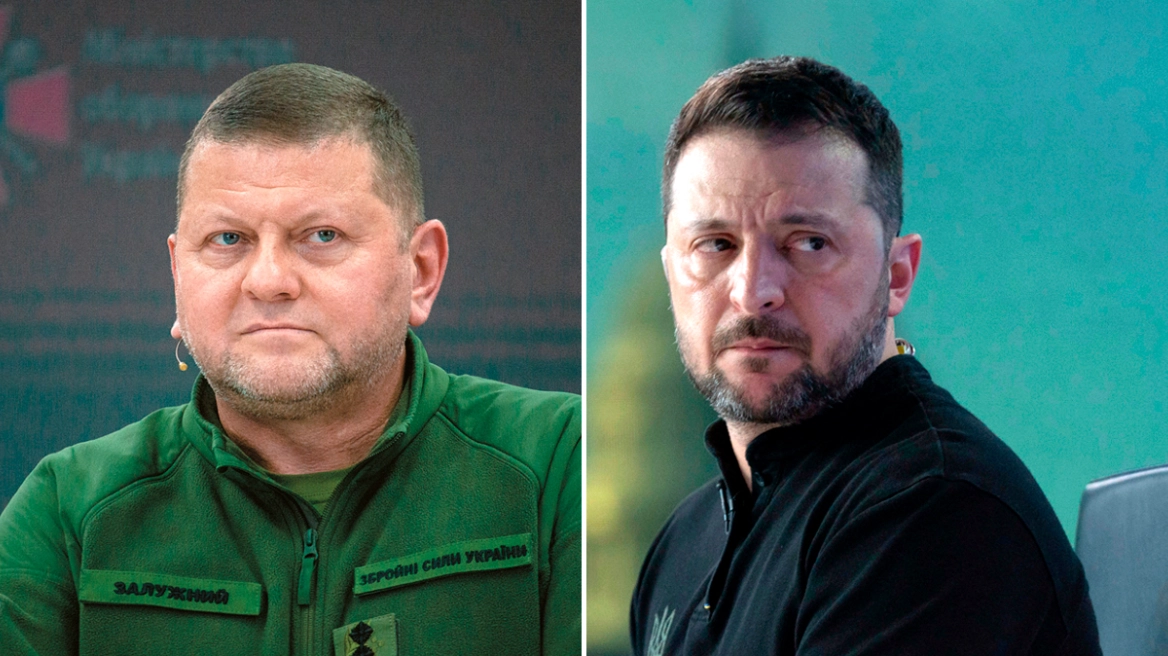
In normal circumstances, an election is decided on programs and personalities. In wartime conditions, it is judged more—or even exclusively—on narrative. That is precisely the problem for Volodymyr Zelensky. He is not just facing potential opponents; he is confronting alternative interpretations of the war itself.
The most serious potential opponent remains Valerii Zaluzhnyi—not because he has announced political ambitions, but because he embodies something that, in times of conflict, assumes enormous importance: military credibility. The popularity of the Ukrainian general—Ukraine’s ambassador to the UK and former supreme commander of the Ukrainian Armed Forces—does not come from a party apparatus but from the image of the man who “held the front.” In an electoral process, even an informal one, this translates into a potential competitive advantage. For Zelensky, the danger is not direct confrontation but a shift in social trust from political leadership to the military.
Born on July 8, 1973, in Novograd-Volynskyi, a city with strong military roots, Zaluzhnyi has built a career marked by a meritocratic rise in the Ukrainian military and decisive leadership on the battlefield. He studied at the National Defense Academy of Ukraine and the Ostroh National Academy, earning a master’s degree in International Relations.
Zaluzhnyi served as Chief of the Armed Forces from July 2021 to February 2024 and was a central figure in reforming the Ukrainian Armed Forces, aligning them with NATO standards and moving them away from Soviet-era doctrines. His tenure coincided with the escalation of the Russian invasion in 2022 and was critical to the country’s defense. Known for his adaptability and pragmatism, he introduced strategies that allowed greater autonomy for frontline units and quicker responses to Russian advances.
Zaluzhnyi’s leadership earned him the nickname “Iron General” in the Western media, highlighting Ukraine’s resilience and strategic intelligence. In March 2022, Zelensky promoted him to the highest military rank, that of general. Despite differences with Zelensky, Zaluzhnyi was recognized with the title of Hero of Ukraine for his contribution to the war.
After retiring from military leadership in 2024, Zaluzhnyi was appointed Ukraine’s ambassador to the United Kingdom and Ukraine’s permanent representative to the International Maritime Organization. According to The Guardian, his role places him at the heart of Ukraine’s vital Western alliances at a critical phase of the ongoing war.
Petro Poroshenko, former president of Ukraine (2014–2019), remains an important “player” but with limited charisma. He has networks, experience, and international contacts, but also carries the weight of the past. Accusations, sanctions, and political conflicts in recent years make him more of a destabilizing factor than a clear contender for power. However, in a polarized electoral atmosphere, he could act as a rallying point for anti-Zelensky forces.
There are also secondary players, though no one can predict the roles they will assume in such an environment: Yulia Tymoshenko (former Prime Minister), Vitali Klitschko, regional actors, and new figures seeking to express social fatigue or indignation. In a normal election, they might have limited impact. In wartime elections, they could shape the framework of a second round or impose thematic agendas, especially regarding the costs of war and the limits of endurance.
The real political threat to Zelensky is not a specific person. It is the potential for the ballot box to turn into a vote on his own strategy: continuing the war to the end or accepting a difficult peace settlement. That dilemma permeates every possible candidate.
The Scenarios
Assuming that institutional obstacles are overcome—through the lifting or suspension of martial law, a ceasefire, or a specific legal framework—a range of scenarios opens up.
Full elections after substantial stabilization: These would provide new legitimacy but require a massive organizational effort: voting for soldiers on the front lines, millions of refugees abroad, internally displaced persons, and areas close to the firing line. Any weakness would fuel contestation.
Special elections under continued threat: These would provide a political alibi but not necessarily social acceptance. They would easily be labeled “elections under pressure” and exploited for propaganda purposes.
Elections after a ceasefire with international guarantees: This is the most realistic political option. The ballot box would act as a tool for re-legitimization rather than a catalyst for crisis. Even in this scenario, territorial questions remain unresolved. No one currently appears ready—not even the US—to provide security guarantees sufficient to support both institutional processes and the practical logistics necessary for meaningful elections.
The Referendum
Recently, and ahead of Trump’s renewed push for elections, the idea of holding a referendum alongside elections—on a peace agreement and possible cession or recognition of lost territory—has gained attention among Ukrainian and Western officials.
Politically, this is framed as a last democratic act, transferring responsibility to the people. In practice, however, it is a high-risk process. A referendum would act as both a shield and a trap for Zelensky: a shield because he could claim the decision is not his, and a trap because any outcome would leave deep wounds. A “yes” to land concession would be seen by many as a national defeat; a “no” would complicate peace negotiations and increase pressure from allies.
Beyond personal or political costs to the president, the referendum would revive memories of civil strife—a volatile mixture of concentrated weapons, Western capital, and unresolved social fractures. For Moscow, it would provide an ideal field for intervention: cyberattacks, disinformation, challenges to legitimacy, and exploitation of societal divisions. The referendum would not just be a political act; it would be an operational battleground.
The Implications
For Ukraine, elections could either normalize or accelerate crisis. Successful elections would restore institutional normality; failed elections would reinforce narratives of internal destabilization.
For the US, the electoral process is a double tool: proof that Ukraine remains democratic and a means of pressuring for a political solution. The threshold is delicate; if pressure is seen as blackmail, it would weaken the very ally it is meant to support.
Europe views elections as a test of institutional maturity, seeking stability, predictability, and integration, but fears a process that could produce a government that is either too rigid or too compromising, with immediate consequences for European security.
Russia, meanwhile, is less concerned about who wins—though it continues to attack Zelensky—than about whether Ukraine will emerge more divided. For Moscow, elections are another tool of war, not peace.
The Ballot Box: The Fourth Front
Elections in Ukraine are not merely a matter of timing; they are a matter of strategy. Legally, the state has built self-protection mechanisms. Politically, however, pressure is mounting.
When ballots are cast, the people will not only judge individuals—they will decide the course of the war, the limits of compromise, and the shape of the next Ukraine. Combined with a referendum on borders, the ballot box would not just be a democratic process but a historic breakthrough with consequences extending far beyond the country’s borders.
Ask me anything
Explore related questions