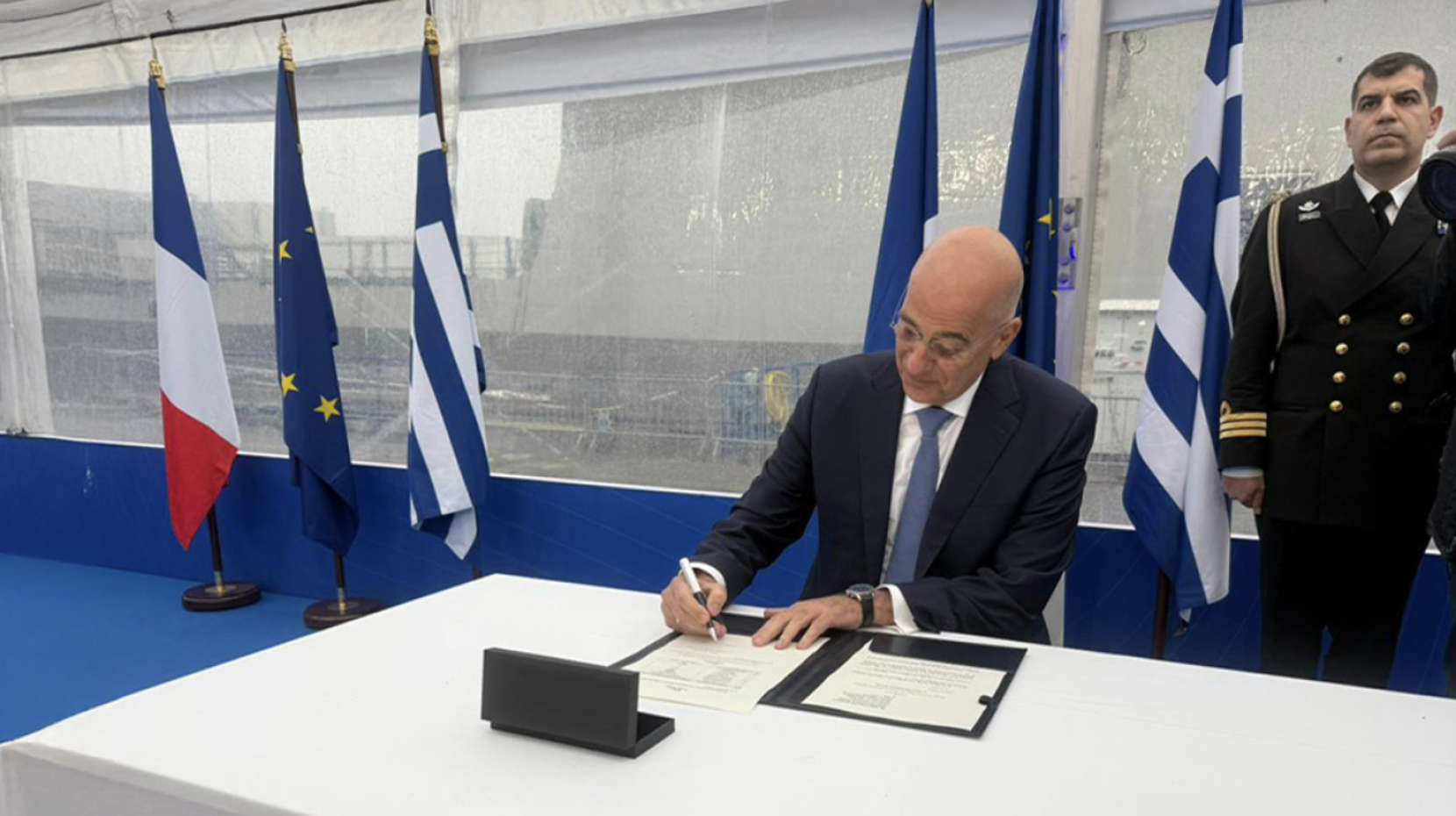
“The Greek Armed Forces are entering a new era,” said Minister of National Defense Nikos Dendias from the Naval Group shipyards in Lorient, France, during the delivery of the first FDI HN frigate Belh@rra F – 601 Kimon to Greece, in a ceremony taking place today.
Today’s event is of special significance for the Hellenic Navy, as it marks the beginning of a new generation of main surface combatants for the Greek fleet, while also representing the culmination of a long-term effort.
During the delivery ceremony, Dendias emphasized that “Greece, as an island nation, lives and breathes through the sea, with the largest commercial fleet on the planet. A Navy cannot exist without great capabilities.” He noted that the frigate Kimon carries a heavy and historic name. “General Kimon linked security with the peak of Athenian democracy,” he said, adding that “Kimon returns to the Mediterranean 2,500 years later to reflect Greece’s power.”
The Minister of National Defense highlighted that the frigate strengthens Greece’s ability to project European values even further. “The inclusion of the four Belharra frigates in the Navy creates the strongest Navy Hellenism has ever had,” he said.
Dendias also announced that there is an agreement for the Greek defense industry to participate in 25% of production from now on. “Greece strengthens itself not to threaten, but to protect and guarantee International Law,” he emphasized.
Watch video: the naming ceremony of the frigate
Delivery of the first Greek Belharra
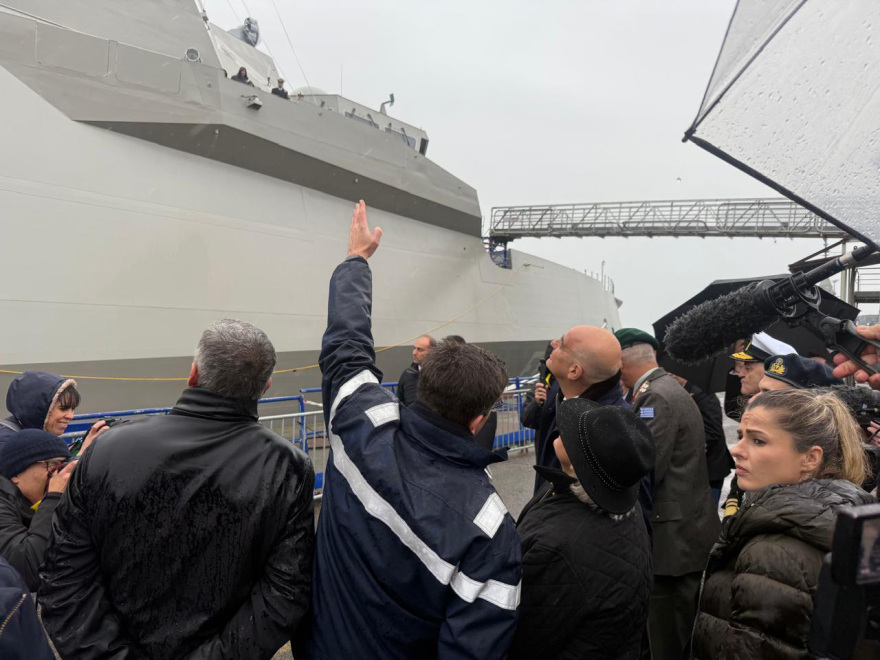
In statements to the cameras before the event, Minister Dendias said:
“I would like to thank the French Minister of Defense for the warm welcome. We are witnessing yet another demonstration of the close Greece–France relationship, within the framework of our strategic agreement. Today is not just the delivery of an exceptional ship; it is a new day in a new era. The frigate Kimon symbolizes the entry of the Greek Armed Forces into the ‘Greece 2030’ agenda, into a new era. I would like to thank the French government and Naval Group.”
Statement by Nikos Dendias at the reception for the Belharra frigate Kimon
The FDI frigates feature the most advanced air defense systems, giving them the ability to cover not only the Aegean Sea but also the sensitive area between Crete and Cyprus, as well as regions of the Eastern Mediterranean that are critical to national interests, where Greece participates in international missions.
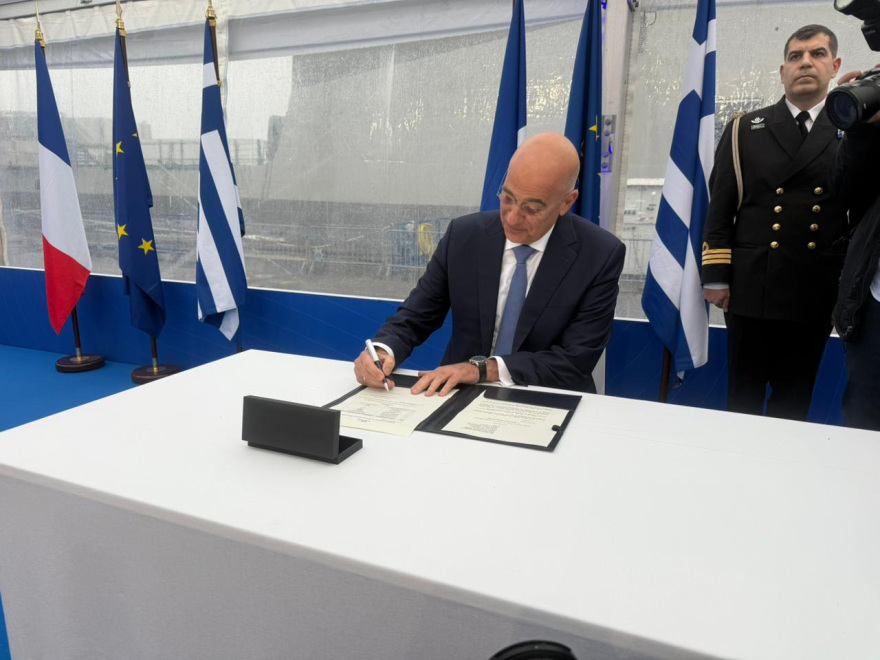
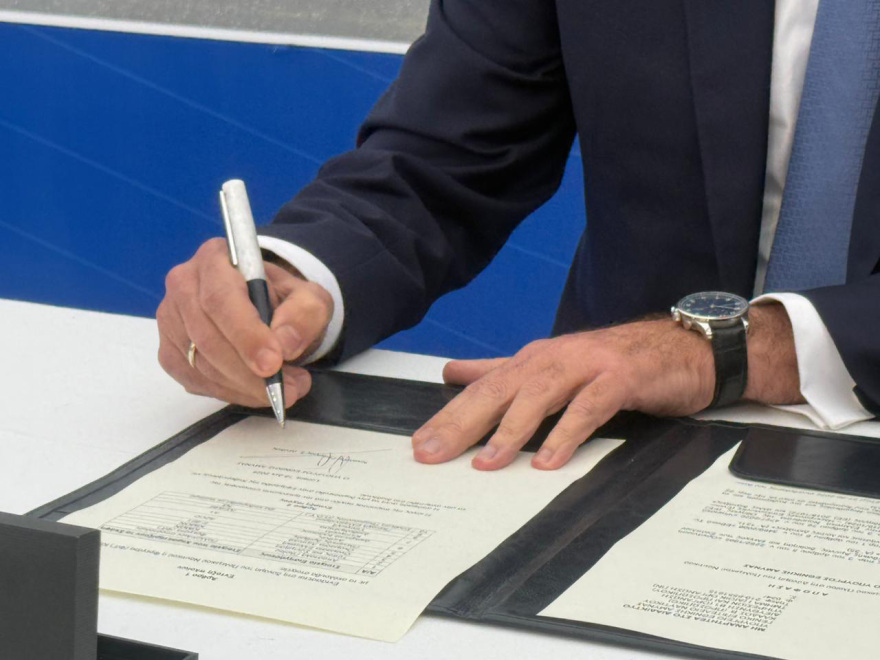
Moment of signing by Minister Dendias
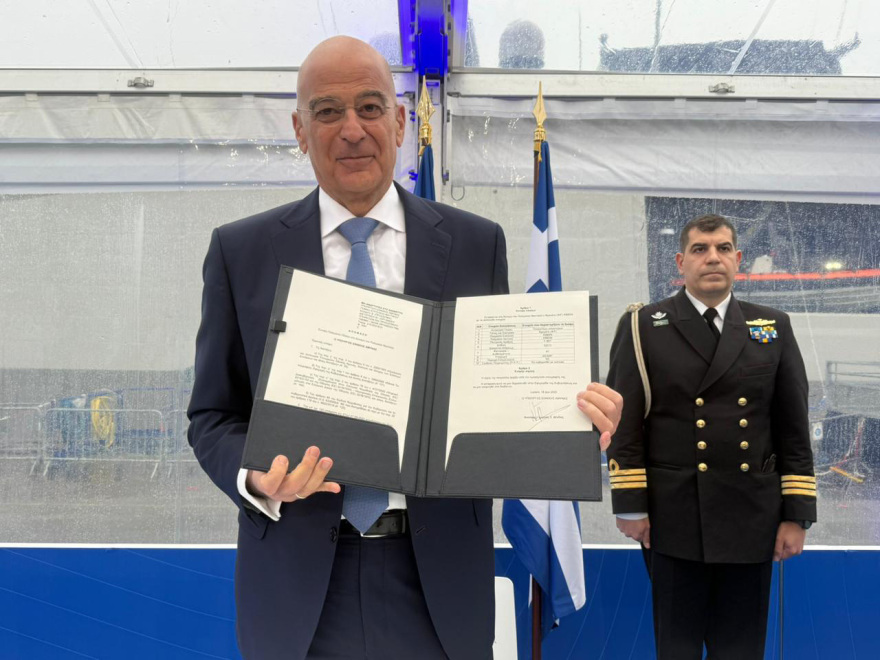
upd
———
Today is a day of special significance for the Hellenic Navy, as the first Belharra-class frigate, “Kimon”, formally and officially moves from the construction phase to that of active service, with the naming ceremony and the raising of the Greek flag at the Lorient shipyard.
This development marks the beginning of a new generation of principal surface combatants for the Greek fleet, while at the same time constituting the culmination of a multi-year process. It is a journey that began with the identification of operational requirements, continued with political decisions and intergovernmental agreements, included difficult negotiations and critical shipbuilding milestones, and concludes today in a ceremony that encapsulates years of planning and preparation.
The frigate’s characteristics
The frigate “Kimon” is the first of the new FDI HN (Belharra) frigates being built by Naval Group for Greece, under the agreement that opened a new chapter in Greek–French naval cooperation. The program has already set the pace on the Lorient production line, with the second ship, HS Nearchos (F-602), following, and the third, HS Formion (F-603), having already passed its own major construction milestones.
The FDI HN was designed as a multi-role frigate with a strong digital footprint, high automation, and sensors operating within a unified system. At the heart of its architecture is a new-generation AESA radar and a combat-management philosophy that emphasizes rapid response, resilience against electronic threats, and continuous awareness of the tactical picture, even in a “noisy” operational environment.
In terms of armament, the Greek configuration is heavy for its class. The package provides robust area air-defence capability with Aster missiles, anti-ship striking power with Exocet, and complementary point defence with RAM, ensuring that the ship does not rely on a single “layer” of protection. The message is clear: Kimon is not coming merely for escort duties, but to operate as an air-defence node and a deterrence platform, with capabilities that shift the balance in high-intensity scenarios.
Ask me anything
Explore related questions