





Repeated US operations targeting Venezuela’s oil-laden ships threaten to choke its economy while fueling its government’s incubus: Donald Trump seeks to overthrow Nicolas Maduro to bring the Latin American country’s wealth under US control.
The US has deployed an armada of warships and submarines, and military 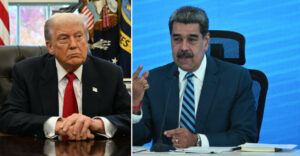 aircraft of various types in the Caribbean as part of an operation it claims is aimed at fighting drug trafficking. However, it now includes the seizure of oil tankers by force.
US President Trump has recently reiterated that his counterpart, Maduro’s days are “numbered” and that he “does not rule out” war between the two countries.
Mr Maduro “knows exactly what I want. He knows it better than anyone,” the Republican told NBC News.
But what exactly does he want?
Other supplier
From the 1920s until its nationalization in 1976, it was the US that exploited Venezuela’s oil. Many US refineries were built to be able to process the crude oil extracted from the subsoil of that country.
Chevron is now the only US company allowed to supply Venezuelan oil to the US market, given the embargo imposed by Mr Trump himself during his first term in 2019.
This is a quantity of just over 200,000 barrels a day, a sector source explained to Agence France-Presse, which is transported by tankers that are not subject to US sanctions and are therefore, at least in theory, protected from US military operations.
The first large tanker captured, on December 10, the Skipper, was taken to an American port and its cargo seized. It was carrying 1.9 million barrels of crude, according to Mr Maduro, who denounced the US “hijacking” of it. The fate of the second, the Centuries, is unclear. Yesterday the US Coast Guard was “pursuing” a third ship, according to a French Press Agency source in the Trump administration, who confirmed information from the US press.
Mr Trump ordered the “complete blockade” of “sanctioned” ships, meaning those blacklisted by the Treasury Department under sanctions and the embargo. However, analysts point out that the measure is too vaguely worded and can therefore be interpreted as applying to any ship carrying crude from Venezuela, with the sole exception of those of Chevron.
The second tanker seized was not on the US blacklist, according to experts. The ship “hunted” yesterday was named by specialist firm TankerTrackers as the Bella 1, which has been subject to US sanctions since 2024 because of its alleged links to Iran and Hezbollah.
For now, the policy is not strictly enforced; several tankers have passed through unimpeded. But it raises the risk of raising water transport prices or driving away shipping companies, noted Juan Szabo, a consultant and former president of Venezuela’s state oil company PdVSA.
Of its total production, which reaches about one million barrels a day, Venezuela exports some 500,000 barrels through the black market, mainly destined for Asia.
PdVSA assures that exports are continuing smoothly. “If there is a real blockade, production will stop very quickly, like when there was the big strike in 2002,” explained an AFP source in the sector, referring to the protests against the then president, the now deceased socialist Ugo Chavez.
Geopolitics
The Security Council is scheduled to consider the crisis at a meeting tomorrow, Tuesday.
US pressure on President Maduro began to escalate in November and moved to another level in early September: since then, the US armed forces have bombed dozens of boats allegedly carrying drugs. Washington, moreover, accuses Mr Maduro of personally heading a drug trafficking ring, and that he is a cartel leader.
At least 104 people have been killed in speedboat bombings in the Caribbean and Pacific.
For Carlos Mendoza Poteja, a professor specializing in oil economics, Donald Trump wants Washington to “keep” Washington in control of the Americas.
The issue is not “just oil” but “sharing the world” with China and Russia, he added.
Economic crisis ahead.
The blockade portends even sharper problems for Venezuela’s economy, already in bad shape — the country was expected to end the year with hyperinflation.
Some in Venezuela won’t stop talking about the military buildup ordered by U.S. President Trump, but they’re keeping their voices down: they’re worried they’ll end up in jail.
Some hope that there will indeed be an American intervention, ending 26 years of Chavista rule. Others fear the isolation of the country, or that Venezuela will relive the dark hours of 2017-2018.
Mr. Szabo estimates that exports could fall as much as 45% in the next four months.
“Venezuela’s net monthly revenues in March and April may be (…) too low,” he added.
Foreign exchange security will not exceed “a third of what it was”, there will be “consequences for imports of non-oil products”, “the devaluation of the bolivar” will accelerate, and life will become “more expensive to a huge extent”, he warned.
Ask me anything
Explore related questions




