





Despite pressures from climate change and rising production costs, milk and dairy production at the Union of Agricultural Cooperatives of Naxos remained broadly stable in 2025, showing a slight increase compared to 2024. According to the Union’s president, Dimitris Kapounis, this stability was achieved thanks to the strengthening and renewal of livestock through the import of breeding animals. “Without this intervention, milk quantities would have declined,” he told the Athens–Macedonian News Agency.
Total production amounts to approximately 1,400 tonnes of products, of which 1,200 tonnes are PDO Naxos Graviera, while the remaining 200 tonnes include other products such as milk, yogurt, and yellow and white cheeses. Production relies on both cow’s milk and sheep and goat milk, with a slight upward trend in cow’s milk, although prospects remain uncertain due to weather conditions.
“Naxos Graviera is currently exported to 18 countries, and according to our plans, this number is expected to rise to 20 by early next year,” Mr. Kapounis said. However, exports remain lower than in previous years due to the loss of the Russian market and the gradual decline in milk production, which limits available quantities. Over the past six years, daily milk production has fallen by around six tonnes, a development attributed to producers leaving the profession, higher costs, and water scarcity.
To address these challenges, the cooperative has implemented a series of measures, including securing cheaper animal feed, providing credit to livestock farmers on favorable terms, and carrying out a major investment of approximately €750,000 in a liquid waste processing unit at the cheese factory.
“The unit is expected to become operational at the beginning of the year and will produce clean water, which will be used both for the needs of the cheese factory and for crop irrigation, reducing pressure on water resources,” Mr. Kapounis said.
The World’s Best Cheese
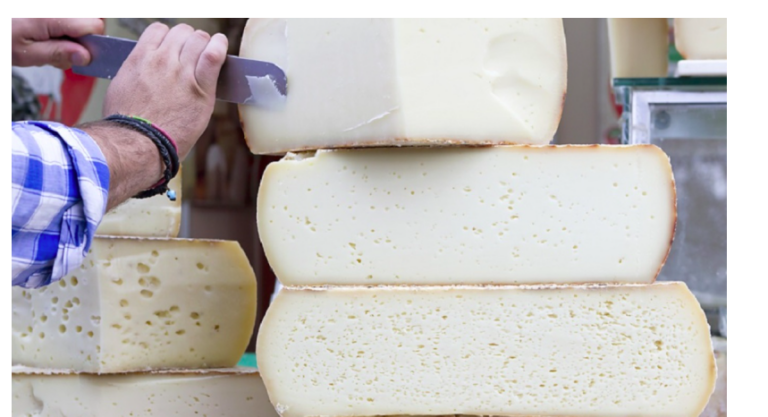
Despite the ongoing challenges facing the island’s primary sector, the cooperative’s flagship product, PDO Naxos Graviera, has reached the top of the global rankings, having been named the best cheese in the world by the international gastronomy platform Taste Atlas. This recent distinction confirms the long-standing reputation of a product closely tied to Naxos’ culinary identity and a cornerstone of the local agricultural economy.
“This distinction belongs to our producers, our cheesemakers, our staff, the cooperative’s management, and of course the consumer who chooses PDO Naxos Graviera,” Mr. Kapounis told the Athens–Macedonian News Agency.
Taste Atlas rankings are based on international reviews, historical data, and flavor characteristics, highlighting PDO Naxos Graviera as a global benchmark.
Concern Over Naxos Potatoes
At the same time, the situation for Naxos potatoes is particularly worrying. Water shortages and a lack of basic infrastructure projects have led to a sharp drop in production. “While the initial target for the autumn potato crop was 1,500 tonnes, it is estimated that production will struggle to exceed 600 tonnes, with negative prospects for the spring crop as well unless rainfall improves,” Mr. Kapounis emphasized.
Another major issue is the circulation of counterfeit “Naxos potatoes” on the market, mainly imported from Egypt, which damages the product’s brand.
To protect Naxos potatoes, the Union has initiated origin-identification procedures in collaboration with the Aristotle University of Thessaloniki, aiming to safeguard the product, even though the state has not yet imposed relevant obligations.
Today, around 600 livestock farms operate on Naxos, and the Union employs 130 workers. “Our strategic goal remains increasing raw material supply through a privately owned breeding livestock unit, to boost cheese production and exports in the coming years,” Mr. Kapounis concluded.
Ask me anything
Explore related questions




