





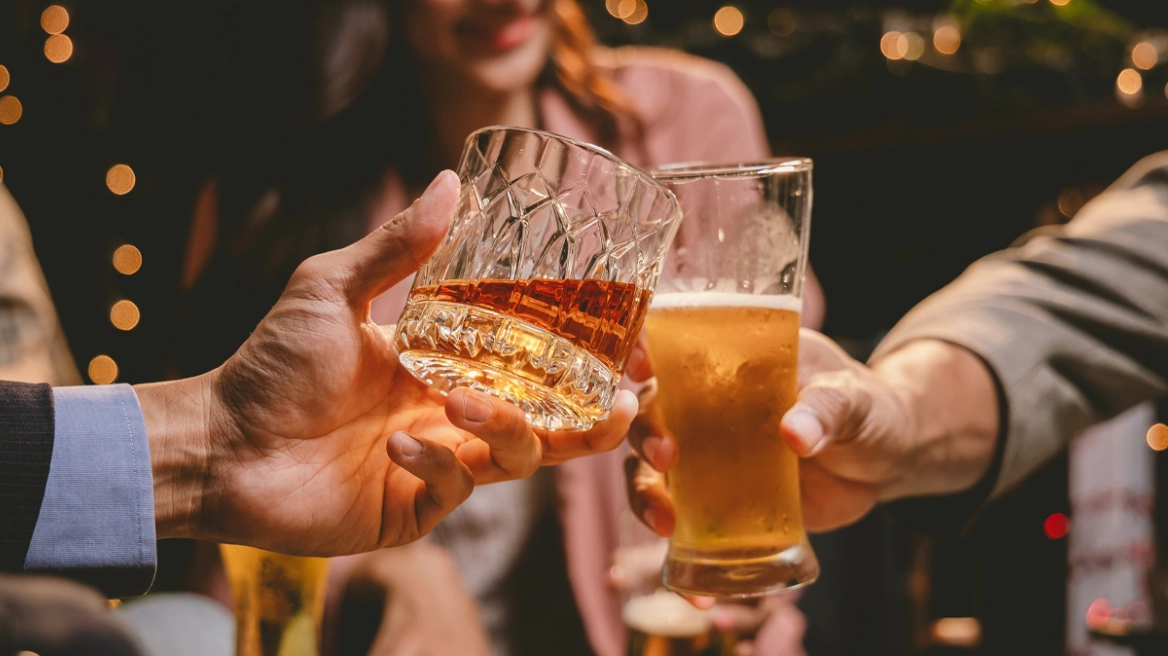
In the early hours at a very well-known music venue in Athens, a group of ten leaves after paying about €1,000 for two premium bottles: one 1.75-liter vodka and one 750-ml gin.
More than two-thirds of the vodka bottle remains, while the gin is almost full and looks as if it was never even opened—clear evidence of what has been happening in recent months with alcohol consumption, not only at bouzoukia venues but also in clubs, bars, and restaurants.
Market executives at alcohol-import companies speak of a drop on the order of 20–25%, even though people continue to go out and fill the venues.
They fill them, yes—but without drinking much, usually sticking to one drink, whereas in the past it was easy to have three or four at a bar or restaurant.
Clearly, the Greek mentality toward alcohol has not changed; however, the sharp decline in consumption is due to two serious causes.
The first—and the one most responsible for this change—is the intensive traffic police checks carried out almost daily, and of course on weekends, with breathalyzer tests on major arteries and roads.
The shock of the checks
The new Traffic Code (KOK) has now incorporated very strict provisions and hefty fines for driving under the influence of alcohol, something many Greeks have discovered firsthand.
Scenes in the early morning hours with cars parked on the side, tow trucks ready to remove them, drivers lamenting, and young women crying after being found over the limit have ultimately alarmed many people.
Now, if a driver’s blood-alcohol level is between 0.25 and 0.39 mg/l, the fine is €350 and the driving license is suspended for one month.
If it is between 0.40 and 0.54 mg/l, the fine is €700, and in addition to a three-month license suspension, the vehicle’s license plates are also removed.
Finally, the unlucky person found with 0.55 mg/l in their system, besides paying €1,200 and losing their license for six months, also faces criminal prosecution and imprisonment.
In cases of repeat offenses, fines are doubled or quadrupled, and the driving license can be revoked for up to ten years.
“Hard” spirits paid the price
The second reason alcohol consumption has dropped significantly is that alcohol remains one of the most expensive accompaniments to a meal or a group’s table at a bar.
Especially the so-called “hard” spirits—whisky, gin, vodka, and tequila—have borne the brunt, as the special consumption tax and 24% VAT, combined with rising international transport costs in recent years, have sent prices soaring.
At a very well-known restaurant in Kolonaki, four years ago a glass of 12-year-old Macallan whisky cost €20; now it costs €30.
The decline in alcohol consumption has sounded the alarm in the food-service sector, where business owners note significant profit losses, especially last year and this year, as taxes and transport costs forced them to raise prices.
Simple spirits and cocktails have always provided the most significant profit margins in bars, trendy restaurants, clubs, and, of course, bouzoukia venues. There, until last year, a group of ten could easily consume a three-liter bottle of premium vodka, knowing that traffic checks were on a much smaller scale.
This year, almost no one orders such bottles at nightlife venues, opting instead for smaller sizes, which in the end are often not finished—fear guards the wasteland—and many customers, upon leaving, take the bottles with them, having paid €250 or €500.
Those who want to drink without fear choose either to use a taxi or go out with a friend who will not drink because they are the one driving, so there is no issue on the return.
Some nightlife venues have also chosen to serve bottles with 0% alcohol content, as is the case with at least three well-known English gins, whose taste closely resembles the original.
Ask me anything
Explore related questions




