





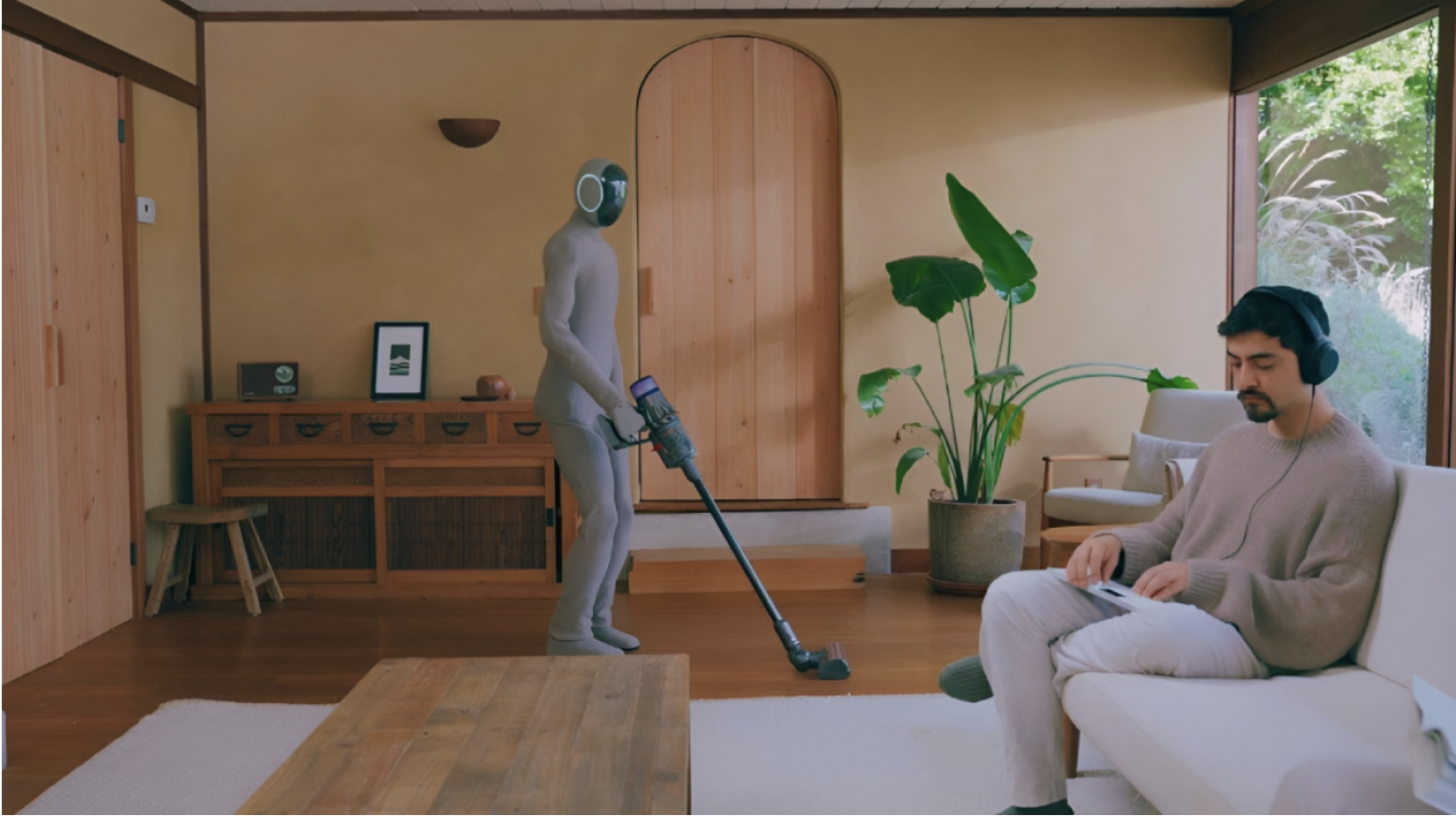
More than 25 years have passed since the dawn of the new millennium, and the futuristic world of flying cars, jet packs and life in space — once considered almost inevitable — still seems far away. Yet one technology that until recently belonged purely to science fiction has begun to take tangible form: humanoid robots.
The new generation of humanoid machines stands upright, moves in a human-like way and can perform everyday tasks, from folding clothes and opening doors to heavy, repetitive work in factories and warehouses. American companies are leading this field, with Tesla and Agility Robotics at the forefront of developments.
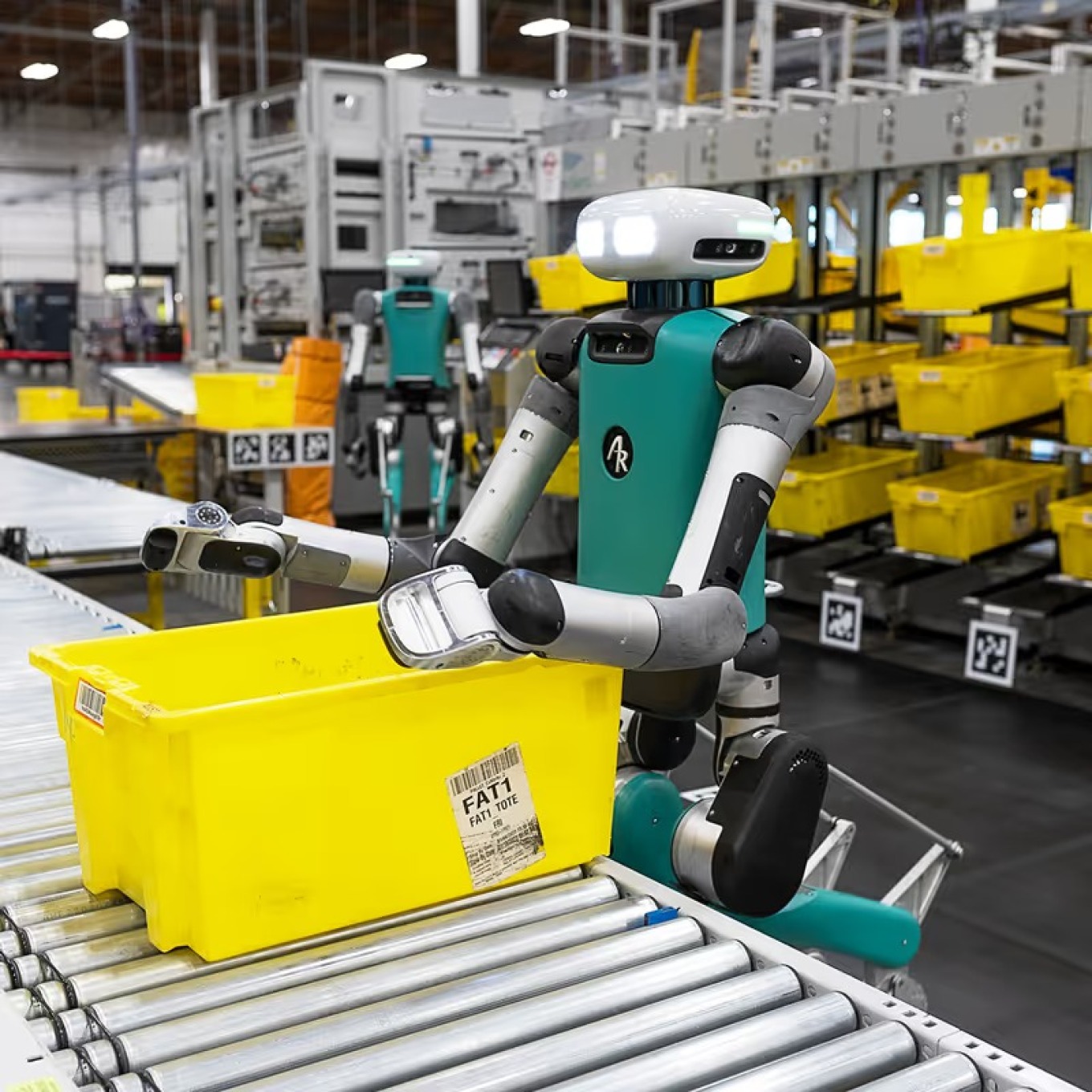
The Digit robot by Agility Robotics already operates in warehouses of companies such as Amazon and is specifically designed to transport plastic bins and loads.
“Robots that can move, act and behave in ways we once could only imagine,” as described by Modar Alaoui, founder of the Humanoids Summit, the international conference dedicated exclusively to humanoid robots and their interaction with society and the economy.
According to Alaoui, this is not a distant scenario: these machines are expected to gradually integrate into everyday life, taking on dangerous, boring and exhausting jobs.
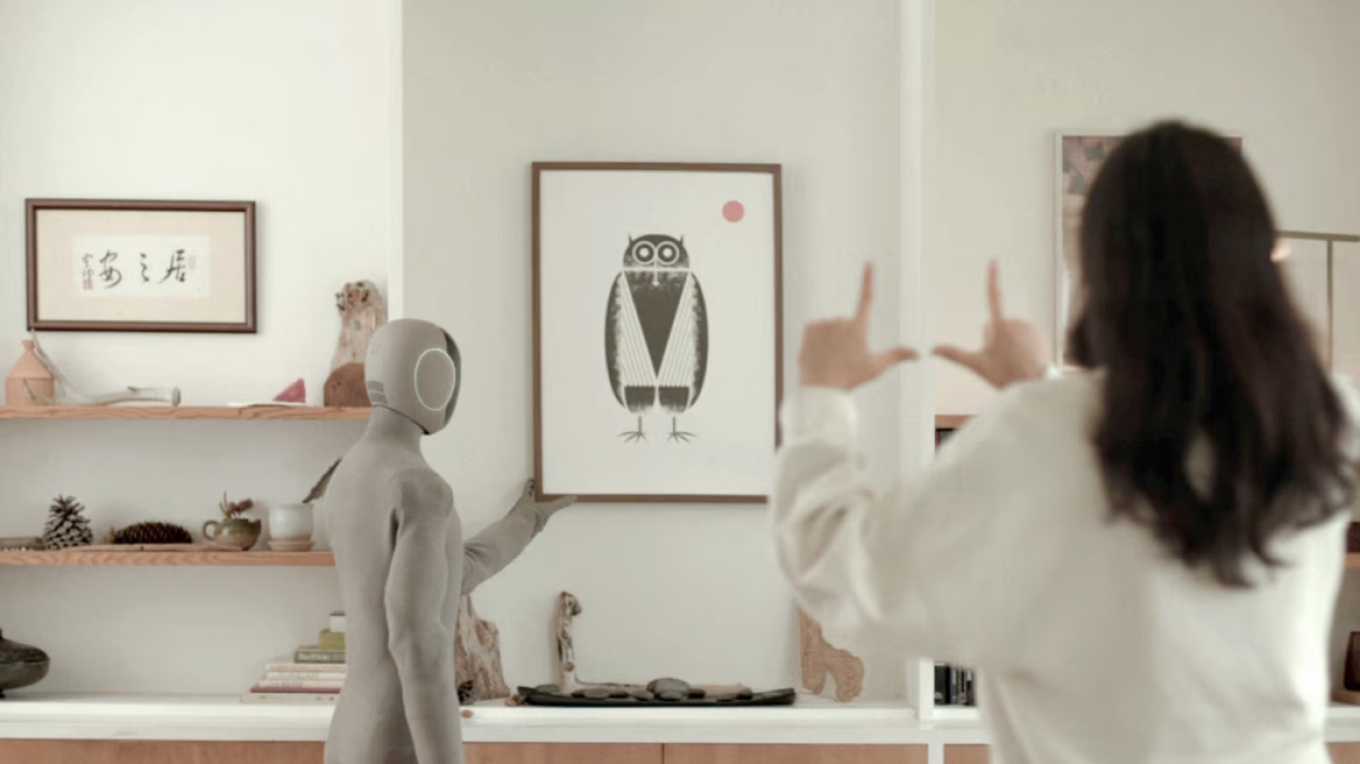
The new generation of robots can perform daily tasks, from folding clothes to opening doors.
Optimus – Tesla
The most high-profile humanoid robot is Tesla’s Optimus. Created by the company’s Artificial Intelligence and Robotics Division, it has already appeared in stores in Berlin, serving customers and performing simple tasks in front of the public. Optimus is based on the same autonomous-perception philosophy as Tesla’s cars, using cameras and sensors instead of traditional lidar technology.
It can walk at speeds of up to 8 km/h, carry more than 20 kilograms, and perform tasks ranging from simple household chores to repetitive work in factories and restaurants. According to Elon Musk, the goal is mass production to dramatically reduce costs, which are expected to range between $20,000 and $30,000.
Tesla is showcasing its humanoid Optimus at the Mall of Berlin. DW went on site to see what it can actually do, how autonomous it really looks, and what spectators think. #dwbusiness pic.twitter.com/IN4TDOH6Zo
— DW News (@dwnews) January 3, 2026
NEO Gamma – 1X Technologies
In the field of home robotics, 1X Technologies is developing NEO Gamma, a humanoid robot standing 1.68 meters tall, designed from the outset to move safely inside homes. The company places special emphasis on a “friendly” appearance, so the robot does not cause discomfort to users.
NEO Gamma is intended for everyday tasks such as house cleaning, tidying up and simple household assistance, while learning through experience and gradually improving its behavior. The first deliveries are expected in 2026, with the price also estimated at around $20,000 — indicating the company’s focus on mass adoption rather than purely experimental use.
Introducing NEO Gamma.
— 1X (@1x_tech) February 21, 2025
Another step closer to home. pic.twitter.com/Fiu2ohbIiP
Digit v4 – Agility Robotics
With a more “industrial” character, Digit v4 by Agility Robotics is considered the first humanoid robot already used on a commercial scale. Digit operates in warehouses of companies such as Amazon and is specifically designed to move plastic bins and loads.
Its design mimics the human body so it can move in spaces built for humans, without requiring changes to existing facilities. It features advanced artificial intelligence that allows it to perceive its environment and respond to unexpected situations. The company estimates that by the end of 2025, Digits in commercial use will have moved approximately 140,000 plastic bins and boxes.
Not a test, pilot, or demo. Digit is integrated directly into the order fulfillment workflow. #OnTheJob pic.twitter.com/nO7YjTGO8R
— Agility Robotics (@agilityrobotics) July 2, 2024
Olaf – Walt Disney Imagineering
At the opposite end of industrial use, Disney is investing in entertainment. Walt Disney Imagineering created Olaf, the snowman robot from the film Frozen, designed to interact directly with the public.
Olaf can speak, move and engage in dialogue, using reinforcement learning techniques and expressive facial mechanisms. Unlike other robotic “costumes,” its body is designed to move more naturally, enhancing the sense of a living presence. The robot is expected to make its first official appearance at Disneyland Paris in late March 2026.
Walt Disney reveals their first free-roaming Olaf robotic figure.
— Film Updates (@FilmUpdates) November 24, 2025
Coming to World of Frozen at both Hong Kong Disneyland and Disneyland Paris. pic.twitter.com/pcXilGyCkR
Ask me anything
Explore related questions




