An imaginative way in which they managed to digitally invade citizens’ banking data via their mobile phones was devised by two Chinese who got caught in the net of the National Police
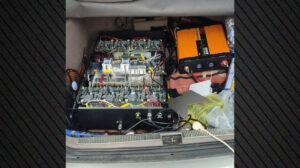
As the investigation revealed, the accused had installed special electronic equipment in a car through which they “misled” the victims’ mobile phones.
The method they used is called “SMS Blaster Attack” and is essentially a type of attack where the perpetrators pretend to be a cell phone antenna.
Through the equipment they had in the car (computer system with router and antenna-transmitter in the “sky”) and, using specific software, they “confused” the mobile phones of the users and made them connect to this “fake antenna” instead of the normal one of the provider (Cosmote, Vodafone, Nova).
This is how they managed to access and send misleading SMS to the victims’ mobile phones, without it appearing to come from a suspicious number.
Simply put, when users walked or drove near the perpetrators’ car-horse, their cell phone would get confused and connect to it, thinking it was the real company.
Once the cell phone is “caught” on this fake antenna, the fraudstercan send a message (SMS) directly to the device that is not “caught” by the filters and appears far from real.
Usually, these messages are intended to panic the user with phrases such as: “Your bank account has been locked, click here to unlock it” or “You have a parcel pending, pay 2 euros for shipping.”
If the user clicks on the link in the message, they are taken to a page similar to those of banks, but it is fake, to steal the codes or card details.
The operation of the attack is based on exploiting weaknesses in the 2G protocol, which, although outdated, is still supported by a large number of devices for compatibility reasons.
Once the target mobile was connected to the attackers’ “fake 2G antenna”, they gained access to device identifiers (IMSI and IMEI) without the need for an authentication process.
Through the fake base, they sent SMS with a fake sender identity, which falsely represented an official entity or banking institution as the sender with phishing links and gained access to their banking data.
After the message was sent, the device would reconnect to the network, with no visible traces of the attack.
The two Chinese men were arrested when a shopping mall employee in Spatainformed the National Police that these people had made suspicious transactions.
A criminal case was formed against them for “Fraud and Illegal Access to Information Systems in conspiracy and on a serial basis, committed by two or more persons who were organized to commit fraud on a professional basis” and for criminal organization.
How to protect yourself
– Don’t trust the name of the sender: Even if the message says “GOV.gr” or the name of your bank, don’t take it for granted.
– Never click on links.
– Hang up and turn on the phone: If you suspect something is wrong with your signal or you get strange messages en masse, a reboot or temporarily turning on “Airplane Mode” helps the phone disconnect from the fake antenna.
Ask me anything
Explore related questions