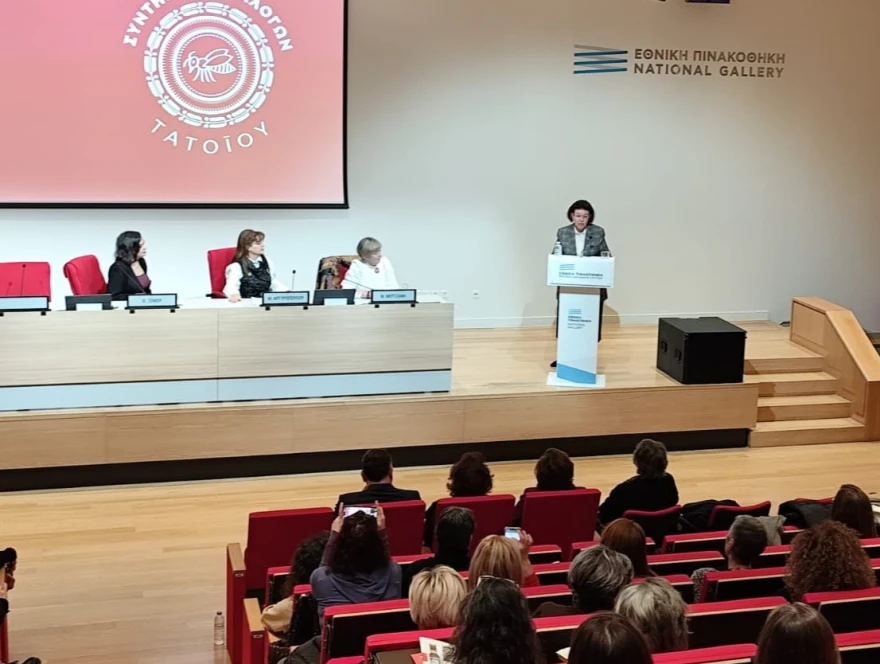
The highly demanding, large-scale, and complex project to rescue and conserve more than 100,000 objects discovered at the Tatoi estate during restoration works was presented today at the auditorium of the National Gallery – Alexandros Soutsos Museum, during a one-day conference titled “Conserving the Tatoi Collection: Solving the Puzzles”, organized by the Directorate for the Conservation of Ancient and Modern Monuments of the Ministry of Culture.
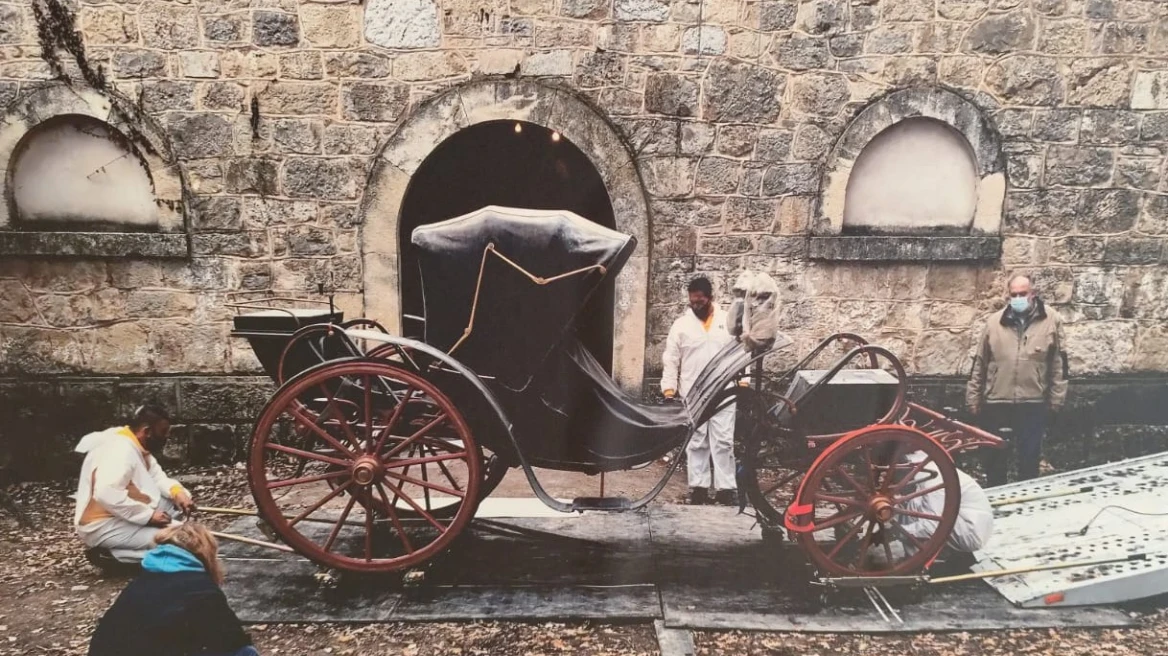
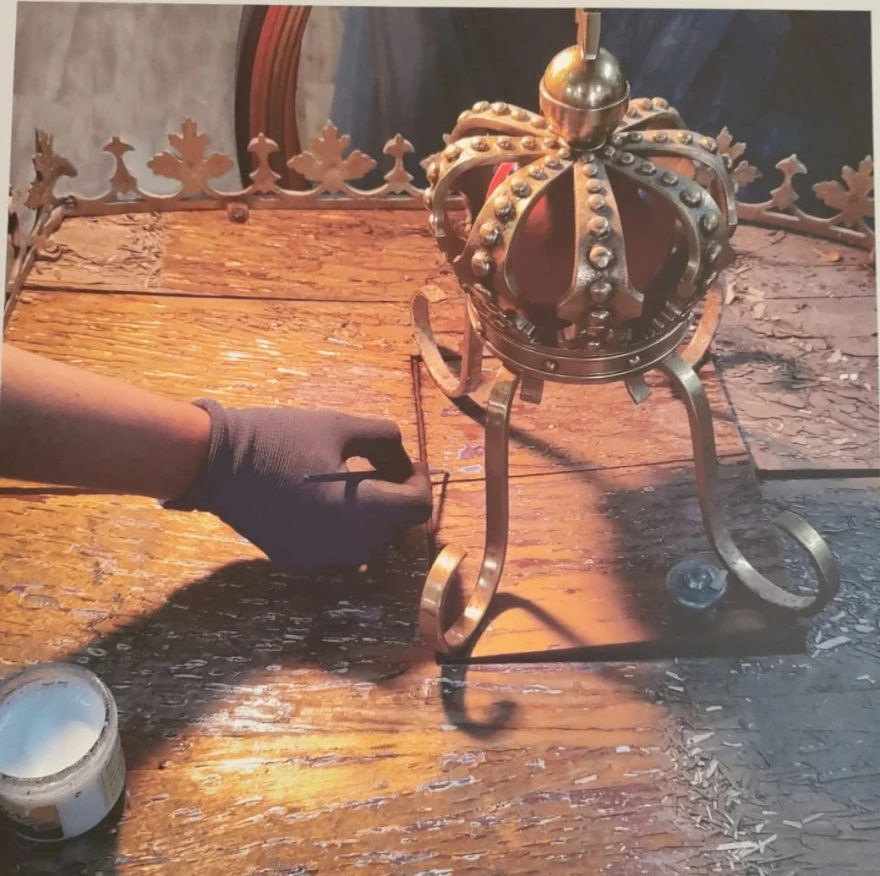
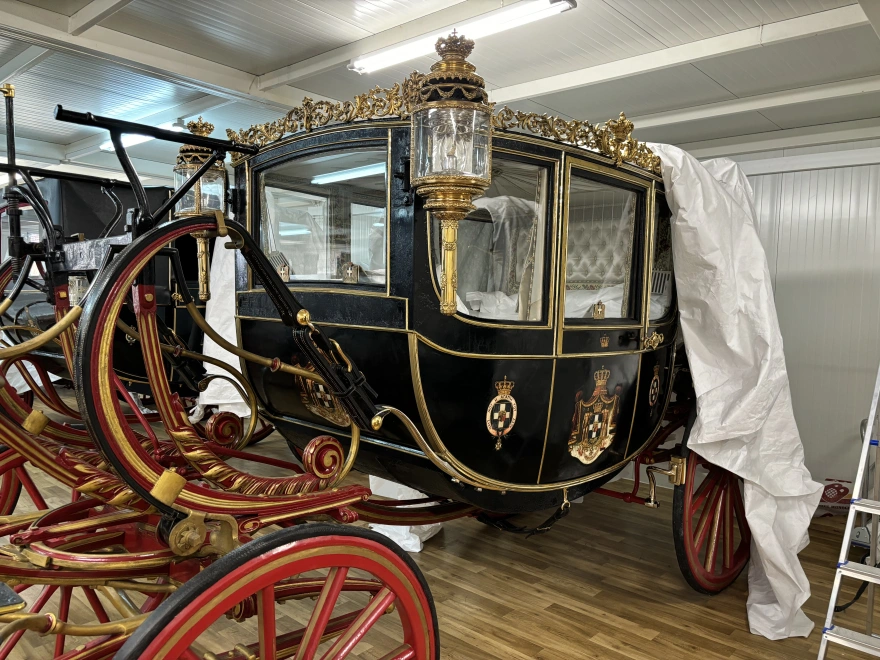
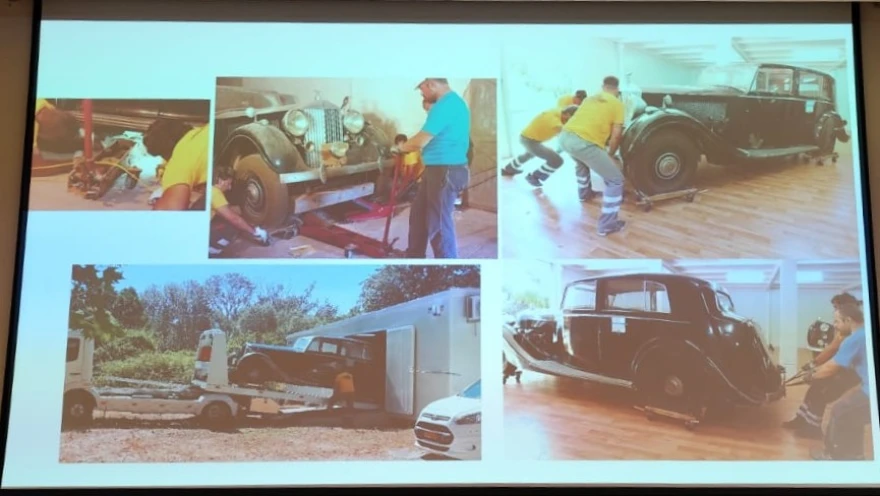
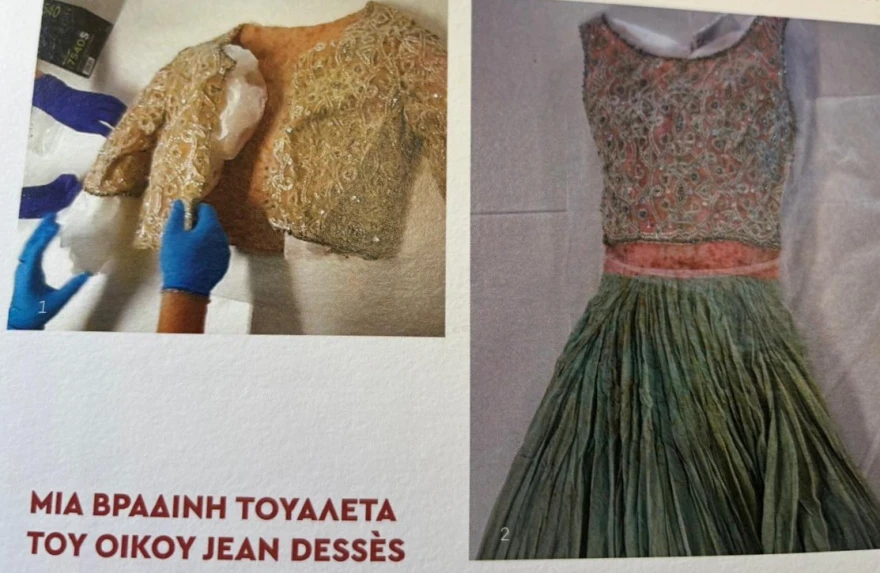
Ornate carriages and luxury cars buried under dust, furniture, precious works of art, costly garments stored in suitcases, everyday objects, books, photographs, and documents are among the movable artifacts recovered from the Tatoi estate. These items were carefully collected, conserved, and documented, forming a vivid narrative of moments from modern Greek and European history.
Statements by the Minister of Culture
“The meeting today offers an excellent opportunity to shed light on a crucial yet largely unseen chapter of the major restoration and revitalization project of the former royal estate of Tatoi: the conservation of its extensive collection of movable objects and archival material,” said Minister of Culture Lina Mendoni.
She explained that the conference title was deliberately chosen, as it reflects the scientific reality of conservation:
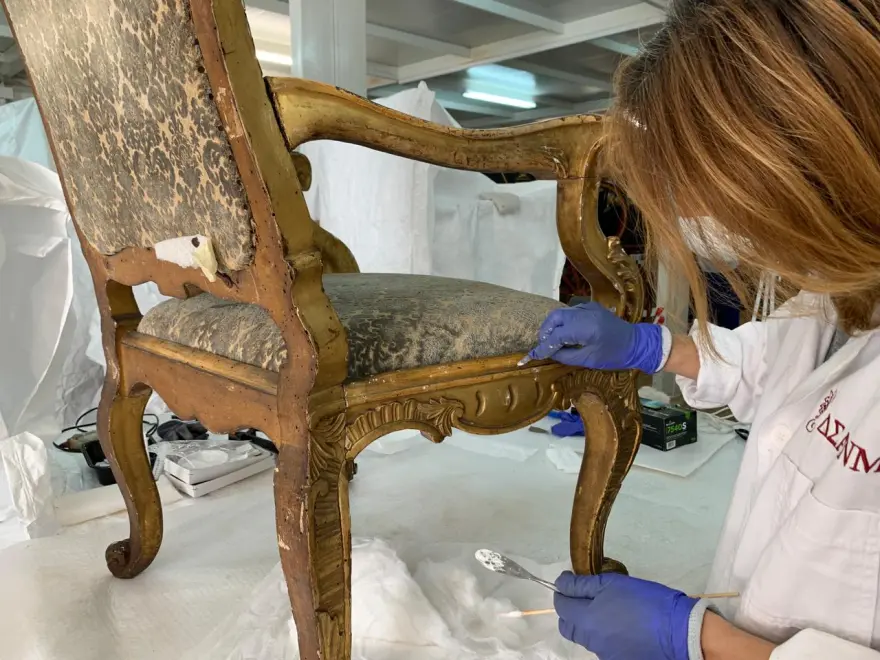
“Each object was a unique ‘puzzle’ requiring material identification, assessment of deterioration, and the selection of the appropriate methodology.”
She added that conservation work is inseparably linked to digitization and documentation, allowing each object to acquire its own place and “voice” within a broader narrative that connects past and present, providing tools for research, education, and future cultural planning.
A Long Period of Neglect
The Minister emphasized that the spaces of the Tatoi estate bear the indelible imprint of the lives and actions of the royal dynasty that created and inhabited it, as well as the political events, ideological developments, social transformations, and cultural shifts that marked Greece in the 19th and 20th centuries.
However, she noted that this historical importance was not matched by proper care for decades. After 1974 and until a 2003 ruling by the European Court of Human Rights, the estate, its buildings, and its movable objects remained abandoned and neglected, exposed to weather and human indifference, with tens of thousands of historically and artistically significant items stored under unsuitable conditions.
The Turning Point: 2019 and Beyond
Mendoni identified 2019 as a decisive turning point, noting that Prime Minister Kyriakos Mitsotakis included the protection, conservation, and promotion of Tatoi among the government’s flagship projects.
The Ministry of Culture designed and is implementing an ambitious, multi-level program funded by the Recovery and Resilience Fund, NSRF, the National Development Program, and private donations, with the first main phase scheduled for completion in 2026.
The interventions form part of a coherent plan to transform Tatoi into an open, accessible peri-urban green space with multiple activities, serving as a site of historical memory, culture, education, environmental awareness, and recreation, with full respect for the natural landscape and long-term sustainability.
After the 2021 Wildfire
Special reference was made to the 2021 wildfire, which dramatically highlighted the fragility of the project and the need for immediate reprioritization.
In response, a systematic and intensive conservation effort was launched, funded with €3 million from the Recovery Fund. Between March 2022 and today:
- Preventive conservation was carried out on approximately 45,000 objects
- 8,300 items were prepared for inclusion in the permanent exhibitions of the Tatoi museums
The project employed 43 specialized professionals, working alongside Ministry staff and numerous contractors, illustrating the scale, intensity, and complexity of the effort.
Scientific Work and Documentation
During the conference, detailed presentations outlined the demanding, multi-year process followed to rescue the objects, as part of the project “Conservation and Restoration of Movable Objects of the Former Royal Family from the Buildings of the Tatoi Estate – Preparation of Exhibits for Display.”
The presentations highlighted:
- The challenging conditions under which conservation took place
- The technical and scientific aspects of the interventions
- Documentation and material management methods
- The complexity of restoring objects of different periods, materials, and historical significance
The overarching goal was the preservation of memory and the adoption of a holistic approach that links material conservation with historical, social, and aesthetic understanding of Tatoi as a living cultural asset.
Closing Remarks
In closing, Lina Mendoni expressed warm thanks to the Directorate for the Conservation of Ancient and Modern Monuments and its head, Maria Mertzani, all permanent and contract staff, the General Director of Antiquities and Cultural Heritage, Olympia Vikatou, private contractors, external collaborators, and everyone involved.
She described the collective effort—spanning five Ministry departments—as a model of cooperation between the public sector, the scientific community, and specialized technical staff, delivering tangible benefits to society, research, and culture.
Additional Exhibition
It is also noted that the photography exhibition “The Work Behind the Work”, featuring moments from the daily working life of conservators at Tatoi, is on display at the mezzanine level of the National Gallery from January 19–26.
Ask me anything
Explore related questions