On Monday morning, the Ministry of Migration and Asylum proceeded with the revocation of the residence permit of a Bangladeshi national, on the grounds that he was operating an illegal mosque in Athens.
The case began following a complaint. Police officers from the Agios Panteleimonas Police Station located the premises in the Agios Nikolaos area of the Municipality of Athens, sealed it, and the foreign national was brought before the courts, where he was sentenced to imprisonment for operating a place of worship without a permit.
As soon as the ministry was informed, the competent minister, Thanos Plevris, ordered the immediate application of the new provision so that the case would not be limited only to criminal penalties but would also have migration-related consequences: namely, that the individual would lose his lawful residence status and that the process for issuing a deportation order would be initiated. This indeed occurred, as the decision was issued this morning.
The decision was based on Article 28 of Law 5224/2025, which provides that operating a place of worship without the required permit does not have only criminal consequences (imprisonment/fine), but may also lead to the revocation of a residence permit for foreign nationals involved in the operation of such a space.
In this specific case, according to information from protothema.gr, a deportation order was also issued without granting a period for voluntary departure, meaning without the “grace period” allowing the individual to leave on his own within a specified time frame.
The Ministry of Migration and Asylum notes that the minister has requested immediate notification of similar cases and the use of expedited procedures for revoking permits of foreign nationals who operate unlicensed places of worship. The message is that, beyond the police and judicial process, there will now also be automatic activation of the “migration aspect” of such cases.
What is happening with illegal mosques in Athens
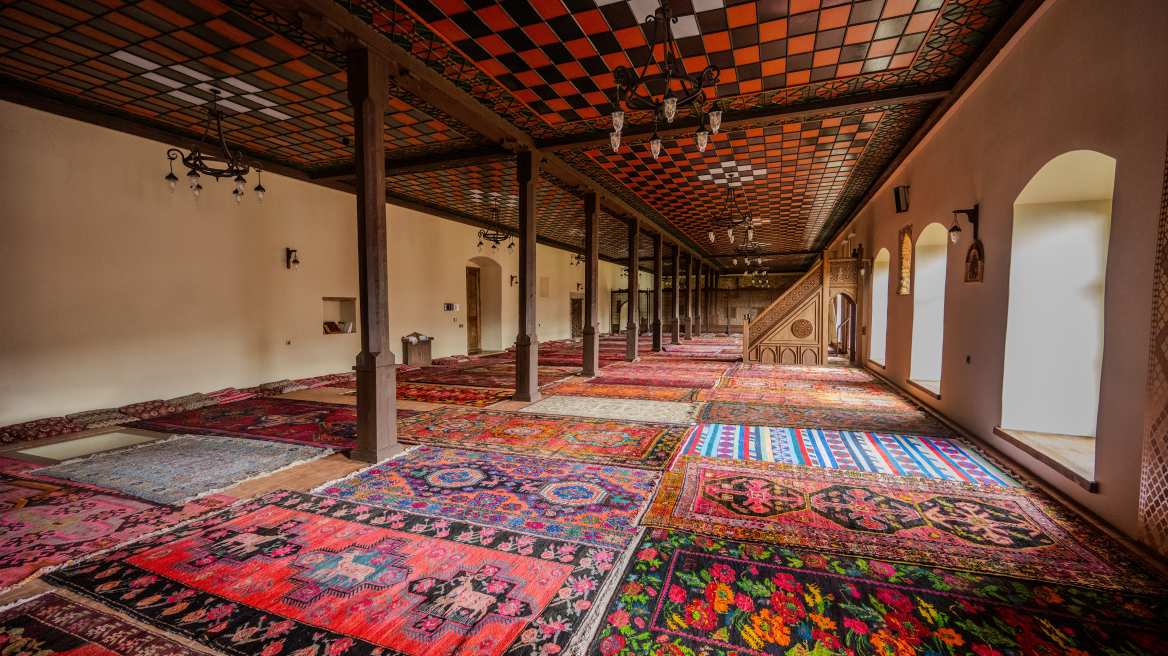
The case also brings back into focus the broader issue of unlicensed places of worship in Attica. According to reports, the illegal spaces still operating in Athens number around 60, while earlier estimates in the early part of the previous decade spoke of more than 100 spaces—from basements and apartments to warehouses or parking areas—lacking basic specifications such as ventilation or toilets.
This number has decreased in recent years, mainly due to the economic crisis and the pandemic, while the situation was also eased by the operation of the state-run mosque in Votanikos, which provided an institutional solution for organized worship.
From the state’s perspective, the position is that this is not a matter of religion but a matter of rules: when a space operates without a permit, there is no oversight of building safety, fire protection, emergency exits, and, in general, whether it meets the requirements applicable to any venue where the public gathers.
With the new provision, the state seeks to close the “gap” that existed until now, so that the illegal operation of places of worship is not addressed solely through criminal law, but also entails immediate administrative consequences for foreign nationals who hold residence permits and are involved in such practices.
Ask me anything
Explore related questions