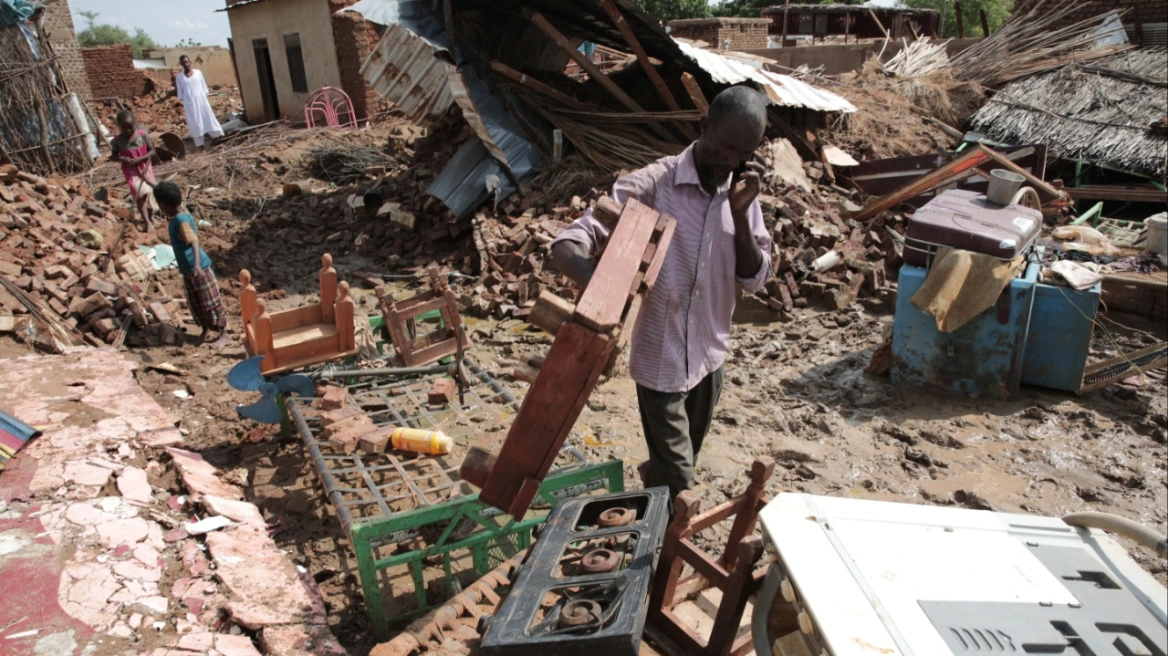
The atrocities committed during the capture of El Fasher in Sudan constituted a “disaster” that could have been prevented, the UN High Commissioner for Human Rights said, highlighting growing concerns that such crimes are now being repeated in Kordofan.
Since April 2023, Sudan has been engulfed in a war between the regular army and the paramilitary Rapid Support Forces (RSF). Both sides have been accused of committing numerous atrocities. This conflict has plunged over 21 million citizens across the vast African country into food insecurity.
“My office has been sounding the alarm about the impending mass atrocities in the besieged city of El Fasher for over a year,” emphasized Volker Turk, the head of the High Commissioner’s office, addressing the UN Human Rights Council in Geneva.
“The threat was clear, but our warnings were ignored,” he criticized.
The RSF’s takeover of El Fasher in October, according to multiple sources, was marked by massacres, rapes, and abductions.
“The responsibility for these atrocities lies entirely with the RSF, their allies, and those who support them,” said Turk.
“If we remain idle, lamenting while armies and armed groups commit crimes under international law (…) we can expect nothing but the worst,” he warned.
Kordofan
“I am extremely concerned that these violations and atrocities could be repeated in Kordofan. Fighting there has intensified following the capture of El Fasher,” Turk noted.
After seizing El Fasher, the last stronghold of the regular army in the vast Darfur region (western Sudan), the paramilitaries have focused their operations on Kordofan, a strategically important region bordering areas under RSF control and sectors controlled by the army in the north, east, and central parts of the country, as well as Darfur.
In the past two weeks, the Sudanese army and its allies managed to break sieges in the urban centers of Kadugli and Dilling, but “drone strikes by both sides continue, causing dozens of civilian deaths and injuries,” Turk noted.
According to the UN High Commissioner for Human Rights, in the two weeks leading up to February 6, “around 90 civilians were killed and 142 injured in strikes carried out by the RSF and the Sudanese Armed Forces (SAF).” The attacks also hit convoys of the World Food Programme (WFP), markets, health facilities, and residential neighborhoods.
Arms Embargo
Sudanese paramilitaries committed “massacres” in Darfur and attempted to cover them up by burying victims in “mass graves,” stressed Nazhat Shameem Khan, Deputy Prosecutor of the International Criminal Court (ICC), addressing the UN Security Council on January 19.
Reporting to the Security Council on the situation in Darfur, she said that, according to the ICC prosecution’s assessment, “war crimes and crimes against humanity” were committed when El Fasher was taken by the paramilitaries.
“Our findings fully confirm this conclusion. They will be presented in detail in a report to be released in the coming days,” added High Commissioner Turk, who visited Sudan in January.
Many governments condemned the atrocities in Sudan before the Human Rights Council.
“The horror must end,” noted the French representative. “All external support for the conflict must cease, and the arms embargo—which France supports expanding across all of Sudan—must be enforced,” she added.
Meanwhile, the EU “is deeply concerned about the situation in Kordofan and reiterates that the atrocities in El Fasher must not be repeated,” a representative of the 27-member bloc told the council.
Ask me anything
Explore related questions