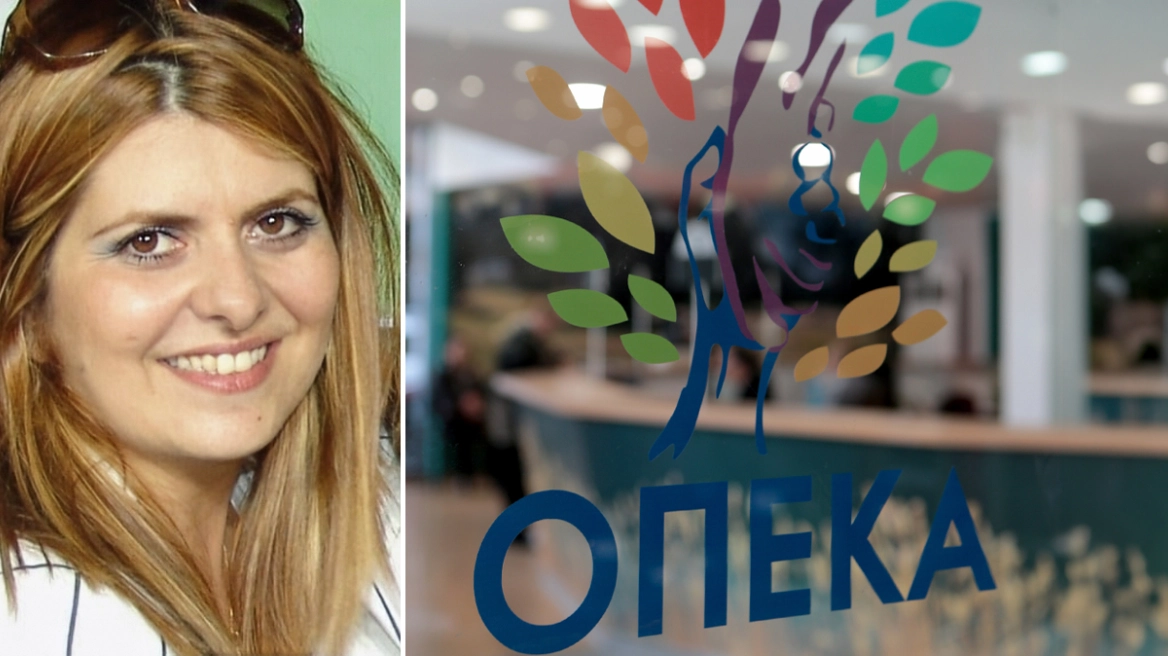
The detailed report by the National Transparency Authority (NTA) has triggered unexpected political repercussions within PASOK. It concerns a scheme involving fake uninsured elderly benefits that appears to have operated within OPEKA (Organization of Welfare Benefits and Social Solidarity). A central figure in the case is former PASOK Organizational Secretary and long-time OPEKA official Tasoula Chatzidaki.
Since June 2022, Ms. Chatzidaki had been serving as a PASOK party official while seconded from OPEKA. However, she reportedly maintained ties with the Organization and had not returned official files or her work laptop upon departure. Even after moving to PASOK’s headquarters on Harilaou Trikoupi Street, the system allegedly continued operating, centered on the uninsured elderly benefit—perhaps the only social benefit not digitized during the 2020–2023 period examined by the Authority.
The NTA launched its investigation following an internal OPEKA report (April 30, 2024), requested by the Organization’s administration in coordination with the General Secretary of the Ministry of Social Cohesion and Family, Konstantinos Gloumis-Atsalakis, and the responsible minister, Domna Michailidou.
The “Roma” Scheme
The more than 150-page report, fully revealed today by “THEMA,” outlines findings from OPEKA’s internal audit and the NTA’s investigation, conducted primarily during 2025. The scheme appears to have been carefully and methodically set up, focusing on handwritten applications that were approved even without required documentation or formal criteria.
Beyond interviews with officials from the relevant OPEKA department, the NTA conducted a sample audit of 80 approved handwritten applications for the Social Solidarity Benefit for Uninsured Elderly. Strikingly, all concerned residents of the Municipality of Ano Liosia.
A key selection criterion was that the approvals bore the signature of Tasoula Chatzidaki (A.X.) or her successor as department head (E.P.), who assumed the role after Chatzidaki moved to PASOK. Investigators also cross-checked data through applications supporting other welfare benefits, particularly the Minimum Guaranteed Income—widely known to be received by many Roma beneficiaries.
According to page 37 of the report, after conducting phone interviews with applicants to understand how the handwritten applications were completed, investigators determined that they were Roma, purportedly residents of the Municipality of Fyli, while in fact residing in other municipalities (e.g., Farsala, Zakynthos, Nea Ionia Volou, Corinth, etc.).
As OPEKA staff began realizing what was happening, in February 2024 a man identified as N.T., who reportedly declared himself “president of the Roma of the Municipality of Fyli,” appeared at the internal auditors’ offices. According to the report, he stated that with the help of an accountant he assisted fellow citizens who did not know how to complete handwritten applications. He also displayed an agenda listing OPEKA employees’ names and mobile phone numbers.
Flowers and Carpets
The Roma “president” did not arrive empty-handed, bringing gifts that were refused by auditors. According to interviews, he had been appearing at OPEKA’s Patission Street offices at least twice a month for over five years, consistently submitting handwritten applications or supplementary documents—apparently without formal authorizations. He reportedly brought flowers, sweets, and even carpets.
Auditors’ suspicions were confirmed upon reviewing 22 handwritten applications found outside normal filing order. All were dated June 30, 2023; all concerned residents of Ano Liosia; all listed Municipality of Fyli as their address; yet their tax returns (E1 forms) listed different addresses. None included a contact phone number. Seven applicants had not yet reached age 67 (the formal eligibility threshold for the uninsured elderly benefit). Five applications were unsigned; three bore only a cross instead of a signature.
The Chatzidaki Signatures
Tasoula Chatzidaki became central to the case, as her signature appears on numerous files, many containing serious irregularities. Of the 80 sampled applications from Ano Liosia, 50 bore her signature and 30 that of her successor.
According to the Authority’s findings, of the 50 signed by Chatzidaki, 25 were complete files, while the other 25 deviated from prescribed procedures. Some lacked tax documentation; others involved applicants below the age threshold.
How were such files approved? Applications from those under 67 were reportedly registered but not immediately forwarded for rejection. Instead, they remained pending until the applicants reached 67, at which point they were processed electronically. The original protocol number was used, enabling retroactive payments.
In cases with missing tax data, documents were submitted later; in some instances, amended tax returns were filed just days before approval. Seven of the 25 problematic applications were unsigned yet originated from the Citizens’ Service Center (KEP) of the Municipality of Fyli.
Overall, of 178 files approved by Chatzidaki between January 10, 2020, and June 14, 2022, 117 bore only handwritten protocol numbers. More than 80 lacked proper signature authentication, and two had no signature at all. Auditors calculated that €723,480 was improperly paid based on decisions she signed.
Her successor E.P. was also examined. Of 91 decisions reviewed (June 2022–November 2023), 34 showed improper benefit awards, with €216,543 calculated as unduly paid.
No Cross-Checks
The system was reportedly so lax that no cross-checking occurred regarding benefits received by beneficiaries, particularly Roma. One striking example involved overlapping claims for Uninsured Elderly Benefits and Minimum Guaranteed Income, with conflicting declared addresses and household compositions across applications.
Investigators also found that several applicants submitted false family-status information (declaring themselves alternately single or married) to secure the maximum benefit amount. Additionally, Community Center employees in the municipalities of Fyli, Elefsina, and Volos approved Roma applications despite incomplete documentation.
Archive Visits and Aftermath
It is notable that Ms. Chatzidaki retained access to OPEKA’s information system months after her transfer to PASOK and reportedly visited OPEKA offices regularly. She delayed returning her work laptop and removed files upon departure, returning them much later. In February 2024, she was reportedly seen accessing OPEKA’s archives after hours, raising staff suspicions.
An archive review found that among foreign nationals’ application packages, two bundles of handwritten Greek applicants’ files had been inserted—some without protocol numbers—suggesting that someone had “planted” non-compliant handwritten applications.
The extensive NTA report has been forwarded to the Athens Court of Appeal Prosecutor’s Office. Prosecutors are now summoning all involved parties for explanations. Key questions remain regarding what benefit OPEKA employees gained from operating the scheme and what role the Roma intermediary played.
In a statement on Wednesday, Ms. Chatzidaki said she welcomes institutional oversight and emphasized that she performed her duties with full responsibility, serving with honesty and transparency throughout her public service career. Nevertheless, she has been removed from PASOK, where she had served as Organizational Secretary and overseen the party’s dual elections in 2023.
Ask me anything
Explore related questions