
There are people who travel to see monuments, cities, breathtaking landscapes. Then there are those who travel to reach a point on the map where there is absolutely nothing. The 64-year-old British businessman Chris Brown clearly falls into the second category.
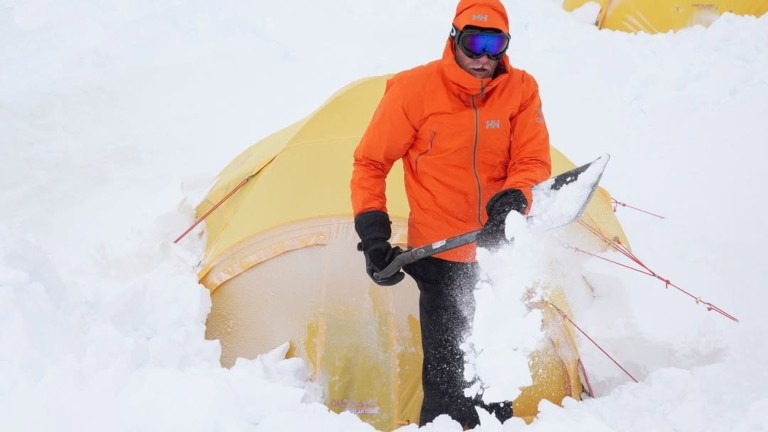
A few years ago he set out to visit the so-called “very inaccessible places” of our planet. That is, those geographical locations that are at the maximum possible distance from the sea or, in the case of the oceans, from land. In those places there is absolutely nothing, but if his words are to be believed, the sensation when he got there was better than when he saw Machu Picchu, the Great Wall or the Eiffel Tower.
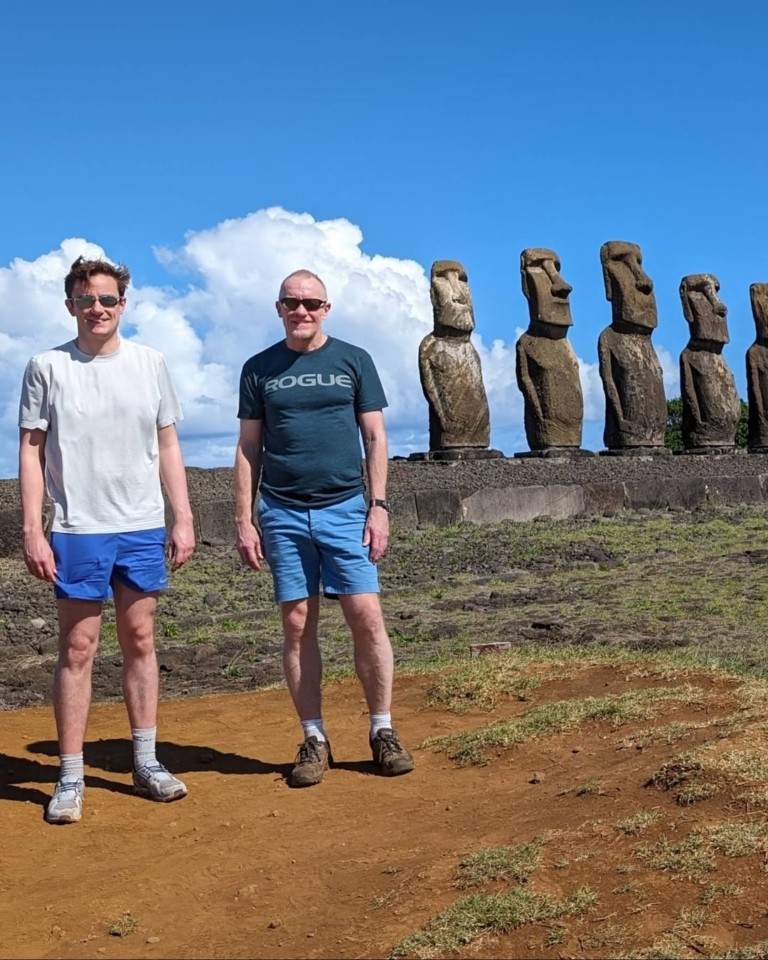
The adventure of a 64-year-old businessman who wants to conquer the central points of the continents and oceans.
There are people who travel to see monuments, cities, and breathtaking landscapes. And then there are those who travel to reach a spot on the map where there is absolutely nothing. Sixty-four-year-old British businessman Chris Brown clearly belongs to the second category.
A few years ago, he set himself the goal of visiting the so-called “points of inaccessibility” of our planet — the geographic locations that are the farthest possible distance from the sea or, in the case of oceans, from land. There is absolutely nothing at these points, yet, if we are to believe him, the feeling of reaching them was better than seeing Machu Picchu, the Great Wall of China, or the Eiffel Tower.
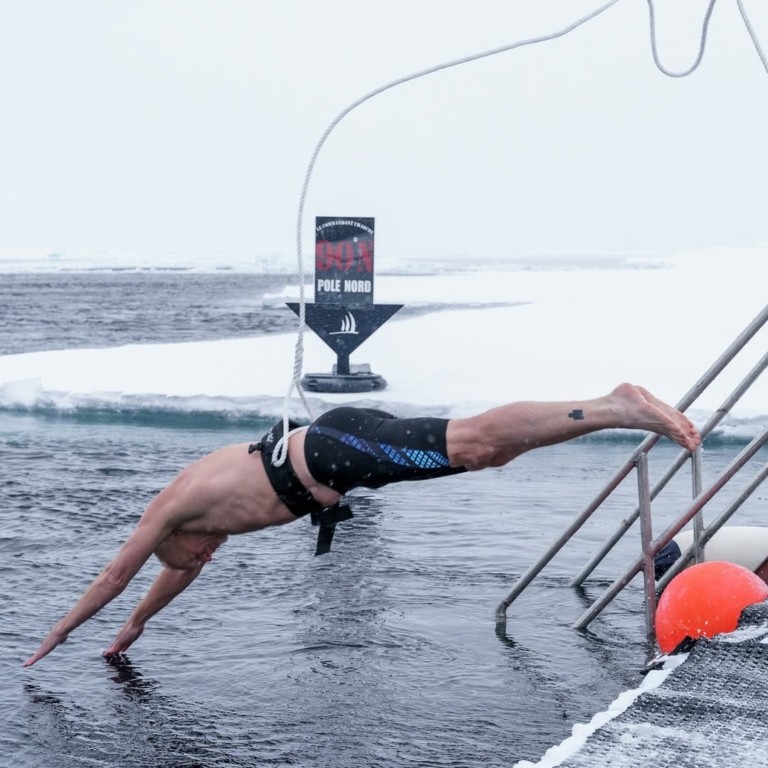
The man who travels to the middle of nowhere
A cold morning on the ice at 80° North, somewhere above Eastern Siberia.
Point Nemo – the most remote place on Earth
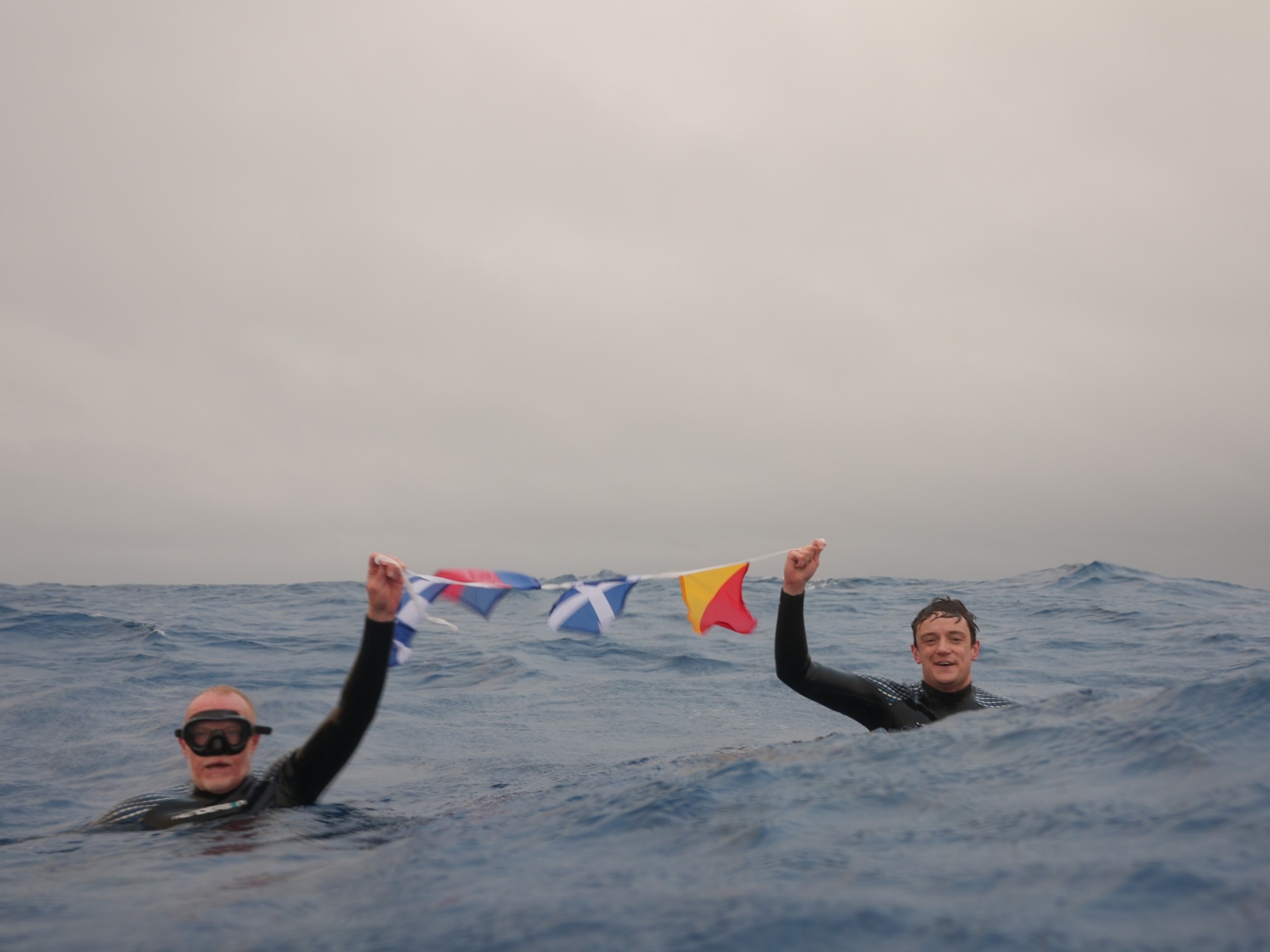
The most famous of the places Brown has visited is Point Nemo in the South Pacific, also known as the “oceanic pole of inaccessibility.” To get there, he spent nearly two weeks crossing rough seas with waves exceeding six meters. When he finally stepped off the inflatable boat and floated in a frozen, empty horizon, he stayed for less than half an hour — took a few photos, confirmed the GPS coordinates to ensure he had reached the exact spot, and then immediately returned to the ship.
Nothingness in its purest form. That is precisely the paradox of these locations: the difficulty of the journey is inversely proportional to the spectacle of the destination. In Antarctica, for example, beyond the geographic South Pole, there is also the so-called pole of inaccessibility — the point farthest from any coastline on the continent. Getting there is no simple matter. On one expedition, Brown and his team were stranded for weeks at a base battered by terrifying polar storms.

The idea of visiting all these places literally “in the middle of nowhere” was born in 2018, when Brown joined an expedition to Everest, the highest point on Earth. There he met climbers pursuing the “Seven Summits” (the highest peaks on each continent) and remembered an earlier experience in Antarctica, when he had learned that there is more than one South Pole.
The spark became a fire
Studying maps and scientific publications, he realized that very few people had attempted to reach all these isolated “anti-destinations.” So he decided to do it himself.
He is neither a professional traveler nor a professional adventurer, but someone who has always sought adventure in life. As a student, he hitchhiked across South America, often ignoring warnings about guerrilla groups. He chose a career in the oil industry, working on North Sea rigs and in geopolitically tense regions. On one mission near the Turkey–Syria border, the platform where he was working came under fire from a Kurdish armed group. Instead of being frightened, he described the incident as thrilling.
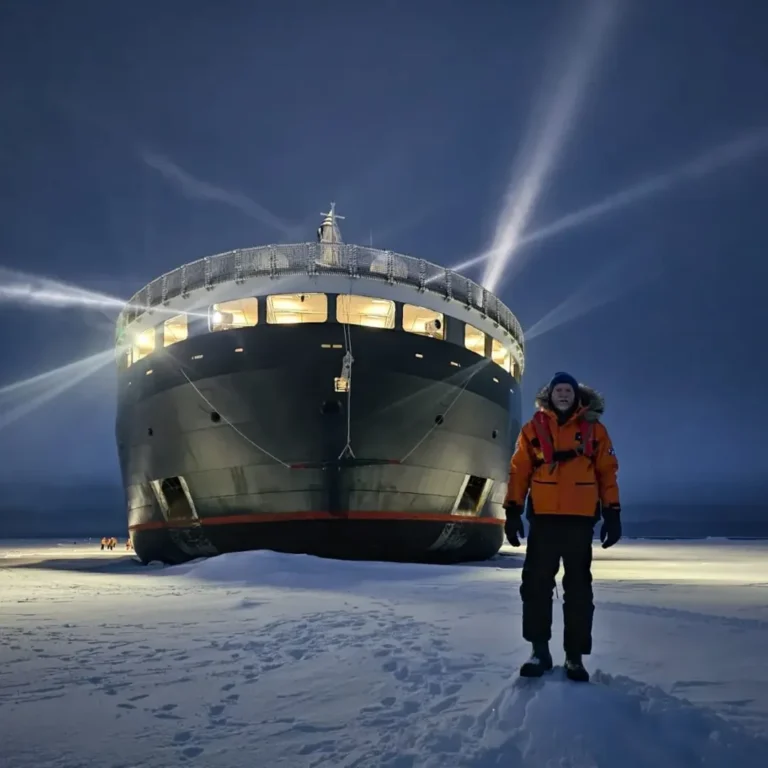
He started with the easier ones. In North America, for example, the continent’s “center” lies in a rural area of the United States — far from coasts, but not from civilization. A flight, a few hours’ drive, and a walk through farmland were enough.
In Australia, reaching the continent’s interior required a 4×4 vehicle and driving across arid landscapes — tiring for most, but for him almost a stroll.
Africa, however, was a different story. According to the coordinates, the continent’s center lies in the jungle of the Central African Republic, a country plagued in recent years by conflict and armed groups. Access to the exact point required a helicopter and an escort of government soldiers. His team remained there for less than half an hour, confirmed the coordinates, and left.
In South America, deep inside Brazil, the challenge was not rebels but the jungle itself — dense vegetation and dangerous insects made the effort exhausting.
Brown approaches each mission with near-scientific meticulousness. He uses specialized mapping software and collaborates with geographers to ensure that the point he reaches is truly the maximum possible distance from sea or land. In a world where satellite maps are accessible to everyone, any mistake can be publicly challenged. For that reason, in some cases he visits more than one possible location to eliminate any doubt.
The final point remaining on his list is the Eurasian “pole,” located in northwestern China, in the Xinjiang region — an area in constant tension due to its large Uyghur Muslim minority.
If everything goes according to plan, within the next two years Brown will have completed a circuit that very few people in the world have attempted. And when he does? He knows few will understand him. But for him, what matters is not the location — it is the trial of the journey.
In an era when everything seems accessible with a click, Brown chooses the most inaccessible places — the ones where there is truly no reason for anyone to go.
Ask me anything
Explore related questions