





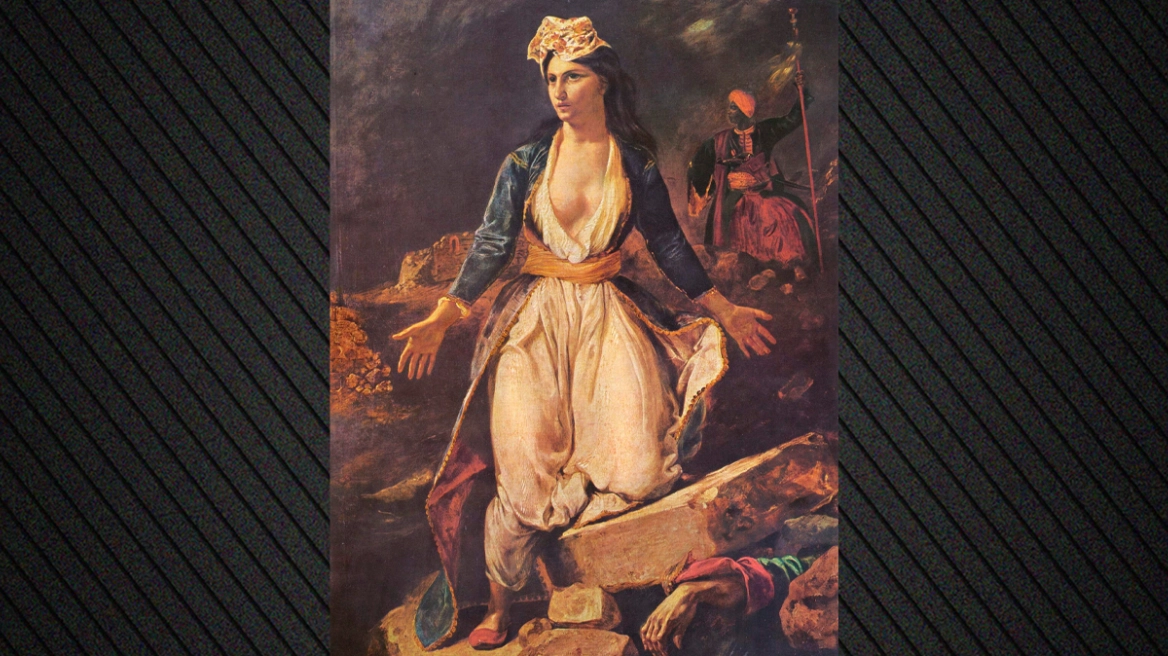
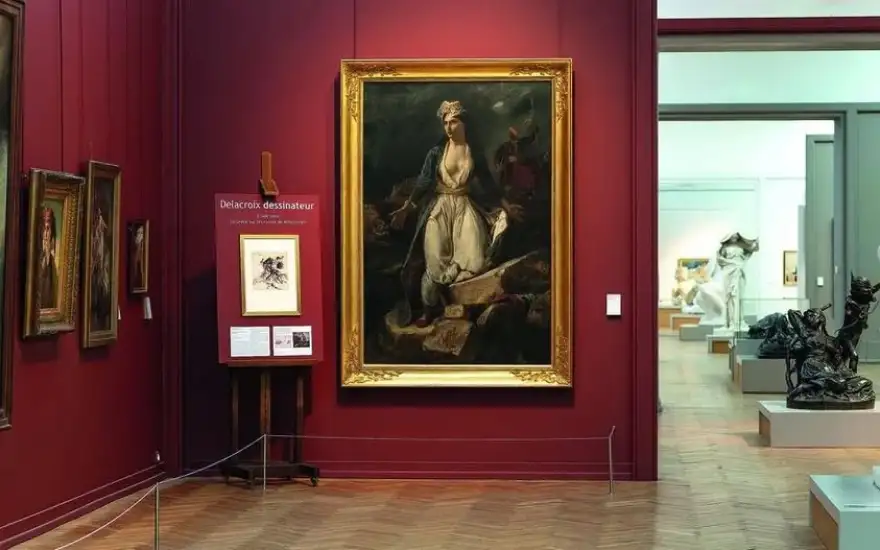
One of the most powerful artistic tributes to the Greek struggle for independence is set to arrive in Greece in 2026. The iconic painting “Greece on the Ruins of Messolonghi” by French Romantic artist Eugène Delacroix will travel from the Museum of Fine Arts of Bordeaux to be exhibited at the Xenokratis Archaeological Museum of Messolonghi. The exhibition will run from March 14 until November 2026 as part of the commemorations marking the 200th anniversary of the Siege and Exodus of Missolonghi.
Painted in 1826, the work is widely regarded as one of the most moving visual representations of the Greek War of Independence. Measuring 208 by 147 centimeters, the painting depicts Greece as a mourning woman dressed in traditional clothing, standing amid the ruins of Messolonghi. Beneath her lie the bodies of fallen Greek fighters, while behind her a figure representing the enemy plants a flag in the ground, symbolizing occupation and devastation.
The dramatic composition reflects the emotional impact that the events of the Greek revolution had on Delacroix and many European intellectuals of the time. The artist wrote in his diary about the brutality of the conflict, describing acts of violence against wounded Greek fighters. These accounts deeply affected him and motivated him to portray the suffering and heroism of the Greek people through his art, contributing to the rise of the philhellenic movement across Europe.
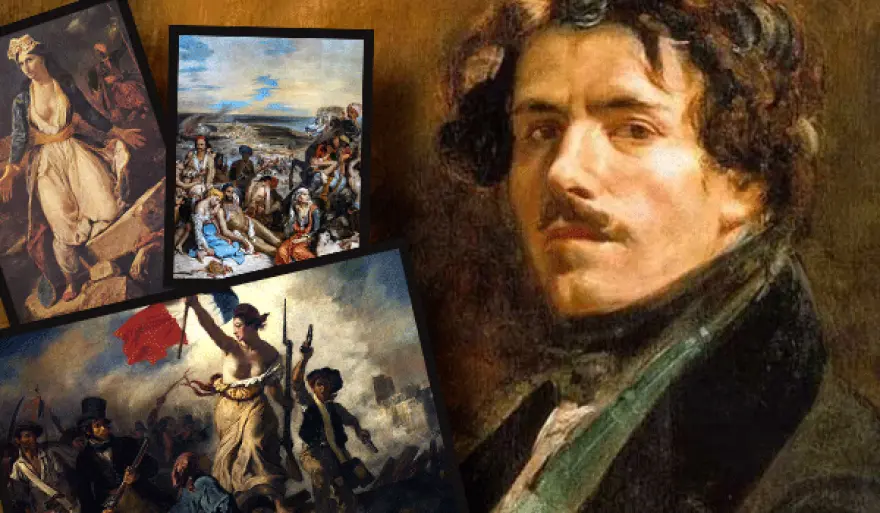
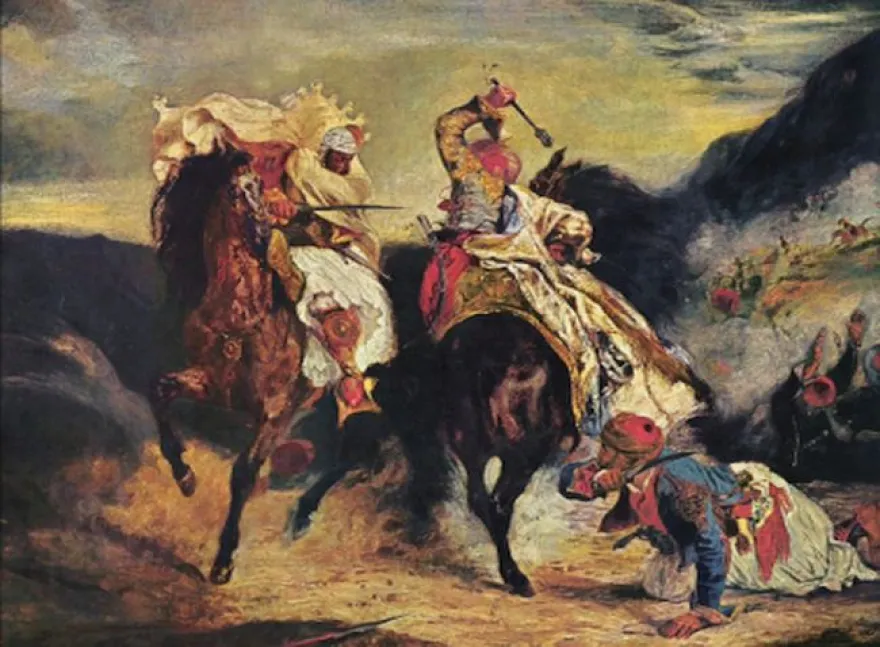
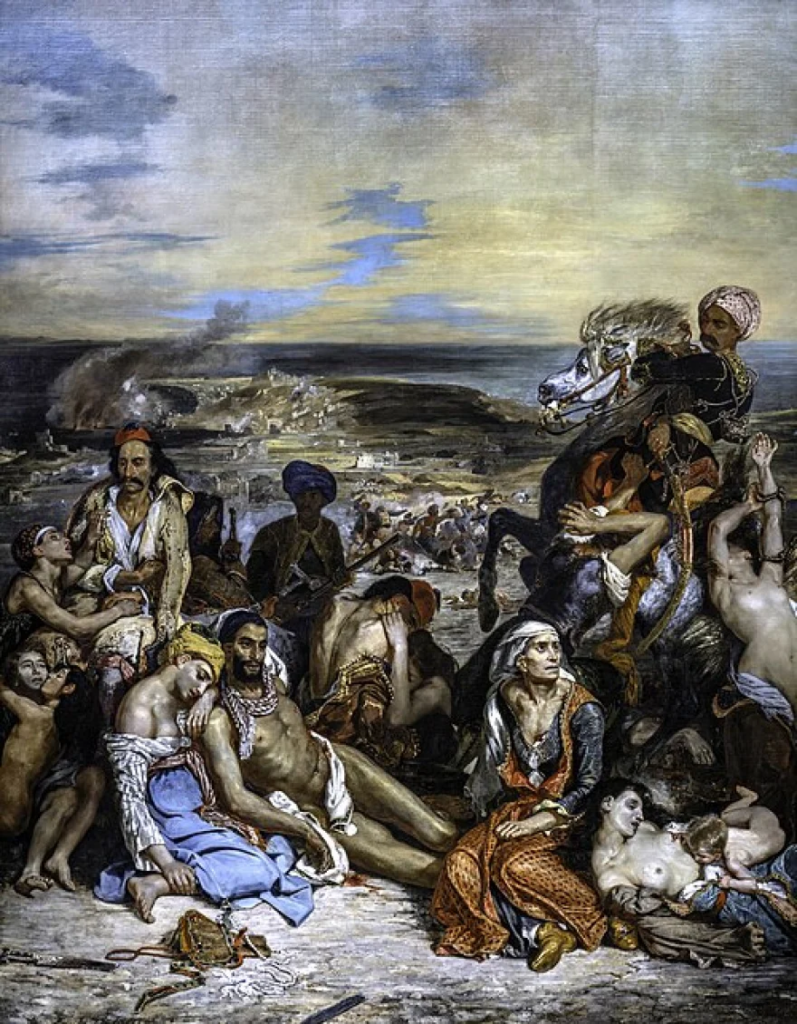
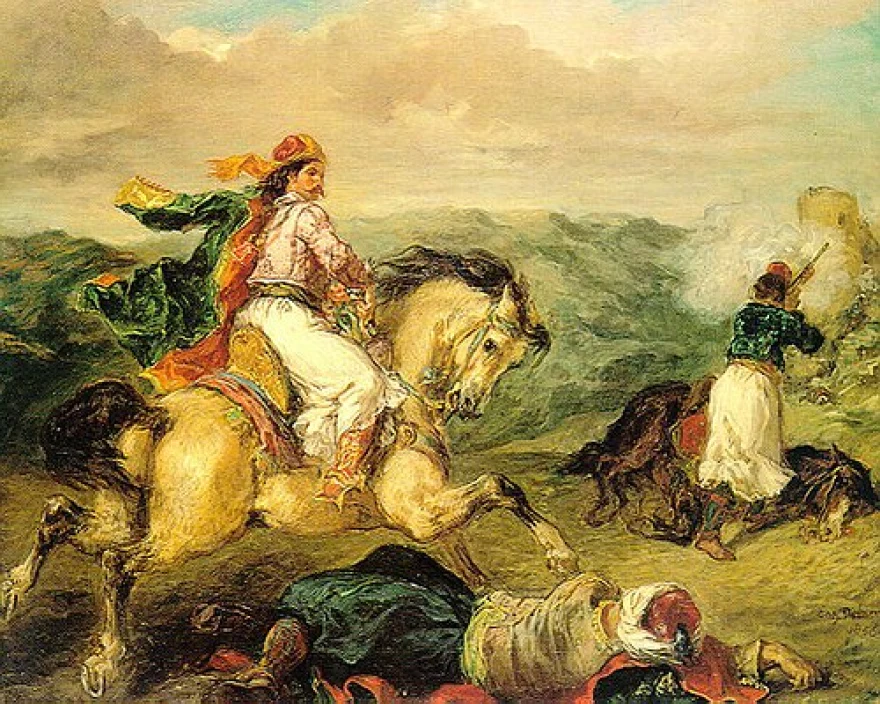
Delacroix created several other works inspired by the Greek struggle for independence. Among the most famous is The Massacre at Chios, painted in 1824 and now exhibited at the Louvre Museum. Another notable piece is The Combat of the Giaour and Hassan, inspired by the poem The Giaour by Lord Byron. These works helped spread awareness of the Greek cause throughout Europe, turning artistic expression into a powerful voice of solidarity with the revolution.
Ask me anything
Explore related questions




