





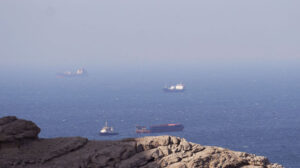
The U.S. military is planning in the coming days to carry out boardings and seizures of ships linked to Iran in international waters, intensifying economic and military pressure on Tehran at a time when tensions around the Strait of Hormuz remain elevated.
Specifically, according to U.S. officials cited by the Wall Street Journal, the U.S. military is preparing to board tankers connected to Iran and to seize commercial vessels outside the Middle East, expanding its naval enforcement operations on a global scale.
The planning comes as Iranian armed forces are increasing their presence in the Strait of Hormuz, having attacked at least two commercial vessels on Saturday and declaring that passage through the waterway is under “strict control” by Tehran.
The U.S. government’s decision to increase economic pressure aims to compel Tehran to ensure free passage through the strategically important strait and to make concessions regarding its nuclear program, which remains a central issue in negotiations between the two countries.
Donald Trump said on Friday that Iran has already agreed to hand over its stockpiles of highly enriched uranium to the United States, a claim rejected by the Iranian side. Discussions are also focused on how long Iran would agree to limit uranium enrichment, as well as the possible release of billions of dollars in frozen funds abroad as part of a potential agreement.
U.S. Central Command stated that 23 vessels that attempted to depart from Iranian ports have already been intercepted as part of a naval blockade. The expansion of the operation would allow the United States to take control of ships linked to Iran in various parts of the world, including tankers carrying Iranian oil outside the Persian Gulf or cargoes of weapons that could bolster the Iranian regime.
The Chairman of the U.S. Joint Chiefs of Staff, General Dan Caine, said that the United States “will pursue every ship flying the Iranian flag or any vessel attempting to provide material support to Iran.” He clarified that the operation also targets so-called “shadow fleet” vessels that bypass international regulations, sanctions, or insurance requirements.
This new phase of the U.S. strategy, which also involves the Indo-Pacific Command, is part of a broader pressure campaign against Tehran known as “Economic Fury.” According to the White House, Trump believes that the combination of a naval blockade and economic measures can help secure an agreement.
The increased pressure comes as the temporary ceasefire between the two sides is set to expire next week. Talks held last weekend in Pakistan did not lead to substantial progress, and no new round of negotiations has yet been scheduled.
At the same time, both sides are taking measures in case hostilities resume, although neither appears to be seeking immediate escalation. Iran maintains thousands of short- and medium-range missiles and is moving launchers from underground facilities. U.S. officials estimate that strikes on the country’s defense industry are hindering the rapid production of new missiles.
U.S. Secretary of Defense Pete Hegseth stated that American forces are on full alert for a possible resumption of military operations should negotiations fail.
Meanwhile, potential strikes on Iran’s energy infrastructure are considered a high-risk option, as they could lead to retaliatory attacks on oil facilities in Saudi Arabia and other Arab countries cooperating with the United States.
As part of the economic pressure, the U.S. Treasury Department announced the expansion of sanctions lists to include ships, companies, and individuals linked to the illegal trade of Iranian oil. Among them are businesses reportedly controlled by Mohammad Hossein Shamkhani, son of Ali Shamkhani, a former security adviser to Ayatollah Ali Khamenei who was killed in an Israeli airstrike in February.
At the same time, U.S. authorities say they are determined to take legal action against those involved in the purchase or sale of oil subject to sanctions.
Ask me anything
Explore related questions




