Thirty years of espionage activity, hundreds of recruited agents—including even generals—targeted assassinations, daring operations in the “heart” of the country of the mullahs, endless hours of surveillance, telephone interceptions, hacking telecommunications antennas and CCTV—these are traffic cameras—analysis of social networks using mathematical methods and target identification with specialized algorithms were used by Mossad to “dismantle” Iran from within.
The Revolutionary Guards general Ismail Qaani, who is said to have been a very important link in the Israelis’ operation, was executed on Friday as a Mossad spy according to Arab media.
He was the one who attended meetings with sworn enemies of Israel, who shortly after his departure were killed by the IDF or Mossad.
He escaped at least four times from specific attacks, and since repeated coincidence ceases to be coincidence, he is said to have paid with his life for being recruited by the Israelis.
His fate was sealed when last Saturday he left the room where Khamenei was meeting with his generals and staff.
The “Invisible” Traitor
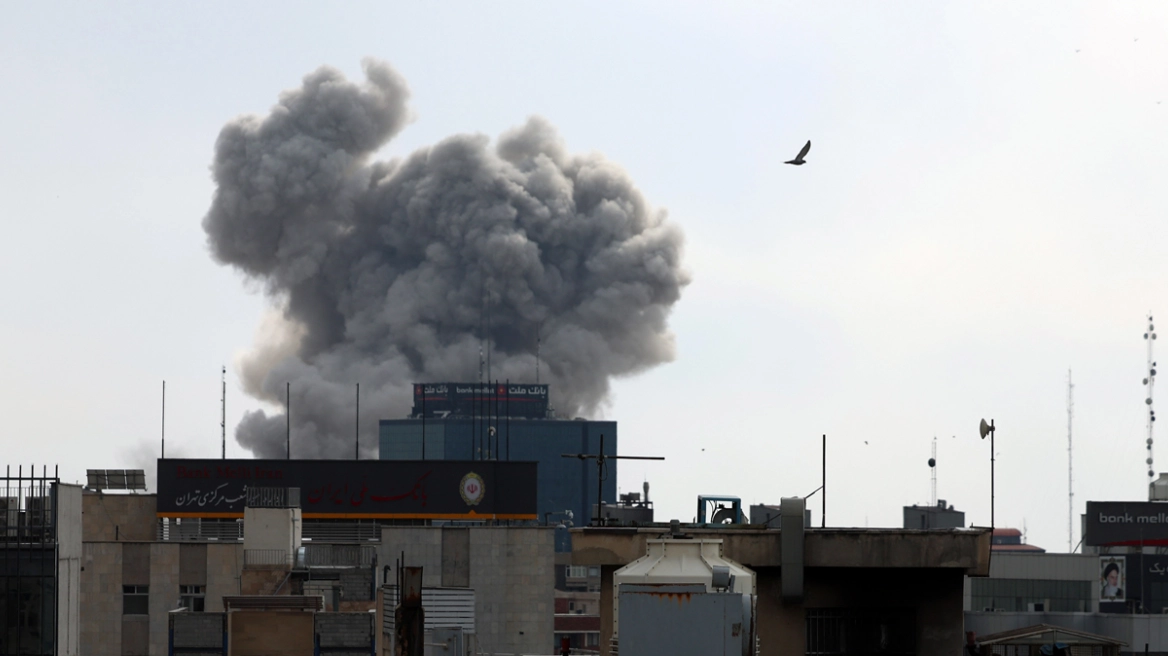
Within the next hour, Israel’s airstrike sent all those present—and members of Khamenei’s family—to the other world, leveling the building complex on Pasteur Avenue.
Shortly after the terrifying strike with more than thirty bunker-buster bombs—on Thursday the IDF revealed the target was struck with Blue Sparrow missiles—the Israeli prime minister reportedly received on his phone a video showing Khamenei’s body.
The footage provided indisputable proof that the leader of Iran was dead. A few hours later the Israelis leaked the news of his death, while only a handful of Iranian officials knew it, which is why state media denied the report.
The big question that now appears to have been answered was who the Iranian military officer or high-ranking official was who had been recruited by Mossad while being so close to Khamenei.
The possibility that the footage had been recorded by an Israeli drone was dismissed, while rumors about the identity of the “invisible” traitor were rampant and focused mainly on one person.
A general of the Revolutionary Guards and commander of the Quds unit, Ismail Qaani, who became a “target” due to luck and repeated coincidences, since in three Israeli attacks he managed to survive.
Unlike his predecessor Qassem Soleimani—who was his very close friend—the 75-year-old general was forged in the flames of the Iran-Iraq war in the 1980s.
He was the technocrat of operations, but his path within the Revolutionary Guards changed dramatically with the death of Soleimani, who was killed in a U.S. drone strike in January 2020.
He had to maintain the cohesion of the “axis of resistance” against Israel without possessing the abilities of his predecessor, and he managed it relatively well.
The Coincidences and the End
On July 31, 2024, Qaani secretly visited the political leader of Hamas, Ismail Haniyeh, at a classified location in central Tehran.
Haniyeh was staying in a building for war veterans in the northern sector of the city, and Qaani sat with him for over an hour before leaving.
When he left, not even two hours passed before the building where Haniyeh was staying was blown up by the Israelis, although suspicion did not fall on the general.
However, only two months later came the second coincidence.
On September 27, 2024, Qaani met with Hezbollah leader Hassan Nasrallah after a lecture on technical expertise to officials of the organization.
After a handshake that may have had significance and a few minutes of conversation, Qaani left—and a few hours later 80 tons of explosives leveled the building in southern Beirut where Nasrallah was.
As became known a few days later, someone among those who shook hands with the deceased had been recruited by Mossad and “painted” Nasrallah’s hand with a colorless substance that turned him into a living transmitter.
In early October, Ismail Qaani returned to Beirut to meet Nasrallah’s successor Hashem Safieddine and after the meeting, what followed was obvious to those who supposedly knew.
Israel leveled the underground headquarters of Hezbollah’s intelligence services, and Qaani’s traces disappeared for days, while during the first 24 hours he was believed to be dead or seriously injured.
The news agency Middle East Eye revealed that as soon as Qaani returned to Tehran he had already come under suspicion and was secretly arrested.
He was placed under house arrest, harshly interrogated, and at some point collapsed and was transferred to the hospital with symptoms of a heart attack.
When he returned “cleared,” he settled accounts with some doubters inside the Revolutionary Guards, and during the 12-day war with Israel he escaped the deadly strikes that wiped out much of Iran’s military leadership—almost miraculously.
But even miracles eventually end, and the coincidence that Qaani survived again after leaving a building just before it was bombed ultimately sealed his fate, according to Arab media, which wrote that he was accused of being a Mossad spy and executed.
“We Knew Exactly Where He Was Sitting”
On Saturday, February 28, it took just sixty seconds and thirty bombs—or Blue Sparrow missiles, as was revealed Thursday—for the Israelis to eliminate Iran’s leader Ali Khamenei, along with top officials, his daughter, his son-in-law and his granddaughter.
And it is the phrase “we knew exactly where he was sitting,” uttered anonymously by a Mossad official to Haaretz, that strongly highlights that Israeli spies brought Iran down from within.
Rarely has another state managed to infiltrate a country so deeply with “cells” of recruited agents, to the point of knowing not only Khamenei’s bodyguards but also their personal vehicles.
However, for this to happen, three decades earlier Mossad had to set up a labyrinthine operation aimed at gradually gaining access not only to Iran’s deep state but even to officials above any suspicion.
“Sixty seconds. That was the time needed for the operation against Khamenei, but it was the result of years of research,” said former Mossad counter-terrorism chief Oded Ailam.
How the Ultimate Strike Was Organized
The elimination of an Iranian president, senior staff members and officials attending an important meeting had been methodically planned by Mossad for the last fifteen years.
It was an operational plan that especially in the last five years included the collection of tens of thousands of pieces of information about the movements of Khamenei, his family and his bodyguards.
With the assistance of the CIA, the daily routine of the Iranian leader came under a microscope after a thorough analysis of all the data the Israelis intercepted every day.
Almost 90% of all traffic cameras in Tehran had been hacked, and the live image from the capital’s streets was transmitted encrypted to servers in Tel Aviv and southern Israel.
Mossad focused on everyone surrounding Khamenei every day, especially his security personnel, who were “caught” by a specific traffic camera focusing on the space where they parked their personal vehicles daily.
Very quickly their faces, along with those of other colleagues guarding generals and brigadiers of the Revolutionary Guards, were given to recruited local agents who had been trained not only in espionage but also in new technologies for surveillance and data collection.
The daily routine of the bodyguards, their days off, the homes they lived in and which official they were assigned to protect all became “property” of the Institute, as Mossad is called.
However, the overall supervision of this surveillance was handled by one of the most secret units of the Israeli army, the famous Unit 8200, which was extensively mentioned by many international media after the execution of Ali Khamenei.
The “Ghosts” That Are the Eyes of Israel
Israel refused to comment officially on whether Unit 8200 participated in the operation to eliminate the Iranian president and his staff, but it did not deny the report published by the Financial Times that was reproduced everywhere.
The secrecy surrounding this unit is so great that its commanders become known only when they leave it, while their successors are referred to only by a letter of their name.
Brigadier “A.” assumed command in November 2024, succeeding Yossi Sariel, who resigned after the attack and massacre carried out by Hamas on October 7, 2023, killing young people and entire families in kibbutzim.
Until the raid, the unit had been collecting for years a huge volume of scattered information daily from agents, phone conversations, camera videos and targeted interceptions from Iran.
It continued doing so in absolute secrecy, and in recent months the data it provided was such that the Israelis, in cooperation with the Americans, even conducted “rehearsals” for the strike.
The Financial Times report also mentioned another achievement of Unit 8200: “social network analysis,” an extensive mathematical processing of billions of data points to discover new targets, centers of power, interpersonal relationships of potential targets, and more.
According to international media there was excellent cooperation between Mossad and the notorious Unit 8200—called “the eyes of Israel”—which has even used artificial intelligence according to Reuters to select targets in Gaza.
The bombing of the building complex in Tehran on Pasteur Street proved that when Israelis want something very much, they will achieve it by deploying incredible espionage and surveillance techniques.
Then comes the strike.
The Fake Sabbath, Implants and Microchips
As days pass, impressive details coming to light confirm Mossad’s deep infiltration inside Iran for decades as well as the deception strategy followed by Israel’s intelligence service so that its targets would suspect nothing.
On Friday before the strike a plan was staged that included the departure of IDF leadership and officers from their base to celebrate the Sabbath.
This is the weekly day of rest that begins at sunset on Friday, when this deceptive Sabbath began.
Mossad ensured that photographs were publicized showing generals, brigadiers and military officials leaving for their homes.
They all returned a few hours later, some even disguised so they would not be recognized, in order to begin the operation.
An operation whose details continue to emerge daily, some of which are not confirmed even anonymously by Mossad officials and resemble conspiracy theories.
According to posts on social media, Israeli agents managed to place tiny tracking devices inside dental implants of high-ranking Iranian officials.
Other users claim that doctors inserted imperceptible microchips into the bodies of generals and government officials during medical examinations.
Something which, according to intelligence officials, would be difficult not to detect after a certain period of time, while again there has been no admission from the Israelis.
The “Legion” of Agents and the Locals
In the revelations that followed the elimination of Khamenei and his senior staff it became known that for years Mossad had built a “legion” of agents inside vast Iran.
The idea is credited to current director David Barnea and concerns a special department which in Iran’s case consists of Afghan refugees.
Five years ago Mossad approached thousands of such people living on the edge of destitution, offering them about $200 per month and asking for two simple things.
To identify the residences of high-ranking military officers and scientists working on Iran’s nuclear program, which the Israelis considered the greatest threat.
The Afghan “legionnaires,” with minimal training, proved an excellent choice, since gradually—besides street, floor and apartment number—they even provided Israelis with the phone numbers of their potential targets.
Mossad also recruited many Iranians, finding thousands of candidates who hated the theocratic regime of the mullahs and proved highly capable informants in daring Mossad operations that further magnified its reputation.
Sharon and the First Sabotage
Although Mossad had been dealing much more intensively with Iran after the fall of the Shah, its operations and activities were relatively limited.
This changed when the mullahs restarted the country’s nuclear program, which had weakened after the victory of Khomeini, who detested it.
In 1995 Israeli spies learned that Iran was running two nuclear programs: one visible concerning the country’s energy, and one secret concerning the construction of nuclear weapons.
But it was Prime Minister Ariel Sharon who in 2001 told Mossad chief Ephraim Halevy in a meeting: “What I need is Iran.”
Since then the Institute had as its strategic focus a continuous sabotage campaign against Tehran’s nuclear vision through sabotage operations, constant disruption of supply chains and, of course, eliminating Iran’s top nuclear scientists.
In 2006 it would prove a difficult year for the Iranians as Mossad set up an operation with front companies and international smuggling networks.
Through them it supplied the mullahs’ nuclear factories with defective components, pipes, insulating materials and valves that at first glance were perfect and functional.
In reality they had been designed to malfunction and break after a few days of operation, causing chaos in Iran’s nuclear program.
Key factories in Natanz and Isfahan suffered damage, and even explosions occurred which the Iranians explained as “technical difficulties”—the program was set back even years in some plants—while at Mossad headquarters a small party was reportedly held.
The continuation was even more impressive…
The Beginning of the Executions
2007 was the year when Mossad’s “hawks” began executing Iranian scientists who were running the country’s nuclear program.
Until now eighteen top names are officially recorded as dead from attacks of various types—from poisoning with radioactive material, booby-trapped vehicles and executions to aerial bombardments—carried out by Israel’s notorious intelligence service.
Lower-level technical directors linked to sensitive nuclear projects died between 2006–2007 in plane crashes involving aircraft belonging to the Revolutionary Guards, which were described as “strange.”
The official cause was mechanical failure, but according to Israeli investigative journalist Ronen Bergman, officials from Western intelligence services wondered whether something else was involved.
No proof ever emerged and the Israelis never commented on these “accidents,” which bore the signature of Mossad: plausible deniability wrapped in perfect timing.
The first truly major scientist’s name on Mossad’s list was the rising star of Iran’s nuclear program, Ardeshir Hosseinpour, who worked at the uranium conversion facilities in Isfahan.
He was found dead in his home; the official cause of death was attributed to a gas leak, and the news caused upheaval in intelligence circles worldwide.
Although Jerusalem remained “silent,” Bergman noted that “rumors immediately circulated that he had been eliminated by Mossad agents.”
The Strike Few Would Dare
Much was said and written about the assassination of top Iranian scientist Mohsen Fakhrizadeh on November 27, 2020, in an execution bearing the stamp of Israeli intelligence services.
The use of a remotely controlled machine gun from thousands of meters away initially shocked the world, and some still claim it today.
However, according to former officials from the CIA, MI6 and Russia’s FSB—as emerged from information and reports—the theory of an automatic remote-controlled weapon and a lone assassin pressing a button from far away does not stand up.
It was very convenient for the Iranians, who did not want to admit that more than fifty Mossad agents who entered Iran were involved in Fakhrizadeh’s assassination.
Mark Polymeropoulos, former head of CIA clandestine operations in Europe and Asia, said at the time:
“A mission of this magnitude requires months or years to plan and execute. It’s not something done by flipping a switch.”
“I believe,” Polymeropoulos concluded then, “that Fakhrizadeh’s execution involved numerous agents on Iranian soil. There was certainly special training and a level of complexity that few intelligence services can achieve.”
The Execution of the Century in the Heart of Iran
In the case of the Iranian scientist, at least twelve agents from Kidon—whose total strength is about 75 people, all with previous service in Sayeret Matkal, Israel’s most elite military unit—took part in his execution, while others had purely supporting roles.
According to what later came to light, they had rehearsed the operation against Fakhrizadeh for more than six months in the Negev desert, where Mossad has built an entire city and roads to train for operations of such difficulty.
As for the famous remote-controlled weapon mentioned by the Iranians, it may have existed—but not to fire at the nuclear scientist; rather to create the necessary confusion and terror among his guards.
The team reportedly included at least two snipers positioned on both sides to provide cover for the others who attacked the two vehicles.
Fakhrizadeh was executed with bullets to the head by the team leader, while the Kidon executioners did not harm his wife.
None of the Israelis were injured and they left after blowing up the now-famous pickup truck mentioned by the Iranians, in what many intelligence officials described as the “execution of the century.”
Mossad’s “Thieves”
Three years earlier, at Mossad headquarters, the then director Yossi Cohen knew that the Iranians had moved thousands of documents, files and electronic archives concerning the construction of nuclear weapons into 32 large safes.
Through a network of recruited agents working in government positions and phone interceptions, the Israelis learned that energy minister Reza Ardakanian and nuclear program chief Mohsen Fakhrizadeh had chosen a warehouse in Tehran’s industrial zone to hide the documents.
A female agent who spoke perfect Farsi arrived in the Iranian capital and the next day began a reconnaissance mission with a male escort in the Shorabad area where the warehouse was located.
What she discovered was that at night—and for several hours—the building was unguarded, because the Iranians did not want to attract attention, something that proved an ideal factor for the operation being planned.
After intensive rehearsals—the Israelis built a replica of the warehouse, found identical safes and arranged them in the same layout—the operation took place on January 31, 2018.
Twenty-four agents participated, and one minute after midnight they blocked the alarm with a special device and broke through the warehouse’s steel doors.
Due to limited time they opened six of the thirty-two safes, which contained the most important documents and files.
Within six and a half hours the agents found 50,000 documents and 55,000 pages stored on 183 CD-ROMs, which they loaded into a truck and departed.
When the morning shift found the warehouse open, an alarm was raised, but the Israelis had already left with their valuable loot, which via Azerbaijan ended up in Israel.
Cohen ensured that after the truck departed, identical vehicles circulated in the streets of Tehran heading in different directions toward various parts of the country.
The incredible part is that during the operation a large volume of information was electronically transmitted to Mossad headquarters in case something went wrong.
The theft of a country’s nuclear archive immediately undermined the mullahs’ claims that their program was only to strengthen the country’s energy sector and not to build nuclear weapons.
As later became known, the main reason Mossad wanted the pages and documents in physical form was in case Iran announced that the thieves had taken fake documents.
Something that never happened.
Ask me anything
Explore related questions