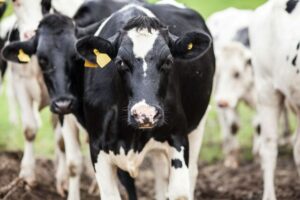
The General Directorate of Veterinary Services of the Ministry of Rural Development and Food announced that the Athens Veterinary Center confirmed a case of foot-and-mouth disease detected in a cattle farm on Lesbos on Sunday, March 15, 2026.
At a meeting held today at the Ministry, under Minister Kostas Tsiaras, in the presence of Deputy Minister Christos Kellas, Secretary General Spyros Protopsaltis, and officials of the General Directorate of Veterinary Services, it was decided to immediately implement the emergency plan provided for the management of the disease, in accordance with European and national legislation.
The entire island of Lesbos has been placed within a restricted zone, where all measures предусмотрены under EU Regulation 2020/687 are being enforced.
Specifically, the following measures have been implemented:
- The movement of live animals of susceptible species (cattle, pigs, sheep, goats) is prohibited, as well as the transport of their products, by-products, and animal feed outside the island. This also includes the transport of food of animal origin by citizens in their personal luggage off the island.
- Any movement of live animals of susceptible species within the island is prohibited.
- Slaughtering of susceptible species within the island is prohibited.
- At the infected farm, all animals of susceptible species will be culled and all products will be destroyed.
According to the announcement, “foot-and-mouth disease (FMD) is an extremely contagious viral disease affecting cloven-hoofed animals (cattle, sheep, goats, pigs, as well as certain wild species). It is characterized by high transmissibility and rapid spread through direct contact, indirect contact with contaminated objects, vehicles, footwear, equipment, or through human activity. It can also spread through the air, significantly increasing the risk of infecting nearby farms. Wild animals and rodents can carry the virus from infected farms to healthy ones.”
Foot-and-mouth disease is classified as a Category A disease under EU Regulations 2016/429 and 2018/1882, meaning diseases that are not endemic in the European Union and require the immediate implementation of strict control and eradication measures upon first detection.
For the control and containment of the disease, the strict application of biosecurity measures and restrictions on the movement of animals, people, products, and materials is considered absolutely necessary.
Foot-and-mouth disease is not transmitted to humans and does not pose a threat to public health.
However, it is considered one of the most dangerous diseases affecting livestock worldwide.
The last time it appeared in Greece was in 2000–2001.
The General Directorate of Veterinary Services emphasized that it remains in continuous communication with the competent local veterinary and other authorities and will promptly issue detailed supplementary instructions for managing and addressing the disease.
Tomorrow, a delegation from the Ministry will travel to Lesbos, led by Deputy Minister Christos Kellas, to coordinate—together with the regional and veterinary authorities—the immediate implementation of the prescribed measures.
On Friday, the Secretary General of Rural Development and Food, Spyros Protopsaltis, will also visit the island to monitor the implementation of the plan and coordinate the operational response of the involved bodies, aiming to contain the spread of the disease.
Ask me anything
Explore related questions