

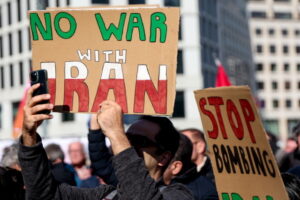
The war triggered by the joint strikes of Israel and the United States against Iran, which has spread across the Middle East, has already cost Arab countries $186 billion, a senior UN official announced today, calling for an end to the hostilities.
“We hope the fighting will stop tomorrow, because every day of delay has negative consequences for the global economy,” said UN Deputy Secretary-General Abdallah Al Dardari, speaking to journalists from Amman.
“We estimate that the loss to the Arab region’s GDP after one month of hostilities will amount to around 6%,” he added—equivalent to “about $186 billion” less for the economy.
The wealthy oil-producing Gulf countries, which have been targeted by Iranian strikes in retaliation for the US-Israeli attack, are bearing the heaviest burden, Al Dardari stressed.
Moreover, “we estimate that the number of jobs that will be lost as a result of this conflict is around 3.7 million,” he added.
Regarding the impact of the war on poverty, “we expect that an additional approximately 4 million people in the region will fall—or have already fallen—below the poverty line this month.”
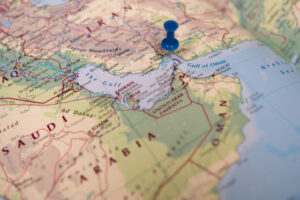
Highlighting the economic dependence of Gulf countries on oil, the UN official underlined the need to find alternative routes to the Strait of Hormuz, through which, under normal conditions, about one-fifth of the world’s oil and liquefied natural gas passes.
“The Arab economy is essentially based on a single product,” he stressed. “Countries that do not export oil depend on remittances from expatriates living in oil-exporting countries and on aid from those countries, while the oil-exporting countries themselves rely on just one product,” he explained.
“This fragility of the Arab economy is being exposed by recent events, which show that it is not sustainable,” he concluded.
Ask me anything
Explore related questions