





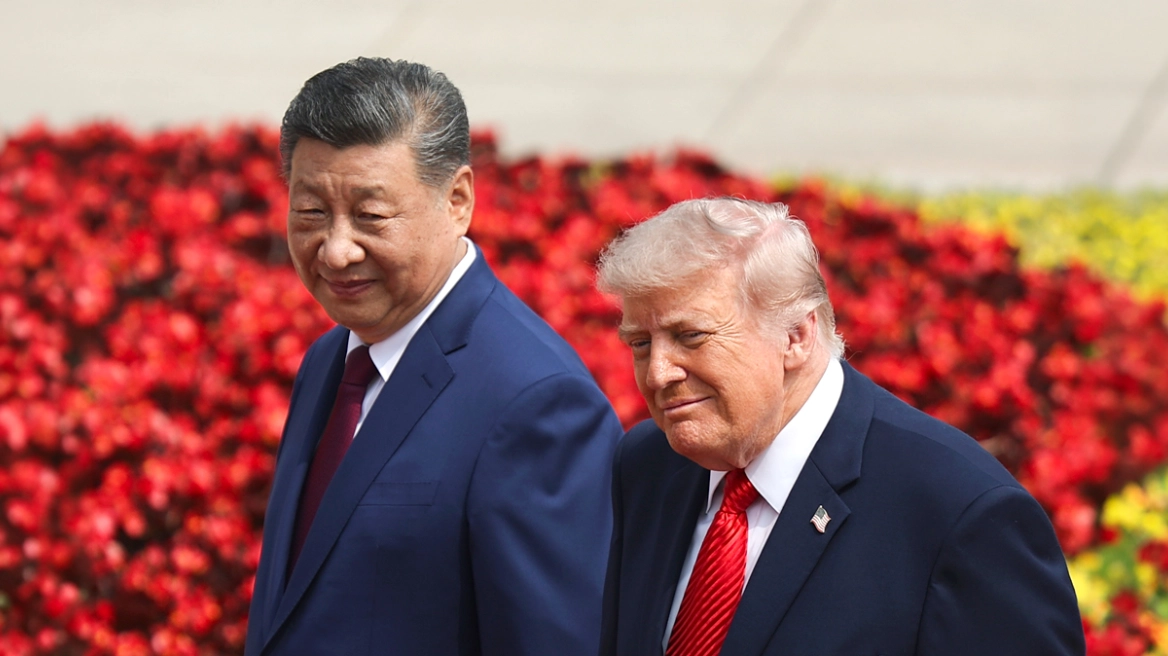
With a historical and geopolitical reference carrying strong symbolism, Chinese President Xi Jinping once again brought the so-called “Thucydides Trap” into the spotlight during today’s meeting with U.S. President Donald Trump in Beijing. Xi’s remarks, made during a period of intense rivalry between the world’s two largest economies, revived the debate over whether China’s rise could lead to inevitable conflict with the United States.
“Can China and the United States overcome the Thucydides Trap and create a new model of relations between major powers?” Xi Jinping asked before the start of talks with Trump, while also raising the question of whether the two countries can jointly confront global challenges and provide greater stability to the world.
The reference was far from accidental. In recent years, the “Thucydides Trap” has become one of the most widely discussed terms in international politics and is primarily used to describe the increasingly competitive relationship between Washington and Beijing.
The term was popularized by American political scientist Graham T. Allison, a professor at Harvard University, who sought to explain the dynamic that develops when a rising power threatens to displace a dominant superpower. The theory is based on a famous quote by the ancient Greek historian Thucydides from History of the Peloponnesian War: “It was the rise of Athens and the fear that this instilled in Sparta that made war inevitable.”
Allison used the Athens–Sparta conflict as a historical example to argue that when a new power grows rapidly and challenges the supremacy of an already dominant one, the chances of war increase dramatically. In his 2017 book Destined for War, he argued that the United States and China are on a path toward dangerous confrontation, although he did not consider conflict inevitable.
According to a study conducted at Harvard’s Belfer Center under Allison’s guidance, in 12 out of 16 historical cases where a rising power challenged a dominant one, the result was war. Nevertheless, the theory has faced strong criticism from many analysts and historians, who argue that modern international relations cannot be interpreted solely through historical analogies.
Regardless of the validity of Allison’s theory, Xi Jinping’s use of the term during today’s critical meeting — one being watched by the entire world — sends a clear political message: that China wants to present confrontation with the United States not as an unavoidable path, but as a historical test that can be avoided through diplomacy and mutual understanding.
“Cooperation benefits both sides, while conflict harms both. We should be partners, not rivals; each country should help the other succeed and prosper together, thereby charting a new course of understanding between major powers in this new era,” the Chinese president stressed shortly after the arrival of his American counterpart.
Ask me anything
Explore related questions




