





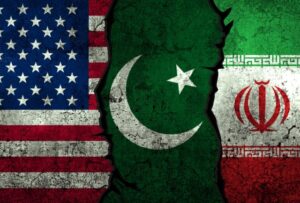
Pakistan’s Foreign Minister Ishaq Dar arrived in Washington on Friday for talks with his U.S. counterpart Marco Rubio, as Islamabad intensifies diplomatic efforts aimed at securing a lasting agreement to help end the ongoing conflict involving the United States, Israel, and Iran.
Pakistan’s Foreign Office said Dar will meet Rubio to “review bilateral relations and exchange views on regional and international developments of mutual interest, as well as U.S.–Iran negotiations.”
The U.S. State Department confirmed that Rubio will host the Pakistani foreign minister at its headquarters.
According to a Wall Street Journal report, Washington and Tehran have continued discussions despite recent U.S. strikes in southern Iran’s Hormozgan province, suggesting that both sides remain engaged in de-escalation efforts and that communication channels are still open.
“We are close to an agreement”
U.S. Vice President J.D. Vance said that while no final agreement has been reached with Iran, the two sides are nearing an understanding. He noted that it is uncertain whether President Donald Trump will ultimately approve a framework deal with Tehran.
Vance added that the United States is capable of significantly delaying Iran’s nuclear program. He said the main sticking points involve Iran’s stockpiles of highly enriched uranium and its uranium enrichment activities.
“There are two main issues: the highly enriched uranium stockpiles and the enrichment issue,” he said, adding that negotiators are currently working on broad principles for a preliminary framework, while detailed provisions would be addressed later.
“We are in a position to delay their nuclear program not only during this presidential term but also in the long term. And that’s a positive for the American people,” he added.
Washington’s “red lines”
U.S. President Donald Trump told Fox News that he prefers reaching a deal with Iran, but reiterated that “all options remain on the table.”
Treasury Secretary Scott Bessent also emphasized that Washington will not compromise on its core demands, including preventing Iran from obtaining nuclear weapons and ensuring freedom of navigation in the Strait of Hormuz. “President Trump will not accept a bad deal,” he said.
Tehran’s response
From Iran’s side, Deputy Foreign Minister Kazem Garibabadi stated that Tehran will reject any demands that do not align with its national interests.
He added that Iranian leadership places greater weight on official communications from the United States than on public statements by American officials.
Draft proposal to extend ceasefire
According to four sources familiar with the negotiations, the emerging framework agreement includes a proposal to extend the ceasefire for another 60 days and restore safe navigation in the Strait of Hormuz.
During this period, both sides would continue negotiations on the most sensitive issues, particularly Iran’s nuclear program.
If approved by the political leadership in Washington and Tehran, the deal would mark the most significant step toward de-escalation since the start of the conflict on February 28.
Ask me anything
Explore related questions




