





The United States and Iran have announced an agreement to end the war in the Middle East following intensive negotiations mediated by Pakistan. The agreement provides for a ceasefire across all fronts, including Lebanon, the reopening of the Strait of Hormuz, and the start of negotiations within 60 days for a permanent settlement. At the same time, Donald Trump warned Tehran that Washington could resume military pressure if no satisfactory agreement is reached regarding Iran’s nuclear program.
Pakistani Prime Minister Shehbaz Sharif announced that the United States and Iran had reached a “peace agreement” that would end military operations on “all fronts,” including Lebanon.
According to Sharif, the agreement is expected to be formally signed on Friday, June 19, in Geneva, Switzerland, after a series of meetings this week aimed at preparing its implementation.
“Now that the agreement has been reached, mediators will facilitate a series of meetings this week. These preliminary discussions will lay the groundwork for technical talks and then the official signing ceremony,” Sharif wrote on X.
Describing the negotiations that led to the agreement, Iranian Deputy Foreign Minister Kazem Gharibabadi said Qatari mediators conducted “almost 14 to 15 hours of lengthy discussions.”
“This negotiation process lasted a long time,” Gharibabadi told Iranian state media. “A Qatari delegation was in Tehran yesterday to finalize discussions on the text of the Islamabad memorandum of understanding between Iran and the United States. We held nearly 14 to 15 hours of talks during which we presented Iran’s final amendments to the text. These amendments were accepted, and the memorandum was finalized.”
However, the agreement was announced shortly after midnight Sunday Iran time because, according to a U.S. official, Tehran did not want the announcement to coincide with Trump’s birthday.
CNN reported that Sharif’s announcement was made just after midnight local time in Iran, making it Monday there while it was still Sunday in the United States.
Trump Confirms the Deal and Announces Reopening of the Strait of Hormuz
Shortly after Sharif’s announcement, Donald Trump confirmed on Truth Social that the agreement with Iran had been finalized.
“The agreement with the Islamic Republic of Iran is now complete,” the U.S. president wrote.
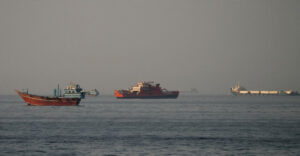
Trump also announced the full reopening of the Strait of Hormuz and the immediate lifting of the U.S. naval blockade of Iranian ports.
“I approve the full reopening of the Strait of Hormuz without transit fees and the immediate lifting of the American naval blockade. Ships from all over the world, start your engines. Let the oil flow!” he wrote.
Later, however, Trump clarified that the Strait would reopen only after the agreement is signed on Friday, allowing time for mine-clearing operations.
“With the Strait reopening once the agreement is signed on Friday, giving time for mines to be removed, oil will flow again on both sides for the region and the entire world,” he wrote in a follow-up post.
According to a U.S. official cited by CNN, the U.S. military has been instructed to lift the blockade of the Strait of Hormuz on Friday, although circumstances could still change before then.
Vance and Possible Trump Attendance in Geneva
U.S. Vice President JD Vance told Fox News that he plans to attend the signing ceremony in Switzerland.
“I intend to be there, although it is possible that the president himself will attend,” Vance said, leaving open the possibility of Trump traveling to Geneva.
The official signing ceremony is scheduled for Friday, June 19.
Iran Says the War Ends Immediately
Iranian Deputy Foreign Minister Gharibabadi stated on state television that the agreement “immediately ends the war.”
According to him, the deal provides for “the immediate end of the war and military operations on various fronts, including Lebanon.”
He explained that the protocol opens the way for negotiations over the next 60 days aimed at reaching a comprehensive final agreement.
“Negotiations will begin within 60 days with the goal of concluding a permanent agreement,” he said, while adding that Iran still harbors distrust toward the United States.
Tehran’s Four Main Priorities
Gharibabadi outlined four key issues for the upcoming negotiations:
- The lifting of all sanctions imposed on Iran, including both primary and secondary sanctions.
- Iran’s nuclear energy program.
- Reconstruction and economic development.
- The creation of a monitoring mechanism to ensure both sides fulfill their commitments.
The 14-Point Memorandum and Frozen Assets
Iran’s MEHR news agency published what it described as a 14-point memorandum of understanding between Iran and the United States.
According to the agency, one clause provides for the immediate release of $12 billion in Iranian assets frozen abroad.
The document also reportedly foresees the release of a total of $24 billion in frozen funds during the 60-day negotiation period following the signing.
MEHR reported that half of this amount would become available before negotiations begin. However, this claim has not been officially confirmed.
Main Points of the Agreement According to Iran
- Immediate and permanent ceasefire on all fronts, including Lebanon.
- U.S. commitment not to interfere in Iran’s internal affairs.
- End of the naval blockade and reopening of the Strait of Hormuz within 30 days.
- Withdrawal of U.S. military forces from areas surrounding Iran.
- Suspension of oil-related sanctions and restoration of Iran’s access to its revenues.
- Reconstruction plans and funding worth $300 billion from the U.S. and its allies.
- Sixty days of negotiations toward a final agreement focused on Iran’s nuclear program and broader sanctions relief.
- Iran’s reaffirmation that it will not develop nuclear weapons under the Nuclear Non-Proliferation Treaty (NPT).
- No new U.S. troop deployments or sanctions during negotiations.
- Release of $24 billion in frozen Iranian assets during the negotiation period.
- Creation of a monitoring mechanism and eventual approval of the final agreement by the UN Security Council.
- Iran’s missile program and support for regional allied groups excluded from the talks.
A U.S. official rejected Iran’s claim that billions of dollars in frozen assets would be released before negotiations begin.
“That is simply not true. This is a performance-based agreement, and no frozen funds will be released unless Iran fulfills its commitments,” the official told CNN.
Trump’s Criticism of Netanyahu
In the political backdrop of the agreement, Trump criticized Israeli Prime Minister Benjamin Netanyahu, arguing that Israel should recognize Washington’s role in securing the deal.
In a phone interview with The New York Times, Trump said the agreement also serves Israel’s interests and claimed his administration had prevented a far more dangerous regional escalation.
“He’s a very difficult person. And frankly, he should be very grateful for what we did. Because if Iran had a nuclear weapon, Israel wouldn’t last two hours,” Trump said.
According to the report, Trump had become increasingly frustrated in recent weeks with Netanyahu’s stance, believing Israeli military operations in Lebanon repeatedly endangered negotiations between Washington and Tehran.
Trump also praised Chinese President Xi Jinping and Russian President Vladimir Putin for their contributions to advancing the agreement.
Warning to Tehran Over Nuclear Issues
Despite the agreement, Trump made clear that Iran’s nuclear program remains unresolved.
He said that if Tehran fails to reach an agreement acceptable to Washington in the coming weeks, the United States may consider renewed pressure measures.
According to Trump, options still on the table include renewed military action or a broader U.S. security role in the region.
He even suggested that the U.S. could become “the guarantor of the Middle East” in exchange for 20% of the region’s revenues if negotiations over Iran’s nuclear program fail.
Oil Prices Fall
The announcement had an immediate impact on global energy markets.
Oil prices fell by about 4% when trading opened in Asia.
At around 02:30 Greek time:
- Brent crude fell 4% to $83.84 per barrel.
- U.S. WTI crude dropped 4.51% to $81.05 per barrel.
Immediately after trading opened, declines had reached as much as 5%.
International Reactions
UN Secretary-General António Guterres welcomed the agreement, calling it a “critical step” toward restoring peace in the Middle East.
“This is a critical step toward the peaceful resolution of the conflict,” he said through his spokesperson.
Leaders of the G7 are expected to discuss the implications of the agreement, particularly the long-term reopening of the Strait of Hormuz.
French President Emmanuel Macron said discussions would focus on supporting Lebanon, maintaining open shipping routes through the Strait, and pursuing a broader agreement covering Iran’s nuclear and ballistic missile programs.
The governments of Britain, France, Germany and Italy (the E4 group) also welcomed the agreement, reiterating that Iran must never acquire nuclear weapons and expressing readiness to cooperate with the United States, Iran and the International Atomic Energy Agency.
They also signaled willingness to consider lifting sanctions in exchange for clear and verifiable Iranian steps regarding its nuclear program.
Ask me anything
Explore related questions




