





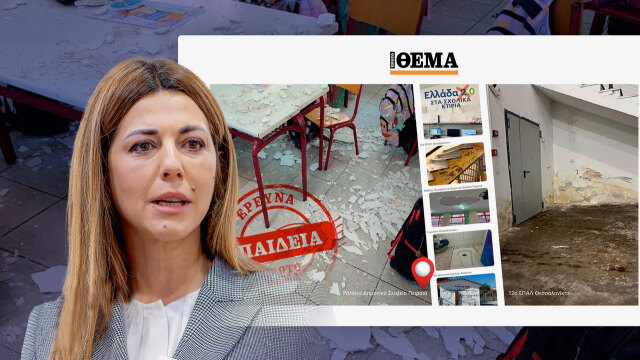
Severe incidents involving heavy building materials falling inside classrooms, outdated and dangerous electrical systems, and even pupils sharing school premises with rodents are being documented in dozens of parliamentary questions submitted by MPs from almost every political party and every electoral constituency across Greece.
In the first 20 days of November alone, 11 questions were submitted, seeking explanations from the relevant ministries over incidents involving falling plaster and concrete, water leaks, rodent infestations and other problems at 45 schools across the country.
Almost all the questions submitted in November, as well as those filed over at least the previous three months, have specific recipients. First and foremost is the Ministry of Education and its minister, Sofia Zacharaki, who, unlike the other ministers with shared responsibility for the issue, has not answered a single question, remaining silent behind the institutional framework that assigns responsibility to municipalities.
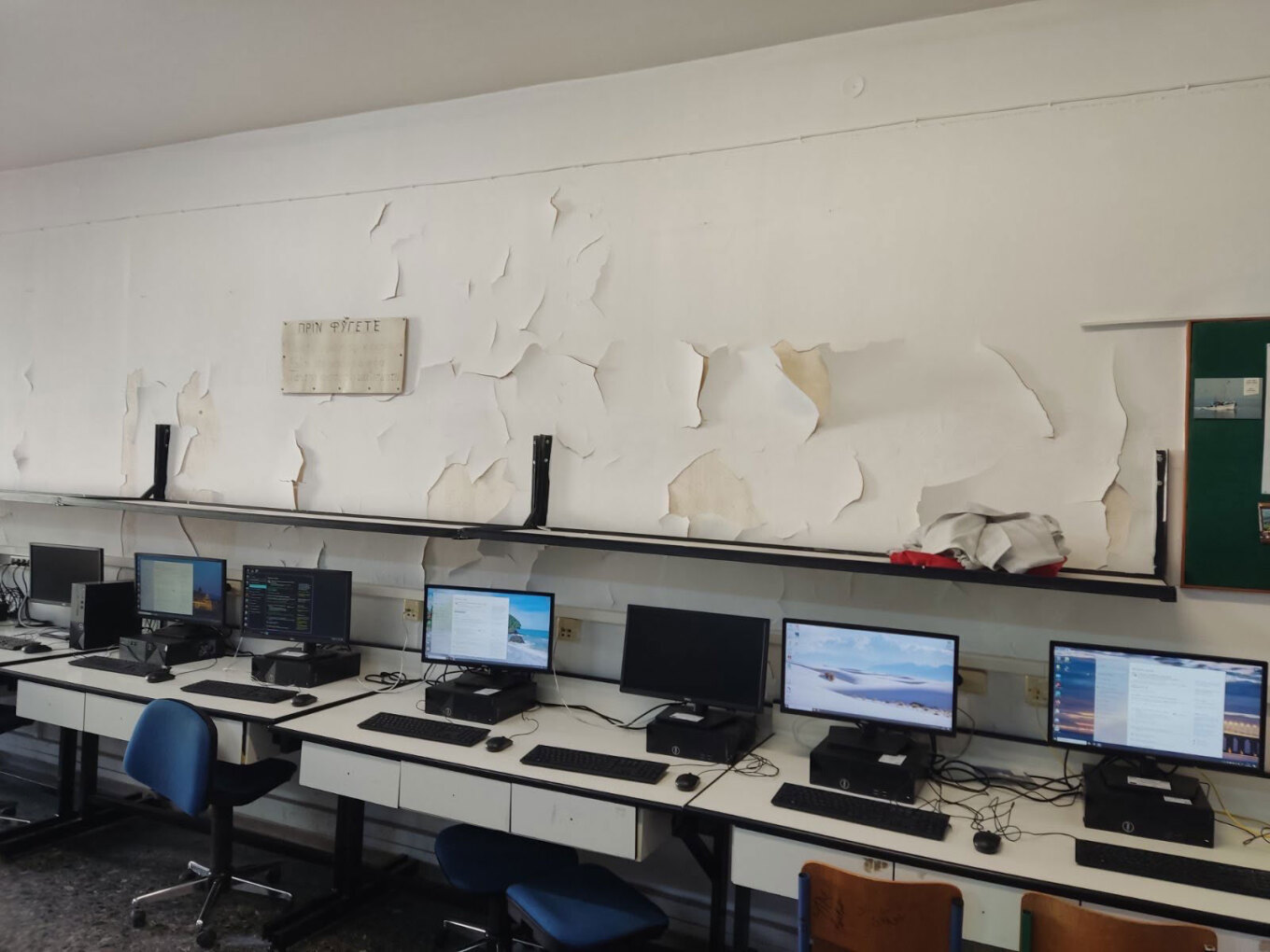
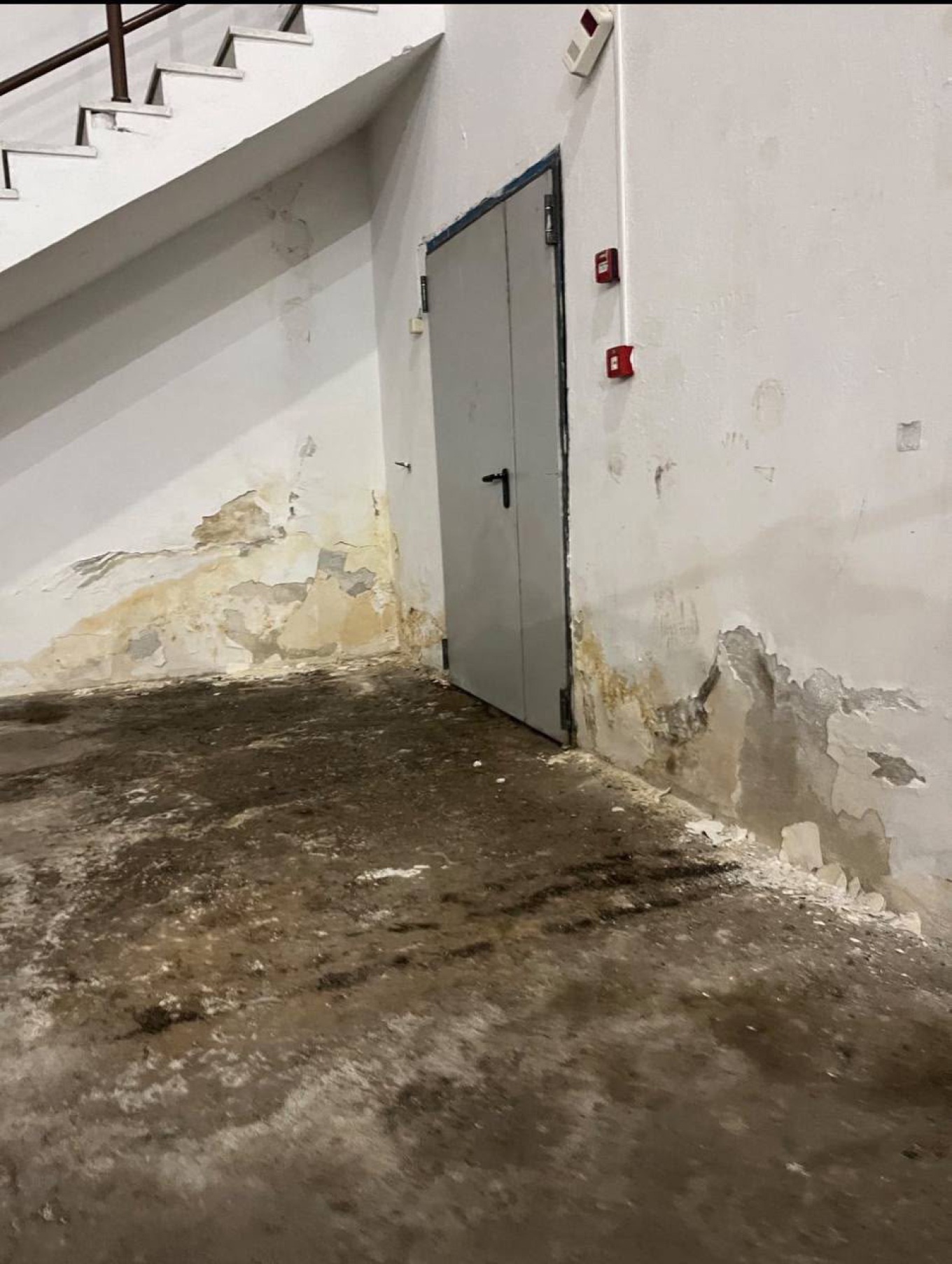
It was also striking that Zacharaki chose not to react in any way to Proto Thema’s investigation, which exposed the shameful state of school buildings – in contrast to the government spokesman, who acknowledged the problem.
The parliamentary questions reaching the House of Representatives describe the same grim picture highlighted by Proto Thema’s reporting. MPs also cite accidents at schools across the country, some of which have resulted in injuries to pupils. They refer to complaints from parents and local media reports documenting specific incidents. Their frequency and geographical spread show that the problem with school infrastructure is neither isolated nor confined to a handful of municipalities. On the contrary, the problem of ageing, poorly maintained and dangerous school facilities appears to extend from Crete to Evros.
Government spokesman Pavlos Marinakis acknowledged that there was a problem with the condition of school infrastructure during Monday afternoon’s briefing of political correspondents. He said government interventions needed to be accelerated to make up for decades of lost ground.
In particular, Marinakis said:
“We do not try to paint an overly rosy picture of the situation. There is clearly an issue that we need to take increasingly seriously. That is why the Ministry of Education launched an initiative in 2024-2025, through the Marietta Giannakou programme, with the participation of banks, to upgrade as many schools as possible. So far, 669 have been upgraded through the programme, and the aim is to raise that number to 2,000 by the summer of 2028. The publication of a list of 500 school buildings for assessment and renovation is also expected in the coming period.
“New schools are being built. Yes, this is an important issue. There is no need to pretend that everything is fine. Our schools had been in the same, or an even worse, condition for decades. In other words, not even a single screw had been put into schools for many years, unfortunately even before the difficult years of the bailout programmes.
“During the first four-year term, the priority was to keep the country on its feet and ensure the National Health System could withstand the pressure. Certain reforms were prioritised. Since the beginning of the second term, upgrading schools and university halls of residence has been at the centre of our efforts, with excellent work also being carried out by the National Youth Foundation (INEDIVIM).
“So yes, there is a problem. We need to move faster; all these measures need to progress more quickly. It is not that we are unaware of the situation, and that is why we are doing everything we can, following years of inaction by many previous governments.”
Beyond Zacharaki, the Ministry of the Interior is also a recipient of the relevant parliamentary scrutiny and appears to be more consistent in fulfilling its duties. Interior Minister Theodoros Livanios points out that, under the law, municipalities are responsible for school buildings. He also provides a detailed account of the funding allocated by central government to local authorities for the upgrading and maintenance of schools.
The Ministry of Infrastructure is also among those addressed. It, in turn, refers the matter to Building Infrastructure SA (KTYPI). The state-owned company explains that it has completed all the contracts assigned to it, including those under the Marietta Giannakou programme. However, it stresses that it is not solely responsible for maintaining all schools.
Finally, the Ministry of Climate Crisis and Civil Protection has also provided answers to relevant questions, relating to the progress of pre-earthquake safety inspections.
The main points of the 11 parliamentary questions submitted in the first 20 days of November, concerning at least 45 schools across Greece, are as follows:
19 November 2026
Communist Party of Greece (KKE) MPs bring to Parliament reports of appalling conditions at the Special Kindergarten and Primary School of Acharnes, where rodents are roaming the corridors.
19 November 2026
Independent MP Socrates Famellos submits a question outlining the serious problems facing schools in his electoral constituency. Among other incidents, he cites:
- At Vasilika Junior High School, plaster fell from a classroom ceiling, injuring a pupil.
- At the 6th Kindergarten of Kalamaria, damage to the ceiling led to the school being closed and pupils temporarily relocated.
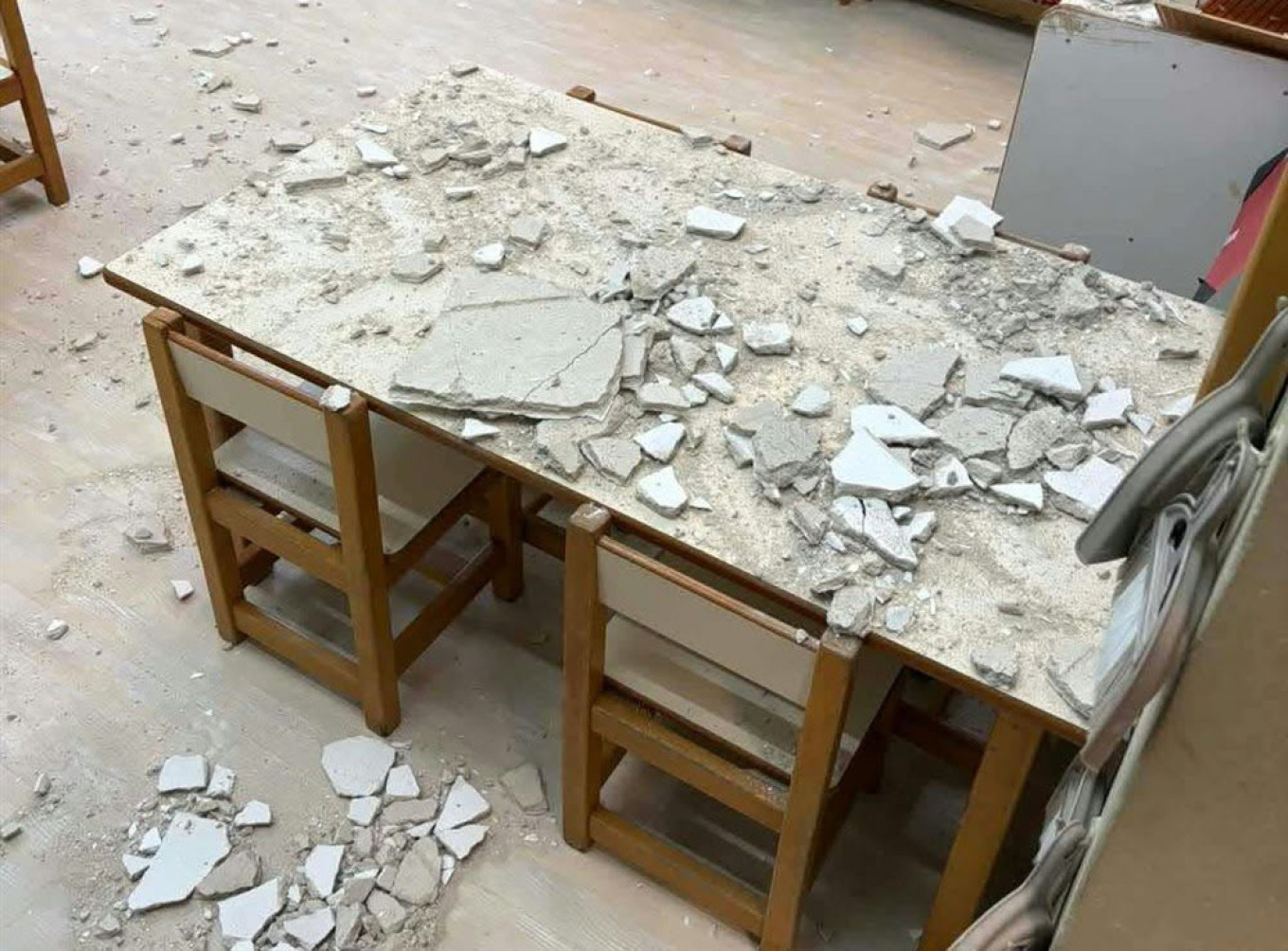
- A similar incident involving falling plaster was recorded at the 3rd Junior High School of Polichni.
- Conditions at the 12th Vocational Upper Secondary School (EPAL) of Thessaloniki are described as dire, with falling plaster, mould, water dripping into the basement gym and locked toilets.
- At the 2nd Primary School of Sindos, pupils are at risk from an adjacent building that is on the verge of collapse.
- At Sindos Vocational Upper Secondary School, there is an urgent need to repair plasterwork and electromechanical installations, improve insulation and upgrade the schoolyard. Additional teaching space is also needed, as even the storage rooms have been taken over for other uses.
- Meanwhile, heavy rainfall has exposed inadequate maintenance of school buildings, with water ingress, flooded classrooms and damage to ceilings and communal areas at schools including the 2nd Primary School of Kalochori, Mygdonia Junior High School and the 21st, 27th, 40th, 53rd and 109th Primary Schools of Thessaloniki.
19 November 2026
Independent MP Rallia Christidou relays complaints from parents of pupils at the 2nd Junior High School of Ilioupoli, known as Delmouzeio. Among other things, she says that although on-site inspections identified serious problems, the lightning protection system has not been restored and the electrical distribution boards have not been replaced.
18 November 2026
In a question submitted by independent MP Areti Papaioannou, it is stated that plaster fell from the ceiling of a classroom at the Kindergarten of Kalamaria on 12 November.
18 November 2026
Greek Solution MP Haido Assimakopoulou brings dozens of incidents reported by local media to Parliament, involving pupils injured by falling plaster in schools. Among the cases she cites are:
- 6th General Lyceum of Patras (1 October 2026): “Plaster fell onto a pupil’s desk … sections of the ceiling fell onto a pupil’s desk. However, the pupil is reportedly said to have left the classroom for a few minutes and was not at her desk when the material came loose.”
- 3rd Lyceum of Lamia (7 October 2026): “The school will remain closed … after plaster fell in a classroom, sending four pupils to hospital.”
- Vasilika Junior High School in Thermi (11 October 2026): “The school has been closed … following falling plaster, which resulted in a 14-year-old pupil sustaining minor injuries.”
- 8th Junior High School of Korydallos (8 October 2026): “Pupil injured after part of a suspended ceiling fell in a junior high school.”
- Neochori General Lyceum in Messolonghi (15 October 2026): “Messolonghi: … pupil injured by a window that came loose.”
- Municipality of Malevizi Parents and Guardians Association (16 October 2026): “Are we sending our children to school or to a survival reality show?” The association also reported that “a school bus in our municipality carrying pupils nearly overturned when the driver tried to avoid branches obstructing visibility and the road surface gave way. … A pupil at Gazi Lyceum suffered an electric shock during a lesson.”
- 2nd Junior High School of Agios Dimitrios, Attica (24 October 2026): “Serious questions over school safety in Agios Dimitrios following falling plaster at the 2nd Junior High School.”
- Experimental School of Pyrgos (5 November 2026): “Pieces of window sills fell during break time – injuries avoided by sheer luck.”
- 1st Junior High School of Hymettus (6 November 2026): “Panic broke out … when a skylight came loose and fell into a classroom, slightly injuring a pupil.”
- 4th Primary School of Hymettus (9 November 2026): “Part of a classroom wall came loose at the 4th Primary School of Hymettus.”
- Kolonaki (11 November 2026): “Another incident involving falling plaster at a school was recorded in Greece, this time in Kolonaki, on Tuesday (10 November 2026). A pupil was not injured by sheer luck, as the accident happened shortly after the children had entered their classrooms for lessons.”
- Ralleia Experimental Schools, Piraeus (13 November 2026): “Piraeus: Part of the ceiling collapsed at a primary school – pupils escaped injury by sheer luck.”
- 30th Primary School of Piraeus (14 November 2026): “Plaster fell in the classroom used by the sixth-grade class at the 30th Primary School of Piraeus. There were no injuries by sheer luck, as the pupils and teachers were away on a scheduled educational visit.”
A separate report dated 7 November 2026 cites two incidents at schools that had recently been renovated. In October, part of the ceiling came loose above the main entrance of the 1st Lyceum of Nea Heraklion. In Corfu, plaster reportedly fell and a washbasin came loose at Kontokali Primary School just one year after the building had been renovated.
Further incidents involving falling plaster have also been reported at the 10th and 24th Primary Schools of Serres, at schools in Ierapetra and in the Municipality of Agia Varvara in Attica.
13 November 2026
PASOK MP Manolis Christodoulakis, representing Eastern Attica, submits a question noting that on 5 November a large section of plaster came away from the ceiling of a classroom at the 1st Primary School of Porto Rafti while the school was in operation, “resulting in two pupils being injured and posing an immediate risk to the physical safety of the children inside”.
13 November 2026
Niki MP Spyros Tsironis also brings local media reports to Parliament. According to reports in the newspaper Peloponnisos, the 24th Primary School of Patras is still leaking despite waterproofing work carried out by the municipality approximately a year ago. At the same time, two classes have been housed in prefabricated classrooms for around 15 years.
12 November 2026
Niki MP Aspasia Kouroupaki cites a letter from the Municipality of Nea Ionia in her parliamentary question. Among other points, it states that within the municipality’s boundaries “there are 53 school complexes in operation, the vast majority of which were built more than 40 years ago, while some date back to before 1950”.
6 November 2026
The Communist Party of Greece says that Mygdonia Junior High School and General Lyceum, in the Municipality of Oreokastro, suspended operations because of the “very poor condition of the school buildings, which became evident following the rainfall on Tuesday, 3 November 2026. The rain caused the school roofs to flood, with water entering the buildings and creating an immediate risk of short circuits, electric shocks or fire, as in many cases rainwater coming through the ceilings runs over or alongside sockets, cables and electrical distribution boards”.
4 November 2026
Niki MP Spyros Tsironis cites complaints from parents and trade union organisations, according to which, on the morning of Tuesday, 3 November 2026, at the 4th Primary School of Corinth, which shares premises with the 12th Primary School, part of a concrete door frame, along with tiles, came loose in the school toilets and fell on a first-grade pupil. The child sustained injuries to the head and arm. After the incident, the pupil was found dizzy in the teachers’ office. According to the complaint, the materials were heavy and a more serious accident was avoided “by sheer luck”.
4 November 2026
A question by Haido Assimakopoulou of Greek Solution highlights serious problems at schools in Heraklion, Crete. It specifically states:
“Complaints by the Parents and Guardians Associations of the 28th and 57th Primary Schools of Heraklion, Crete, have caused serious concern over the severe and recurring problems with the electrical installation at the school complex shared by the two schools. According to the complaints, continuous electrical faults, short circuits, blown fuses and power cuts have been recorded since August 2026, while the problem is said to have worsened significantly following the severe weather events in September.”
Seven years on, just 669 of Greece’s 12,690 schools have been renovated
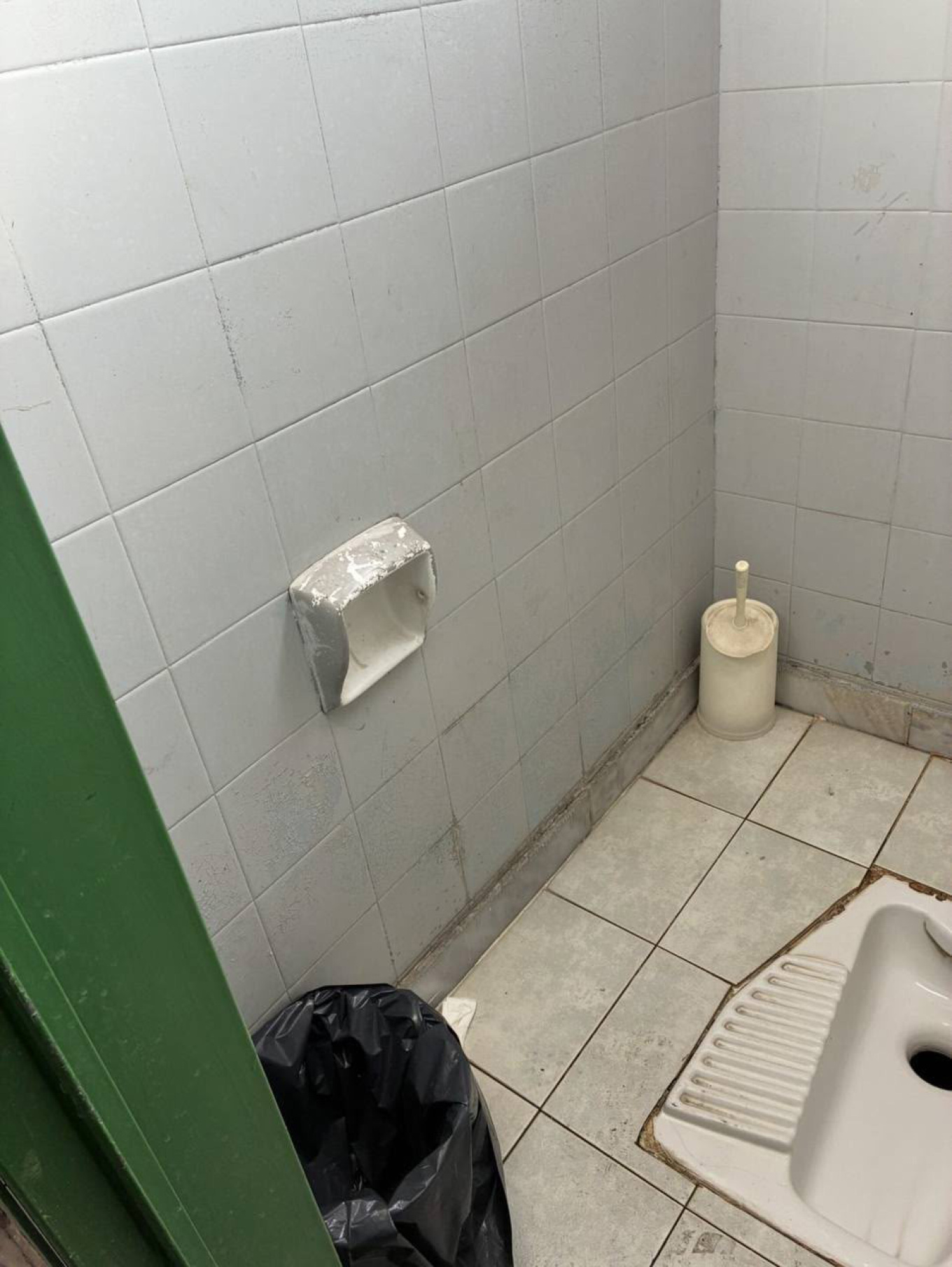
It is recalled that Proto Thema’s investigation highlighted the serious problems with school buildings that continue to affect thousands of public schools across the country. Pupils and teachers are required to go about their daily activities in facilities that, in many cases, fail to meet even the most basic standards of safety and hygiene.
The picture that emerges is stark: of Greece’s 12,690 public schools, just 669 have been renovated through the Marietta Giannakou programme, representing only slightly more than 5% of the total. At the same time, according to a survey by the Federation of Secondary School Teachers of Greece (DOE), approximately eight in 10 school buildings require intervention, while one in 10 is considered unsuitable for use.
The shortcomings go beyond cosmetic problems or deterioration caused by age. Schools from Attica to Thessaloniki and Alexandroupoli have reported incidents involving falling plaster, flooded classrooms, extensive damp, heating problems, damaged toilets and the presence of rodents.
A telling example is the 5th Junior High School of Ilioupoli, where faulty sanitation facilities were repaired after images of the conditions were made public. At the 23rd Primary School of Acharnes, water ingress into classrooms has been recorded, while schools in Piraeus and Kalamaria have experienced falling plaster, posing obvious risks to the safety of pupils and teachers.
Particularly worrying, too, is the state of school accommodation. According to figures cited by the Federation of Secondary School Teachers of Greece, around 12% of classrooms are housed in containers, with some of these temporary structures having been in use for decades.
Meanwhile, a significant number of schools still lack adequate accessibility infrastructure for pupils with disabilities. There are also cases in which parents are forced to contribute financially to cover basic needs, such as consumables and cleaning materials.
The situation highlights a major contradiction in the way the modernisation of public education is progressing. While more than €148m has been allocated for the procurement of interactive whiteboards and investment is being promoted in digital equipment, robotics and school laboratories, thousands of pupils continue to attend lessons in buildings suffering from serious structural deterioration.
Ask me anything
Explore related questions




