





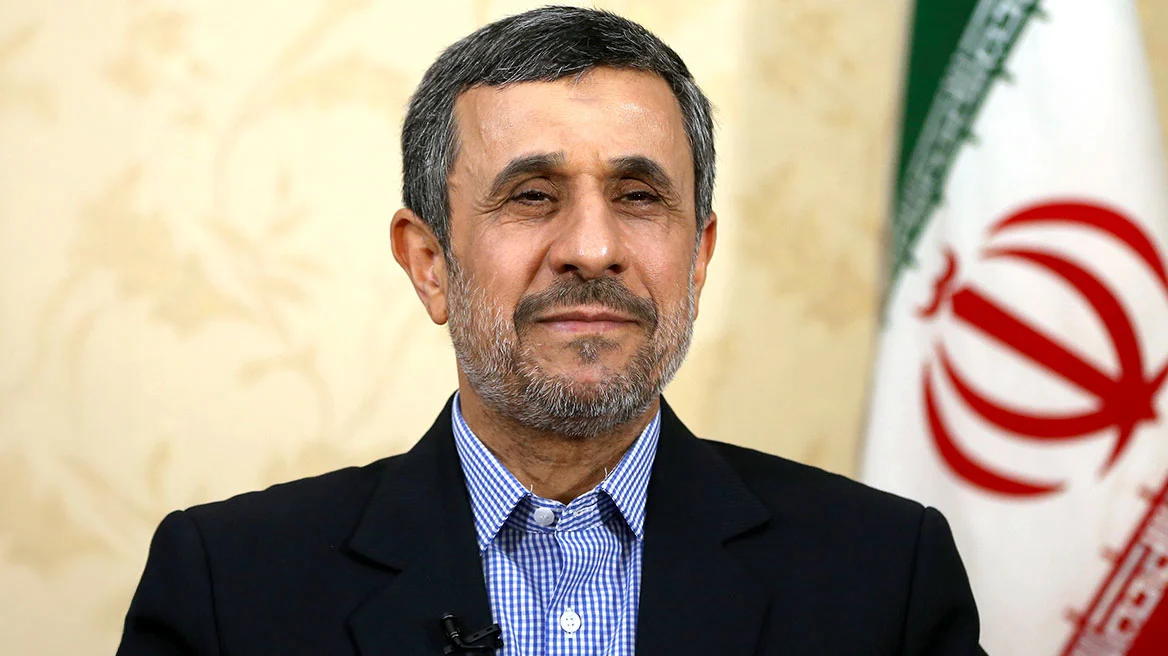
In early 2024, Professor Gergely Deli, rector of the Ludovika University of Public Service in Budapest, received an unexpected and highly confidential request from a senior Hungarian government official. He was asked to organise a conference on climate change and invite a particularly unlikely guest: Mahmoud Ahmadinejad, Iran’s widely condemned former president.
Even more startling, however, was the real reason behind the invitation. According to Professor Deli, the official confided that the conference was merely a cover designed to enable Ahmadinejad to hold secret meetings in Budapest with agents from Israel’s intelligence services — his country’s sworn enemy.
Professor Deli was well aware that extending such an invitation could damage both his own reputation and that of the university. Nevertheless, as he later said in an interview, he believed that doing so might ultimately help save lives.
“When two enemies want to talk to one another, the best thing you can do is facilitate that dialogue,” he explained.
The Alleged Recruitment and Regime Change Plan
Ahmadinejad’s 2024 visit, followed by a second trip the following year, reportedly formed part of a years-long operation by Israeli intelligence. The objective was to turn the former president into a Mossad intelligence asset and, when the moment was deemed right, install him as Iran’s new leader. According to The New York Times, the claims have been corroborated by American and Iranian officials.
Recruiting Ahmadinejad was reportedly such a high priority for Tel Aviv that then-Mossad chief David Barnea personally travelled to the Hungarian capital in 2024 to meet him. Shortly afterwards, Israeli intelligence is said to have briefed the CIA on its contacts with Tehran’s former hardline leader.
Israel’s alleged decision to back a regime change plan centered on Ahmadinejad marks an ironic twist of history. During his presidency, he accelerated Iran’s nuclear program, repeatedly called for Israel’s destruction and denied the Holocaust. According to US sources, Israel had in recent years been covertly funding Ahmadinejad’s accommodation and travel expenses, while Mossad operatives met him regularly abroad.
The Failed Extraction and Capture
The operation reportedly reached its climax in late February this year — during the opening days of the US-Israel military conflict with Iran — with a daring attempt to extract the former president, who was living under close surveillance in Tehran. The plan envisaged the launch of an uprising to overthrow the regime, with Ahmadinejad assuming power. However, the operation ultimately failed.
On 28 February, an Israeli airstrike hit Ahmadinejad’s residential compound, targeting the building used by his personal security detail as well as his armoured vehicle. Immediately after the strike, a black Peugeot reportedly arrived at the scene, collected Ahmadinejad and sped away. Sources claim the vehicle was driven by Mossad agents, who transported him to a safe house inside Iran.
The former president, however, is said to have become deeply alarmed by the course of the operation and disillusioned with the Israeli plan. Under circumstances that remain unclear, he left the safe house, after which his whereabouts became unknown until last Monday, when he briefly reappeared at the funeral of Supreme Leader Ayatollah Ali Khamenei.
Today, Ahmadinejad is reportedly in the custody of the Revolutionary Guards’ security services and under house arrest, after the Iranian authorities allegedly uncovered the full extent of his contacts with Israel.
The reported regime change plan also included the arming and training of Kurdish opposition fighters in northern Iraq, who were expected to invade western Iran and advance towards the capital — an operation that ultimately never took place.
“It was a series of highly specialised operations that had to be carried out, and Ahmadinejad was part of that planning,” Tamir Hayman, the former head of Israeli military intelligence (IDF), confirmed in May.
The Transformation of a Hardliner
During his presidency from 2005 to 2013, Ahmadinejad was Iran’s most prominent hardline politician, known for mass executions of dissidents and the violent suppression of the 2009 protests.
After leaving office, however, he underwent a dramatic transformation.
He shifted towards a more moderate image, giving interviews in which he defended popular culture, criticised the violence of the security apparatus and accused Iran’s ruling elite of corruption. He also changed his appearance, replacing his trademark khaki jacket with expensive suits, grooming his beard, undergoing cosmetic procedures, including Botox, and beginning to learn English.
At the same time, he gained considerable support among working-class Iranians by holding daily meetings with members of the public at his office in Tehran.
“Ahmadinejad didn’t do this for the money. He is financially secure. He did it for power. He wanted to be back in charge of the country,” said Abdolreza Davari, a former close adviser.
According to people close to him, Ahmadinejad had become completely disillusioned with the Islamic Republic following the three-time rejection of his presidential candidacies. He believed that, if war broke out, the Americans and Israelis would choose an exiled politician unfamiliar with Iran, thereby destabilising the country.
Instead, he saw himself as “a Boris Yeltsin-style reformer” and reportedly promised his allies that, if he returned to power, Iran would recognise Israel and normalise relations through the Abraham Accords.
The Suspicious Overseas Contacts
Iranian counter-intelligence reportedly began to suspect Ahmadinejad as early as 2017, when he started sending public letters to Donald Trump and Saudi Crown Prince Mohammed bin Salman.
His first contacts with Israeli intelligence agents are believed to have taken place in 2023 during a visit to Guatemala. Tehran’s security authorities reportedly attempted to prevent him from leaving the country, prompting the former president to stage a lengthy sit-in protest at the airport, which gained widespread attention on social media before he was eventually allowed to board his flight.
His first trip to Budapest followed in 2024. Viktor Orbán’s Hungary maintained closer relations with Israel than any other European country. In June 2025, Ahmadinejad returned to Ludovika University just days before the outbreak of the war.
During that visit, his Iranian bodyguards reported that Ahmadinejad managed on at least two occasions to slip away from their surveillance and disappear for several hours. When questioned, he claimed he had been meeting university professors.
At the conference, Ahmadinejad surprised those present by speaking in English and, for the first time, omitting the customary Quranic verses with which he had always opened his speeches. Instead, he spoke about “our common humanity” and a “new world order”.
At Khamenei’s recent funeral, Ahmadinejad appeared visibly exhausted, wearing a heavy jacket despite the high temperatures and a surgical face mask. He stood silently with his head bowed, completely surrounded by security personnel. Unlike Iran’s other former presidents, he was the only one permitted to attend — perhaps in what may prove to have been his final public appearance before being returned to isolation.
Ask me anything
Explore related questions




