





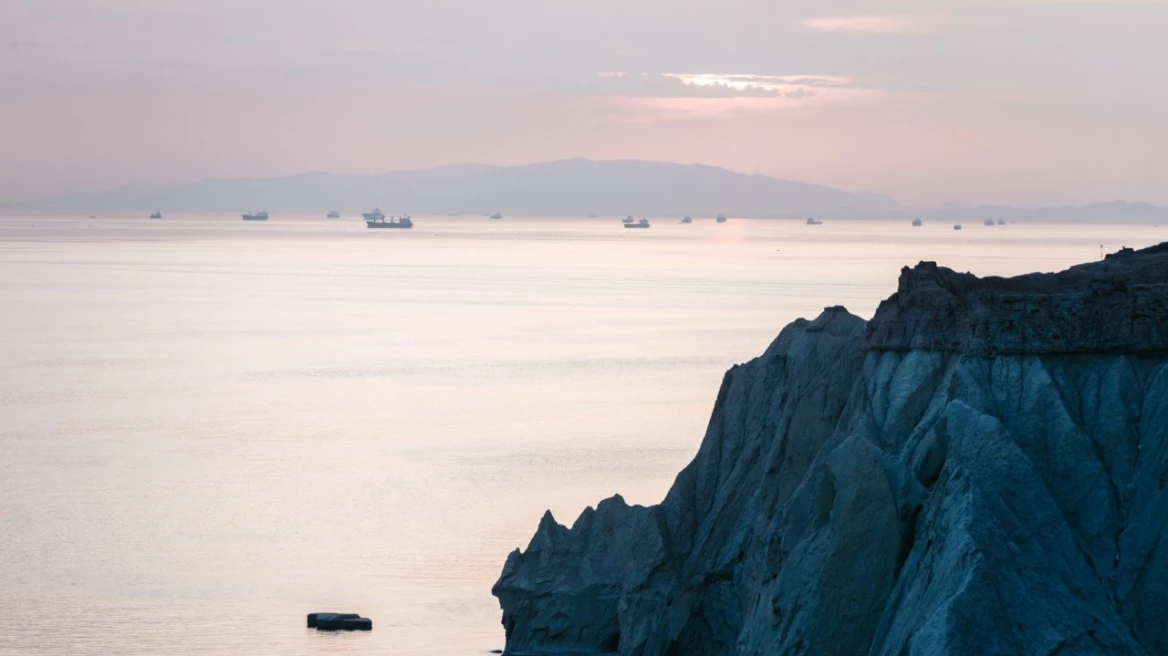
The new military escalation between the United States and Iran has placed Greek shipping in an environment reminiscent of the most difficult periods in modern maritime history.
For Greek shipping companies, which operate the world’s largest tanker fleet and maintain a daily presence in the Persian Gulf, the Strait of Hormuz is no longer merely a critical commercial passage. It has evolved into a high-risk operational zone, where every decision can determine the safety of crews, vessels, and cargoes.
According to industry executives, the biggest challenge is not only missiles or attacks against ships. It is the so-called “invisible risks” that multiply as the conflict deepens: electronic interference with navigation systems, sudden changes to transit rules, military instructions that change within hours, and an operational environment in which yesterday’s assessment may already be outdated.
For many Greek companies, voyage planning is no longer completed weeks before departure. It is reviewed daily, even just a few hours before a vessel approaches the area. Experts at EOS Risk Group point out that the nature of the threat has changed.
Beyond missile attacks and unmanned aerial vehicles, incidents of electronic warfare are increasing. Cases of GPS and GNSS spoofing or jamming are occurring more frequently, causing navigation systems to display an incorrect vessel position or even preventing them from operating reliably. The crisis has highlighted a new reality for shipping.
Information has acquired operational value equivalent to that of security measures. Decisions are no longer based solely on the captain’s experience or voyage planning. They rely on continuous monitoring of the operational picture, real-time intelligence assessment, and companies’ ability to immediately adjust sailing plans when conditions change. Security companies recommend continuous manual verification of a vessel’s position using radar, charts, and visual reference points, as the electronic picture can no longer be taken for granted.
For Greek-owned shipping, the crisis translates into far more than an increased security risk. Companies are being forced to manage higher war-risk insurance premiums, more expensive security-related chartering costs, longer loading and unloading delays, route changes, increased fuel consumption, and constant revisions to their commercial contracts.
At the same time, the need for continuous monitoring of developments significantly increases operating costs, as dedicated security teams and operations centres remain on constant alert to assess every new piece of information and immediately update vessels. The difference compared with the past is that before accepting any charter, a number of critical parameters are now examined: the level of military threat, available insurance coverage, loading and discharge ports, instructions from authorities and security advisers, and the requirements of charterers and financiers.
Shipping companies remain in constant communication with insurers, P&I Clubs, specialised risk-management firms, and military authorities, while captains receive continuously updated instructions regarding the safest routes and timing of transits.
In several cases, routes are adjusted or vessels delay entering the area in order to reduce, as much as possible, their exposure to potential incidents. For Greek shipping companies, which maintain a strong presence in oil and LNG transportation from the Persian Gulf, the success of a voyage no longer depends only on weather conditions or commercial agreements. It depends on the speed at which information is assessed, the ability to anticipate the next developments, and the flexibility to adapt in an environment where the balance can change within minutes.
“The crisis does not concern only shipowners. It affects the Greek economy as a whole,” Alketa(s) Drosos, Maritime Commercial Manager at EOS Risk Group, told newmoney. “Greece continues to depend on oil and LNG imports, while prolonged tension in Hormuz could lead to another rise in international energy prices. This means more expensive fuel, higher transport costs, greater pressure on businesses, and a resurgence of inflation. At the same time, any serious disruption to the operation of the Strait could cause new delays in the global supply chain, affecting the supply of raw materials, industrial goods, and consumer products that also reach the Greek market.”
The US air strikes of 14 July against targets in Iran, including the strategically important island of Qeshm, which dominates the Strait of Hormuz, marked a new phase in the confrontation. Tehran’s response was swift. Attacks on targets in Kuwait and Bahrain, the activation of air-defence systems, and explosions in the wider region confirmed that every military action now triggers almost immediate retaliation.
“This sequence of attacks creates a continuous escalation cycle in which commercial shipping finds itself in the middle of a geopolitical confrontation. Merchant vessels are not necessarily direct targets, but they operate in an area where any mistake, misinterpretation, or military action can cause a serious incident,” Alketa(s) Drosos stated, adding:
“The importance of the Strait of Hormuz remains enormous. Approximately 20% of global oil consumption passes through this specific waterway, along with a significant share of liquefied natural gas (LNG) exports. Any disruption directly affects global energy markets, increases war-risk insurance premiums, raises transportation costs, and ultimately feeds through into the prices paid by businesses and consumers.”
The operational environment became even more complex when the Persian Gulf Strait Authority temporarily suspended the issuance of transit permits for the northern route, while the Islamic Revolutionary Guard Corps (IRGC) announced that it would stop vessels attempting to pass without prior coordination. At the same time, the United States reinstated restrictive measures against vessels linked to Iran, creating a network of military and administrative restrictions that significantly complicates navigation.
Following recent attacks on tankers in the Strait of Hormuz and the Gulf of Oman, which caused casualties among seafarers and serious damage to commercial vessels, EOS Risk Group upgraded its risk assessment for the area to EXTREME (5/5), the highest level available.
Analysts estimate that after every US strike against Iranian targets, the likelihood of retaliation within the following 24 hours increases significantly. The factor causing the greatest concern is that there is now no clear list of possible targets. Military facilities, energy infrastructure, ports, and even commercial vessels directly or indirectly connected to countries considered allies of the United States could come under threat.
The security environment is further aggravated by developments in the Red Sea and the Gulf of Aden. Houthi attacks against shipping and energy infrastructure continue to pose a serious threat, while pirate groups off the coast of Somalia remain active, keeping the risk level high for passing merchant vessels.
The coexistence of military operations, terrorist threats, electronic warfare, and piracy creates an unprecedented web of risks, requiring a different approach to maritime security management.
The most important conclusion from recent developments is that commercial shipping is no longer merely operating alongside a geopolitical crisis. It is at the center of it.
The new reality shows that geopolitics does not affect only governments and armed forces. It influences shipping companies’ decisions, the safety of thousands of seafarers, the functioning of global supply chains, and ultimately the daily lives of citizens. In today’s world, shipping’s most powerful “weapon” is not only the size of its fleet, but its ability to know early what is changing and adapt before the risk becomes reality.
Ask me anything
Explore related questions




