





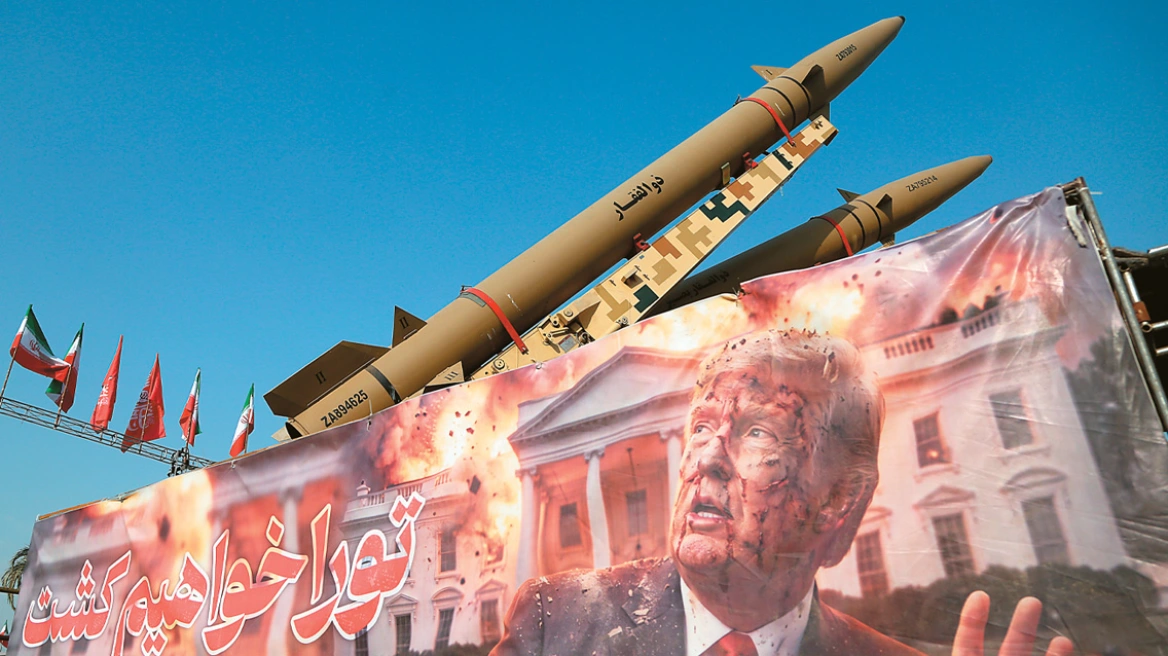
Five months after the outbreak of the war with Iran, Donald Trump is facing a challenge very different from the one he expected when the United States and Israel launched their attack on the Islamic Republic on 28 February. The US still possesses the military capability to inflict devastating damage on Iran. What it has yet to find, however, is a way to end the war on terms that can be presented as a clear American victory. Developments over the past week have exposed this contradiction more clearly than at any previous stage of the conflict.
Trump once again threatened massive military strikes before postponing them. He insisted that negotiations with Iran were progressing well, while Tehran questioned whether direct talks were taking place at all. At the same time, the real negotiations shifted to the arena where Iran still holds its greatest asymmetric advantage: the Strait of Hormuz. As a result, a war that began with Iran’s nuclear programme at its centre has reached the point where Washington must first resolve the issue of freedom of navigation in the Persian Gulf before it can return to the nuclear question.
The Attack That Never Came
Last week began with the region once again on the brink of a major escalation. For several days, Trump warned that the United States was prepared to launch another attack on Iran. On Saturday night, however, he announced that the operation would be postponed, provided a swift agreement could be reached on the “immediate, full and complete” reopening of the Strait of Hormuz and the elimination of what he described as the “Iranian nuclear threat”. The decision was not made in isolation.
Shortly beforehand, Trump had spoken with Saudi Crown Prince Mohammed bin Salman, who stressed the need for de-escalation and a return to dialogue. US sources have also indicated that pressure from Gulf states played a significant role in the decision to refrain from launching another major military operation.
The explanation is straightforward. Saudi Arabia, Qatar and the United Arab Emirates may be close allies of Washington, but they are only minutes away from Iranian missile strikes—a reality that has now been demonstrated in practice. They are not defending Iran; they are defending their own cities, refineries, desalination plants, ports and energy infrastructure. This marks one of the most significant shifts brought about by the war: countries that for years urged Washington to adopt a tougher stance towards Tehran now find themselves in the paradoxical position of trying to restrain the White House.
What followed was a week during which Washington and Tehran often appeared to be describing two entirely different realities. Trump claimed that an “all-day negotiation” with Iran had taken place on Tuesday and described the talks as “very good”. At the same time, however, he warned that if Tehran backed away, it would be “hit very hard”.
Qatar, for its part, spoke of progress in mediation efforts, while Iranian officials disputed the US account of direct negotiations. Both sides are already seeking to shape the narrative over who ultimately came to the negotiating table. Trump needs to demonstrate that military pressure forced Iran into negotiations. Tehran, meanwhile, needs to present any agreement as the result of its resilience rather than American coercion.
Behind this battle of competing narratives, however, a far more substantive negotiation is taking place under Oman’s mediation—and, unsurprisingly, its central focus is the Strait of Hormuz.
What Iran Wants
The details that emerged this week regarding the terms under discussion between Iran and Oman may prove to be the most significant element of the equation.
The proposal currently under discussion would give Iran control over inbound maritime traffic entering the Persian Gulf while allowing it to monitor outbound shipping movements. Serious disagreements remain, however, over the exact supervisory mechanism and the procedures governing vessel transit.
Before the war, Iran exercised no such formal authority.
This creates an exceptionally difficult dilemma for the White House. If Trump accepts an agreement granting Tehran powers it did not possess before 28 February, Iran will be able to claim that, after five months of American and Israeli military attacks, it has emerged with greater influence over the world’s most strategically important energy shipping route. If he rejects the proposal, the Strait will, in practical terms, remain closed.
The same deadlock exists over transit fees.
Tehran has sought to impose charges equivalent to 5%-7% of the value of cargoes, while Oman has discussed lower rates. The United States rejects the idea of transit fees altogether. At the same time, however, US sanctions and insurance requirements make the practical implementation of such a mechanism extremely difficult.
In other words, even if a political agreement were reached tomorrow, it would not mean that oil tankers would immediately return to the Strait in large numbers.
The figures themselves may be more revealing than official statements.
Between Monday and Thursday, only 33 vessels passed through the Strait, compared with 50 during the same period the previous week. Just six crude oil tankers departed the Persian Gulf. Before the war, around 130 to 140 vessels transited the Strait of Hormuz each week.
This is Iran’s real asymmetric advantage.
Tehran does not need to defeat the US Navy, nor even block every ship. It simply needs to create enough uncertainty for shipowners, insurers and oil traders to conclude that the risks outweigh the potential profits.
Tehran Puts the Entire Gulf on the Table
Over the past week, Iran sought to raise the cost of any new US military strike even further.
Iranian Foreign Minister Abbas Araghchi held discussions with Saudi Arabia, Turkey, Qatar and Pakistan’s leadership, delivering a clear warning: if the United States launches new strikes against critical Iranian infrastructure, Tehran’s response could target oil facilities, refineries, electricity and water networks, transport infrastructure and other strategic assets across the Gulf states.
The message to Arab governments was straightforward: they cannot allow the United States to use the region as a base for war without bearing part of the consequences themselves.
From Iran’s perspective, this is a logical strategy. It cannot compete directly with America’s military machine. It can, however, make the cost of escalation so high for Washington’s regional partners that they themselves become a source of pressure on the White House.
The Mecca Agreement
It is within this context that last Friday’s tripartite defence agreement, signed in Mecca by Saudi Arabia, Turkey and Pakistan, should be understood.
Under the agreement, an armed attack on any one of the three countries will be regarded as an attack on all three.
The pact brings together the Arab world’s largest economic power, NATO’s second-largest military force and the Muslim world’s only nuclear-armed state within a new framework of collective deterrence.
Negotiations had begun almost a year earlier, meaning this is not an alliance hastily created in response to the war. The timing of its conclusion, however, is far from coincidental.
It would be inaccurate to describe the agreement as anti-American. All three countries maintain important security relationships with the United States, while Turkey remains a NATO member.
At the same time, however, it is equally difficult to separate the agreement from the growing sense of insecurity across the region.
Saudi Arabia increasingly recognises that its traditional security guarantor may, through its own military decisions, trigger a chain reaction that places the Kingdom’s oil infrastructure and broader economic development strategy at risk. Reuters has also noted that repeated regional conflicts have raised serious questions in Riyadh about the reliability of the American security umbrella.
The Mecca Agreement can therefore be seen as a new regional insurance policy—not a break with the United States, but an effort by key regional powers to avoid relying exclusively on Washington for either their security or the management of regional instability.
Here lies one of the greatest ironies of the war: an American intervention intended to reshape the Middle East’s security balance in Washington’s favour may instead accelerate the emergence of a regional security architecture in which Middle Eastern states seek to become less dependent on the United States.
US Stockpiles Are Running Low
On the military front, the past week also exposed another challenge for Washington. It is not a lack of military power—the United States remains vastly stronger than Iran—but rather the cost of sustaining that level of military capability over many months.
According to information revealed by Reuters, the US military has used “almost all” of its available ATACMS and Precision Strike Missiles during the war with Iran. At the same time, according to a source familiar with the figures, just under half of America’s global stockpile of Tomahawk cruise missiles has been expended.
The picture is similarly concerning in air defence.
The Centre for Strategic and International Studies (CSIS) estimates that between February and July approximately 65% of available Patriot interceptors were used, while stocks of THAAD missiles declined by at least 38%. Reuters sources indicated that these estimates are consistent with internal US government data.
Trump initially sought to downplay the issue. On Thursday, however, he acknowledged that while the United States possesses almost unlimited quantities of certain categories of munitions, stockpiles of others are “a little tighter.”
He also announced that the US defence industry is increasing production of both Patriot interceptors and Tomahawk missiles.
The issue is not simply how many missiles are still required for the war with Iran.
Every Patriot interceptor, every Tomahawk missile and every long-range precision weapon expended in the Middle East is one that is no longer available for a potential crisis in the Pacific or Europe.
The real calculation facing Washington is therefore not simply, “Can we strike Iran again?” The answer to that question is clearly yes.
The more difficult question is: “How many more times can we do so without dangerously depleting the stockpiles intended for other, potentially larger, conflicts?”
Ask me anything
Explore related questions




