





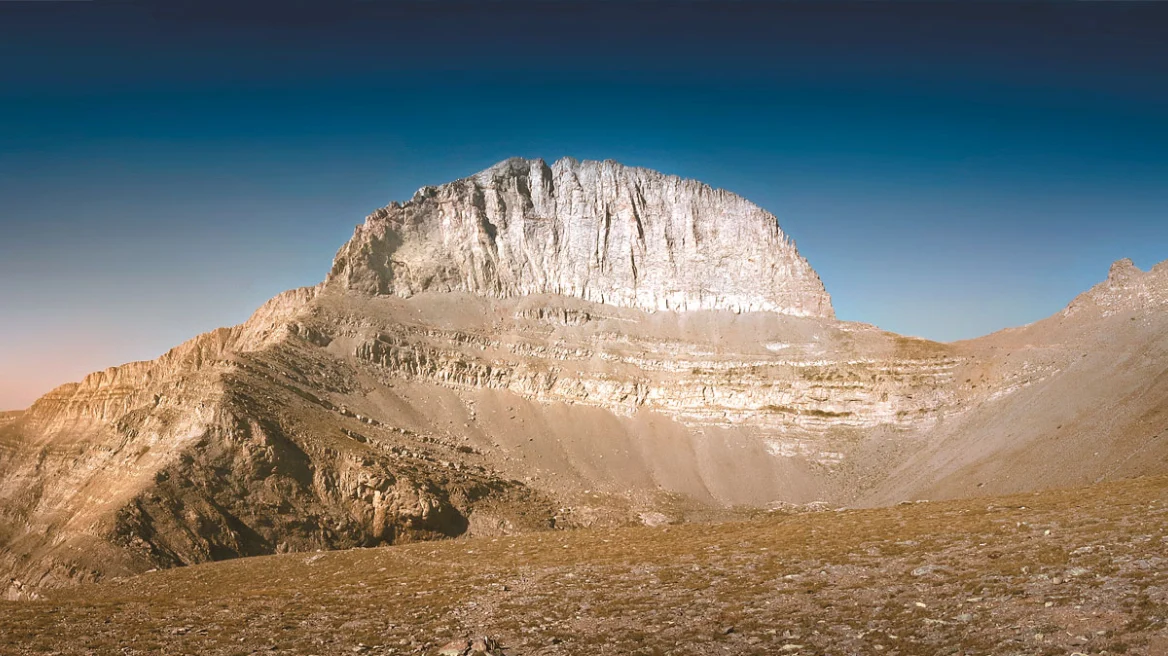
It was 26 July 2026 when, in Busan, South Korea, UNESCO’s World Heritage Committee unanimously confirmed what myth had been declaring for centuries: the wider Mount Olympus area rightfully belongs among the world’s most important monuments.
Its inscription on the World Heritage List as a Mixed Site is the ultimate international acknowledgement that on the Mountain of the Gods, rare wild nature and a profound cultural footprint are utterly inseparable. The Mountain of the Twelve Gods, Greece’s highest peak at 2,918 metres, now ranks alongside the Great Wall of China, the Grand Canyon and the Taj Mahal.
It is one of the most significant international honours Greece has ever received for its natural and cultural heritage, though it comes with a set of specific obligations that the Greek state must now meet.
Behind UNESCO’s decision lies a mountain with far more quirks than the average visitor might imagine, from geological paradoxes to a summit conquest that took centuries to happen. Here are 12 facts that explain why the Mountain of the Gods finally earned its place on the world stage.
1/ It is one of the rarest Mixed Sites in the world
UNESCO divides its monuments into cultural, natural and mixed categories, the last of which requires simultaneous evidence of outstanding cultural and natural value, something very few places on Earth manage to prove. Of the more than 1,000 monuments on the World Heritage List, mixed sites are consistently the smallest category, far smaller than either the purely cultural or purely natural monuments. Olympus is only the third Greek site to earn this title, after Meteora and Mount Athos, and one of the very few mixed sites worldwide that combine mythology, archaeology and rare biodiversity within the same mountain range. With its inscription, Greece now has 21 monuments on the World Heritage List, a total that places it among the countries with the highest density of UNESCO sites relative to their size.
2/ It passed two separate “tests”
To be listed as a mixed site, Olympus’s nomination file had to satisfy at least one cultural and one natural criterion out of UNESCO’s 10 in total. The criteria ultimately approved were direct association with ideas and traditions of universal significance (in this case, the mountain’s status as the home of the Twelve Gods according to Homer’s epics and Hesiod’s “Theogony”) and the criterion covering a site’s importance for in situ conservation of biological diversity.
3/ It is home to more than a quarter of Greece’s flora
Perhaps the most striking element of the nomination file is a simple statistic: Olympus is home to around 1,983 plant species, more than 25% of all Greek flora. Among them are dozens of narrow endemic species, plants found nowhere else on Earth, many of which carry the word “olympicum” or “olympi” in their scientific names, precisely because they were first described by botanists studying the mountain. The density of this plant diversity per square kilometre places Olympus among the most important biodiversity hotspots on the entire European continent.
4/ It was a refuge for life during the last Ice Age
The reason behind this botanical wealth lies in the mountain’s geological and climatic past. During the glacial periods, when much of Europe was covered in ice and many species vanished for good, Olympus served as a natural refuge, a “refugium”, for plants and animals that did not survive elsewhere. Its steep terrain created microclimates at different altitudes and orientations, ranging from near-Mediterranean conditions at the foothills to alpine conditions at the summits, allowing species with very different ecological needs to survive side by side. This ark-like function explains why the mountain today retains such a rare concentration of endemism within such a small area, and why botanists from around the world regard Olympus as one of the most important laboratories for studying European flora.
5/ It has Greece’s largest population of chamois
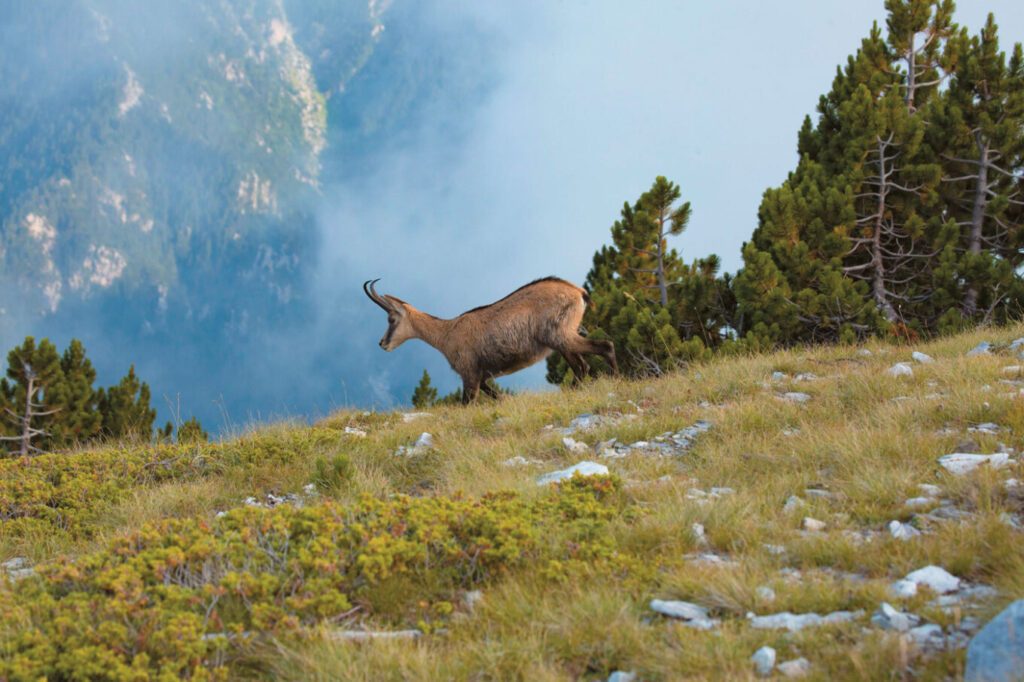
Beyond its flora, UNESCO’s file also documented the mountain’s rich fauna: populations of brown bears, numerous bird species (mainly birds of prey, which exploit the air currents between the gorges), as well as reptiles and amphibians. The most striking element, though, concerns the largest population of chamois in all of Greece, which finds refuge on the mountain’s sheer, near-vertical cliffs.
Olympus is home to a rich and unique fauna of more than 200 species, including 32 mammal species (such as chamois, wild boar and roe deer) and more than 100 bird species
6/ It is a relatively young mountain, once a seabed!
Although it seems eternal in the collective imagination, Olympus is, geologically speaking, relatively young: its main rock formations are no more than 200 million years old. Back then, most of present-day Greece lay at the bottom of a shallow sea, where sediments were deposited that later formed the mountain’s present limestone rock. A succession of geological events gradually raised the whole area from the seabed to the surface.
7/ Second-highest mountain in the Balkans, by just seven metres
Despite its reputation as the “home of the gods”, Olympus is not even the highest mountain on the Balkan peninsula: that title belongs to Rila in Bulgaria, which surpasses it by around just seven metres. Mytikas, with a precise altitude of 2,917.727 metres, nonetheless remains indisputably Greece’s highest peak, and unlike Rila, it does not stand alone. Around it spreads an entire cluster of peaks above 2,000 metres (Stefani, also known as the Throne of Zeus, Skolio, Profitis Ilias and Touba), which makes the mountain range as a whole far more impressive than a simple altitude comparison suggests.
8/ It is remarkably compact, just 600 square kilometres
The main Olympus range is almost circular in shape and covers an area of around 600 square kilometres, small relative to the myth built up around it, and smaller, for instance, than several Greek administrative regions. Within this relatively limited area, dozens of peaks above 2,000 metres coexist alongside deep gorges, ravines and sheer cliffs, a density of terrain rarely found elsewhere.
9/ Nobody had set foot on its summit before 1913
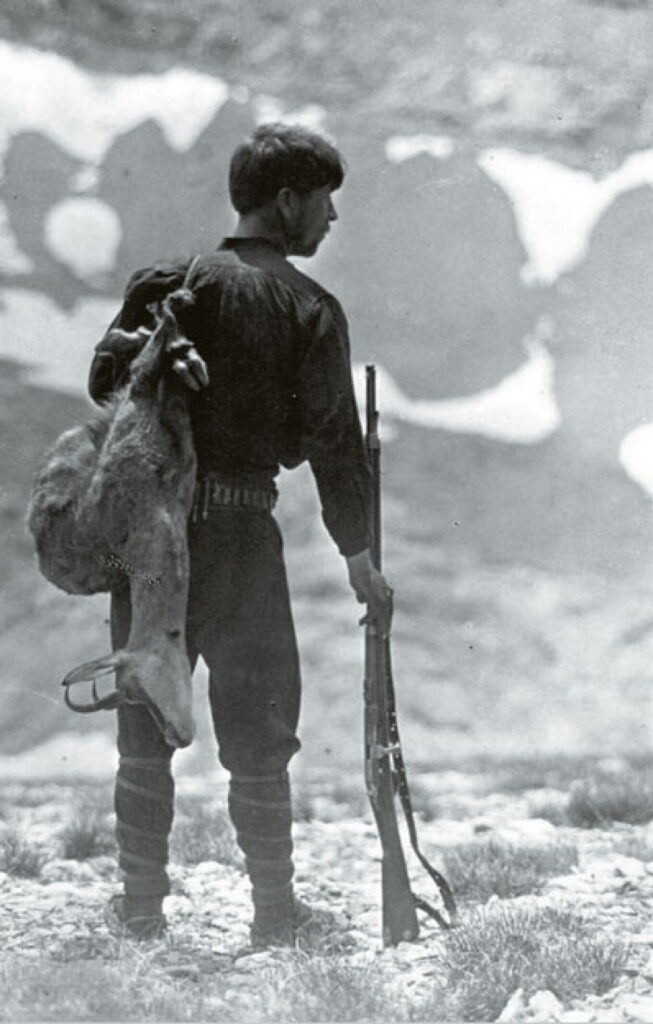
Perhaps the most surprising fact of all: despite its mythological reputation stretching back millennia, Olympus’s highest peak, Mytikas, was not conquered by human feet until 2 August 1913. The historic ascent was made by Christos Kakkalos, a hunter and woodcutter from Litochoro, together with Swiss photographer Frédéric Boissonnas and writer and art critic Daniel Baud-Bovy, who had arrived in Thessaloniki as guests of the Greek government to document military operations following the liberation of Macedonia, and who decided to attempt the climb after seeing the mountain from across the Thermaic Gulf. The expedition set out on 29 July 1913 and was tested by fog, hail, an overnight storm and even a wrong summit, before the three mountaineers finally reached Mytikas.
Attempts to conquer the summit had, however, begun centuries earlier. The first recorded attempt is credited to Saint Dionysios of Olympus in the 16th century, followed by another unsuccessful attempt by French naval officer Sonnini in 1780. Earlier efforts failed repeatedly, partly due to the presence of notorious bandits and klephts in the area, such as Yagoulas, Nikotsaras and Georgakis Olympios, and partly due to the technical difficulties of the final metres to the summit.
10/ An ancient sanctuary of Zeus was found on its summit
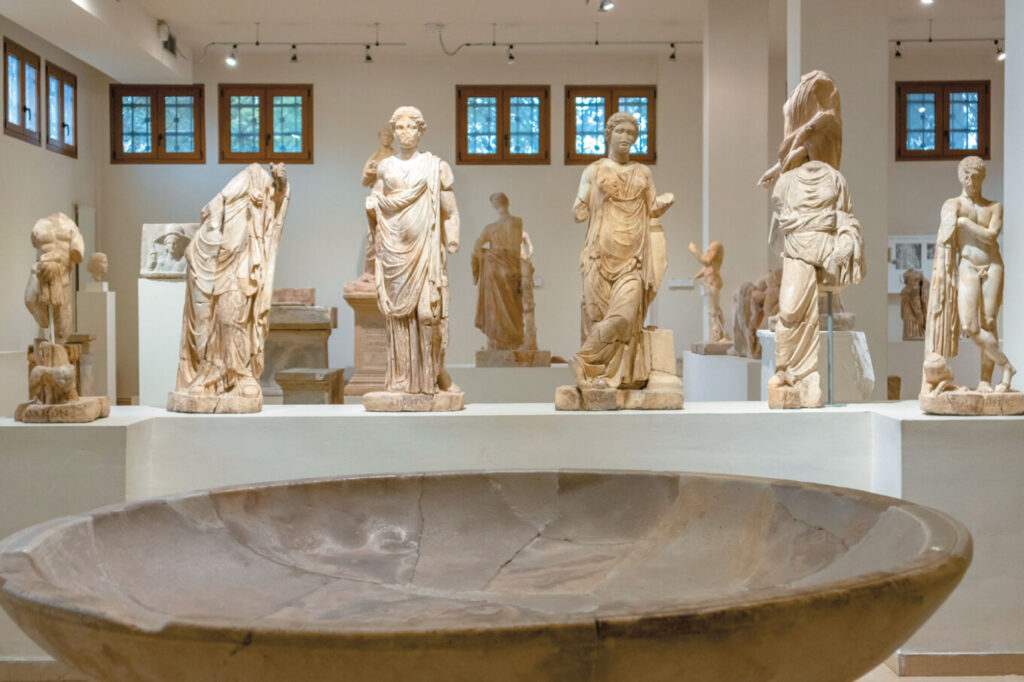
The mountain’s mythological connection is not based on literary sources alone. On the peak known as Agios Antonios, archaeologists have found the remains of an open-air sanctuary, with evidence documenting the organised worship of Zeus at an altitude of more than 2,500 metres, one of the very few sanctuaries in the ancient world built so high up, at a point where ancient worshippers had to climb almost to the very threshold of the gods’ dwelling to perform their rites. At the mountain’s foot, the archaeological site of Dion, named after Zeus himself, provides the most complete physical record of this religious tradition, with temples, altars, theatres, a stadium and inscriptions spanning centuries of religious, political and social life, from the archaic period to Roman times. This combination of a mountain-top sanctuary and an “urban” sanctuary at the foothills is exactly the kind of physical evidence the nomination file needed to support its cultural criterion.
11/ It had already been protected three times before UNESCO
Olympus has not just now gained protection. It was declared Greece’s first national park back in 1938, almost a century before its UNESCO inscription and long before this kind of institutional tool became widespread internationally. In 1981 it joined UNESCO’s own World Network of Biosphere Reserves, a completely separate and much earlier distinction that is often confused with this year’s listing, but which specifically concerned the management of the human-nature relationship in the area. Then in 2021, the mountain range was upgraded to a full National Park under a new presidential decree on protection and management, a step that established the modern legal framework on which the entire UNESCO nomination file was later built.
12/ The journey to recognition
The nomination itself was not a quick process. The preliminary file was submitted to UNESCO in 2022, jointly by the Ministry of Culture, the Ministry of Environment and the Natural Environment and Climate Change Agency (OFYPEKA), which was responsible for compiling the full dossier. Culture Minister Lina Mendoni personally oversaw the documentation of the file’s cultural component (the mountain’s connection to mythology and the archaeological finds on the Agios Antonios peak and at Dion), having already placed the matter high on the ministry’s agenda since 2022, describing Olympus at the time as “the ideal combination of nature, mythology and history”. The full file was submitted in 2023, and it took a further three years of evaluation, on-site expert visits and consultations before final, unanimous approval was granted in Busan, South Korea, on 26 July 2026, a development the minister herself later described as “a highly significant success that makes us all proud”.
Photos: Getty Images / Ideal Image, Shutterstock
Ask me anything
Explore related questions




