





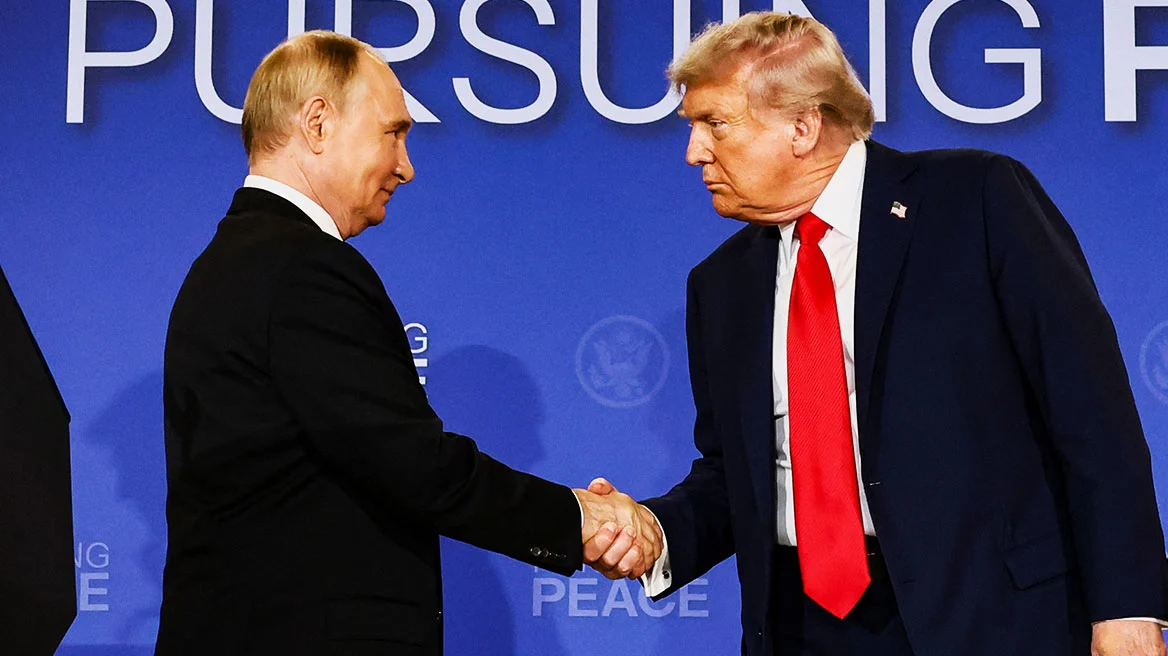
Sky News sees a not-so… selfless “gift” to Donald Trump behind Vladimir Putin’s decision to release former U.S. Marine Robert Gilman, assessing in an analysis that the Kremlin’s move is anything but random and is directly linked to the war in Ukraine.
What makes the case unusual is that this time Moscow released an American citizen without receiving a Russian prisoner in return. This is an extremely rare move for the Kremlin which, according to the British network, is attempting in this way to restore the relationship between Putin and Trump and create the conditions for future diplomatic trade-offs.
And the timing is particularly significant. The war in Ukraine is creating increasing problems inside Russia, Ukrainian drone attacks deep inside Russian territory are becoming more frequent, refineries are being hit repeatedly, and talks to end the war have essentially ground to a halt.
The Unusual Release of Robert Gilman
When Russia releases an American prisoner, it generally asks for and receives something in return. Sky News recalls the case of Wall Street Journal reporter Evan Gershkovich, who was released as part of the major prisoner exchange in 2024. Even more notable was the case of American basketball star Brittney Griner, who in 2022 was exchanged for convicted Russian arms dealer Viktor Bout.
With Robert Gilman, however, things unfolded differently. After more than four years in a Russian prison, the former Marine was released without a corresponding Russian prisoner being released by the American side. This is a notable exception to Moscow’s usual practice, since, as Sky News observes, the Kremlin rarely gives something away without receiving something in return.
The release also came after reports last week that Gilman was close to death. An unnamed U.S. official, cited by Reuters, said that the Russian president had approved his release as a “gesture of goodwill.”
Innocent “Gift” or Diplomatic Investment?
Sky News appears skeptical of the idea that the move signals any substantive change in Russia’s approach to so-called “hostage diplomacy.” Instead, it assesses that this is a clear attempt by the Kremlin to score points with the White House, in the expectation that the move will bring future diplomatic benefits.
And the arena in which Moscow would like to cash in this gesture is obvious: Ukraine. According to the analysis, Putin is attempting to present himself to Trump as a reasonable and accommodating interlocutor with whom the U.S. president can make deals.
The timing of Putin’s move is particularly significant, as the war in Ukraine is now creating increasing pressure inside Russia. Ukrainian drone attacks deep inside Russian territory are becoming increasingly frequent, while repeated strikes on oil refineries are placing additional strain on the economy and at the same time drawing attention to weaknesses in the Russian war machine. And all this is happening while, after four and a half years of war, there is still no end to the conflict in sight.
The U.S.-mediated peace talks have now become a distant memory, having been frozen after the start of Trump’s war against Iran. For Moscow, however, there is another worrying development. In recent weeks, Trump appears to have moved closer to Putin’s main rival, Volodymyr Zelenskyy. The two presidents met in Washington in late July, at a time when assessments were mounting that the White House appeared more receptive to Kyiv’s positions.
This picture is significantly different from the atmosphere that prevailed a year earlier. At that time, Trump had welcomed Putin with special honors in Alaska and gave the impression that he was close to reaching a deal on the war that would have been significantly closer to the Kremlin’s demands.
The balance has changed since then and, according to Sky News, Gilman’s release should be viewed precisely within this new context.
Ask me anything
Explore related questions




