





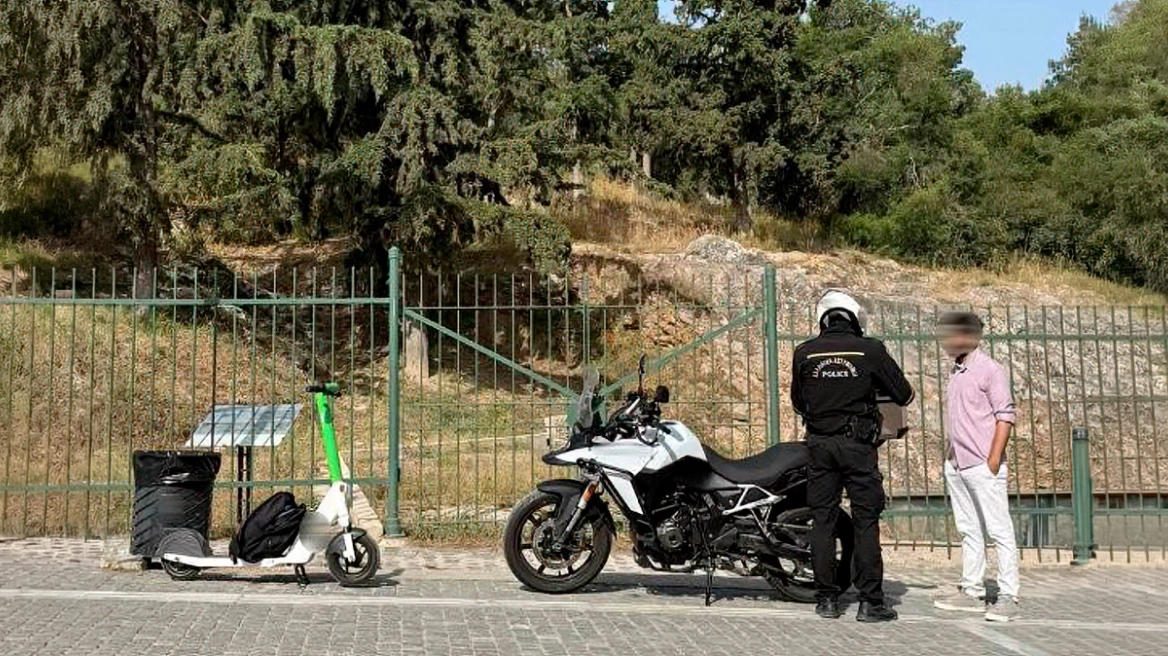
“I’ll sell it and get some peace of mind.” This phrase, heard increasingly often from electric scooter owners, explains why second-hand e-scooter websites have been flooded with listings following the introduction of the new measures, which impose strict speed limits, require riders to be over 17, mandate helmet use, insurance, etc. But why are they so eager to get rid of them, and how many people no longer want them?
People in the industry estimate that around 5,000 electric scooters have currently been put up for sale. They represent a significant proportion of the approximately 60,000–80,000 electric scooters that have been purchased, either new or used, and are being ridden by private individuals throughout the country (shared fleets are not included; in the wider Athens area alone, it is estimated that 4,000–5,000 shared scooters are in circulation at various times, while similar fleets operate in Thessaloniki, Patras and the tourist islands).
At prices ranging from €38 (for children’s scooters capable of carrying up to 50 kilograms) to as much as €3,500 (for scooters with top speeds of up to 130 km/h and a range of 160 km), prospective buyers literally have thousands of options to suit every budget and every taste.
Scooters on the Auction Block Due to Fines, Insurance and Helmets: Parents Who Bought Them for Their Children Are Now Selling Them
The Responsible Ones
In the community of “scooterists”—enthusiasts who are passionate about electric scooters—this surge in second-hand sales is, however, being viewed rather optimistically. The reason is that, as they explain, the new measures are leading the community toward a kind of self-cleansing, as irresponsible or uncommitted users of these vehicles are voluntarily leaving the community—users whose behavior was tarnishing the reputation of the rest.
“I wore a helmet and reflective gear anyway, I didn’t speed anyway, and I was careful, and my scooter is equipped with good lights and good brakes. It has nothing to envy from other vehicles that are licensed.
Paying €30 a year to insure it is nothing to me. So I have no reason to be afraid of the Traffic Police when I’m on the road,” says one scooter owner, who tells us that he will sell his own—which he paid more than €2,500 for—when he gets tired of it, or rather, as he puts it, “when I decide to upgrade and move on to something even better.”
Scooters on the Auction Block Due to Fines, Insurance and Helmets: Parents Who Bought Them for Their Children Are Now Selling Them
And the “Burned Ones”
There is, however, another side. There are the occasional scooter users. There are also those who have been “burned”—those who have experienced the strictness of the new Highway Code firsthand (in their wallets, to be precise).
For example, until just a few weeks ago there was an electric scooter user who rode every day on Kifisou Avenue, and even took the left-hand lane, provoking the anger of other road users as he was literally gambling with his life. It was only to be expected that this user would not remain a scooter user for long…
There are also occasional underage users. We found, for example, one user who decided to sell his electric scooter because he feels that his freedom is being restricted by the obligation to wear a helmet; another who refuses to pay the €30 annual insurance premium for the €2,500 scooter he bought; and yet another who rejects the solution suggested by other users of installing a speed limiter on his scooter so that he will not run into trouble during a Traffic Police inspection.
Some of the users—or… former users—of Light Personal Electric Vehicles (LPEVs) who have put them up for sale are parents who had bought them exclusively so that their children—under the age of 17—could get around, and who now refuse to pay fines and risk being accused of neglecting a minor. In some cases, they explain to us, unfairly, because some had chosen to buy scooters for their children who had held a license to ride a moped from the age of 16.
Scooters on the Auction Block Due to Fines, Insurance and Helmets: Parents Who Bought Them for Their Children Are Now Selling Them
5,000 Active Listings
Because used electric scooters are sold mainly by private individuals through classified-ad platforms and social media, and because there is no single official database, live data from the largest buying-and-selling platforms in Greece suggest that at any given time there are approximately 3,500–5,000 active listings for used electric scooters, with prices starting at €50–€100 for adult scooters and reaching a ceiling of €3,500 for super-scooters, such as a Nami Burn 2 Max 72V 32Ah, a Dualtron Thunder 3, or a Quickwheel Viper, which was purchased this year and can reach speeds of up to 130 kilometers per hour.
Added to these are used-scooter listings from dealers, as well as private sellers’ listings on Facebook Marketplace and in Groups dedicated to electric scooters (Groups such as “Patinistes” and “Electric Scooters,” which are considered the most specialized and the ones with the most hardcore fans of micromobility).
The social network, after all, is a very popular channel for direct transactions between private individuals, especially in the major cities (Athens, Thessaloniki, Patras). There, someone can find bargains, but can also make a controlled entry into the world of micromobility by getting advice from experienced users. Or they can fall victim to the cynicism of more experienced users, as happened to a young man who boasted that he never stopped at traffic lights and asked to be given the details of a tuner so he could make his scooter faster—and received the sarcastic response that there is a tuner who could make his scooter so fast and so dangerous that the police officers would not have time to catch up with him.
Which Models Are Being Sold
In private listings, the most popular scooter models are, by and large, the ones we encounter most often. An overwhelming majority of the used scooters are Xiaomi models (M365 Series, Pro 2, Scooter 3, 4 Lite) and Segway-Ninebot models (MAX G30, ES series). These are followed by models from KuKirin/Kugoo, UrbanGlide and Dualtron (for more powerful/more expensive scooters). As a result, the average prices fall into three categories.
The first consists of budget scooters, or what are otherwise known as “Basic/Entry Level” models, which average between €100 and €250. The second is the so-called mid-range category, which places an emphasis on long range and is priced between €250 and €500. For the more experienced users there are the High-performance models, meaning electric scooters with dual motors, larger wheels and tires, higher-capacity batteries, etc. (Dualtron, Kaabo, Nami), which are priced from €600 to more than €2,500.
Experts in the field say that, when it comes to used scooters, the most important component is the battery (since replacing it often costs as much as half the scooter). Before buying, it is customary—and recommended—to check the mileage through the scooter’s app and to check for any play or looseness in the folding mechanism.
Naturally, it is also essential to verify that a scooter is legally owned, since if, for example, it has been stolen, the buyer risks, at best, never being able to use it on the road (because it cannot be insured without its serial number, which will flag it as stolen), or using it and risking arrest and having a criminal record as a thief or receiver of stolen goods.
Scooters on the Auction Block Due to Fines, Insurance and Helmets: Parents Who Bought Them for Their Children Are Now Selling Them
Watch Out for the Battery
There are, however, other reasons why someone might sell their scooter. Experts explain that the high supply of used electric scooters in classified ads is due to a combination of technical, financial and behavioral factors. Among the main ones are the following:
1/ The Battery Degradation Trap
The lithium battery is the most expensive component of a scooter (often accounting for 40%–60% of its total value). After 1.5 to 2 years of use (or approximately 300–500 charging cycles), the battery’s range drops noticeably. Many owners, seeing the cost of replacing the battery approach the price of a new scooter, prefer to sell the used one while it is still functioning and buy a new one.
2/ Changing Transportation Needs and the Fading of the Initial Enthusiasm
A large portion involves impulse purchases. Many people bought a scooter believing it would solve their transportation problem, but in practice discovered that it did not suit their needs (e.g. because of poor road surfaces, fear of traffic, lack of storage space, or a change of job). Another portion is related to seasonality and the weather. In autumn and winter—or after the summer holidays—many decide to get rid of scooters they used only during the warmer months.
3/ Model Upgrade
Some, the more “serious” scooterists, upgrade. The first models people bought (such as basic Xiaomi models) had limited power and small wheels without suspension. Users who became accustomed to micromobility often sell their first scooter to move on to something more powerful, with greater range, larger wheels (10 inches), or dual suspension for a more comfortable and safer ride.
4/ Fear of Breakdowns and Maintenance Costs
Scooters are subjected to considerable strain on Greek roads. Issues such as repeated punctures (scooter flats), looseness in the folding mechanism and brake problems lead some users to sell their scooter before a serious fault develops that requires specialized servicing.
5/ The Natural Maturation of the Market
Because tens of thousands of scooters were sold in Greece between 2020 and 2023, it is mathematically certain that there is now a huge volume of electric scooters, relative to how recently micromobility became part of our lives, that are 2–4 years old and are moving into the second stage of their life cycle.
It is recalled that the new regulations introduced a strict framework into the Highway Code for LPEVs, as electric scooters are now treated fully as vehicles rather than toys. The basic measures, traffic rules and fines, which can reach as much as €1,000, include, among other things, a ban on the use of electric scooters on public roads by people under the age of 17 (with the exception of vehicles for people with disabilities, while the existing rule remains in force whereby for very small vehicles with a maximum speed of up to 6 km/h, the age limit is 12), the mandatory presentation by the rider of an identification document (e.g. an identity card) during an inspection, and compulsory third-party liability insurance for owners/users and rental companies.
A maximum speed limit of 25 kilometers per hour has also been introduced. Scooters capable of reaching higher speeds are prohibited or classified under other vehicle categories.
Naturally, riding is strictly prohibited on roads where the speed limit is above 50 km/h (e.g. avenues, national highways, the Attiki Odos), as well as on sidewalks. The use of an approved protective helmet is mandatory, as are a white light at the front, a red light at the rear, reflective elements on the scooter, and the use of a reflective vest by the rider during nighttime hours.
The carrying of passengers is also prohibited, as are the use of mobile phones and headphones, while the same blood-alcohol limits apply as those for car and motorcycle drivers.
Ask me anything
Explore related questions




