





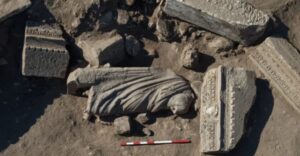
A rare marble sculpture group depicting Asclepius and his son Telesphorus has been brought to light by archaeological excavations at ancient Aspendos, near present-day Antalya, Turkey. The discovery provides new evidence about the role of healing and the worship of health in the public and everyday life of the ancient city.
The discovery was announced by Turkey’s Ministry of Culture, with Minister Mehmet Nuri Ersoy describing it as the “return of healing to the light,” referring to the significance of the sculpture.
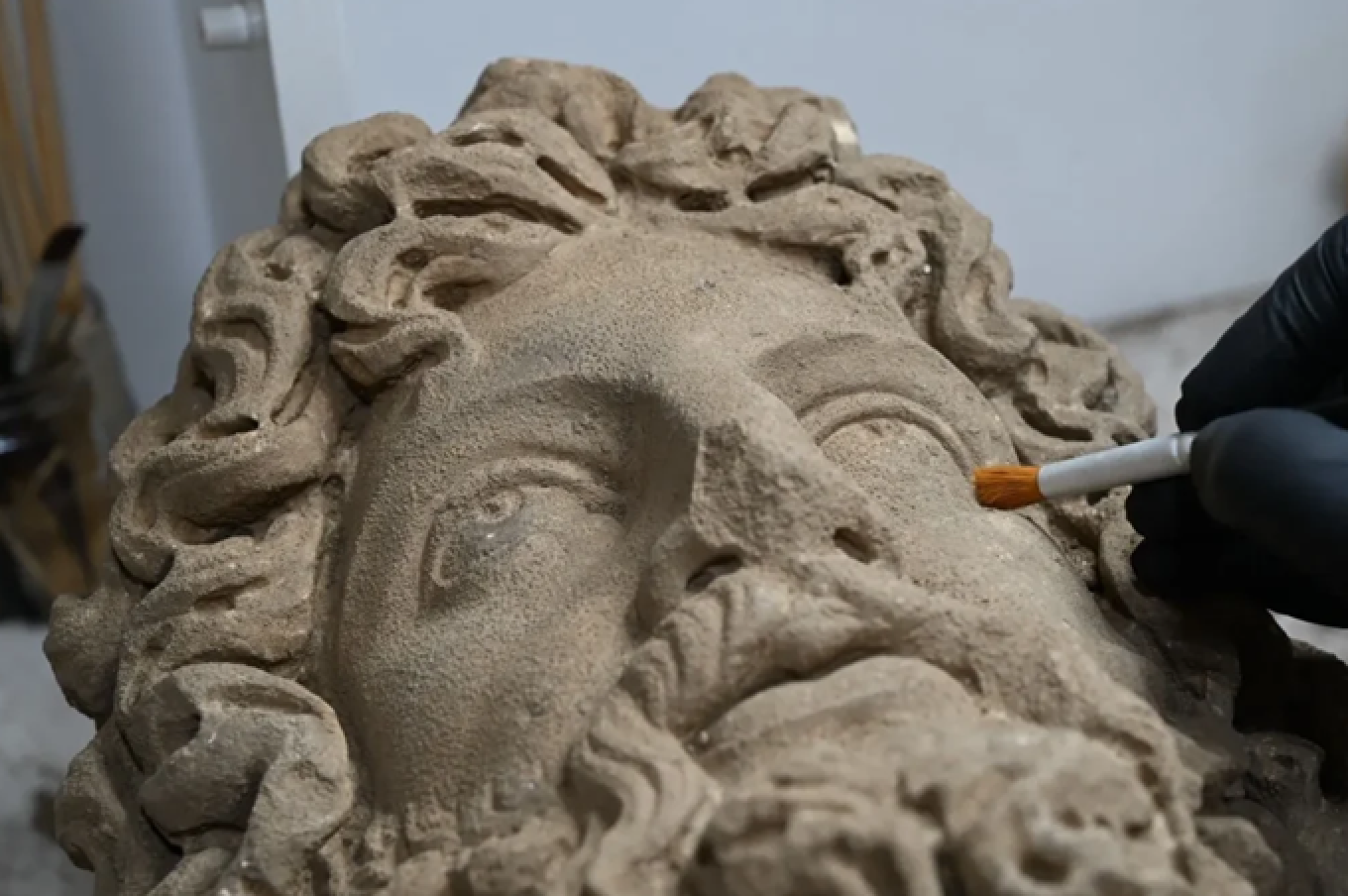
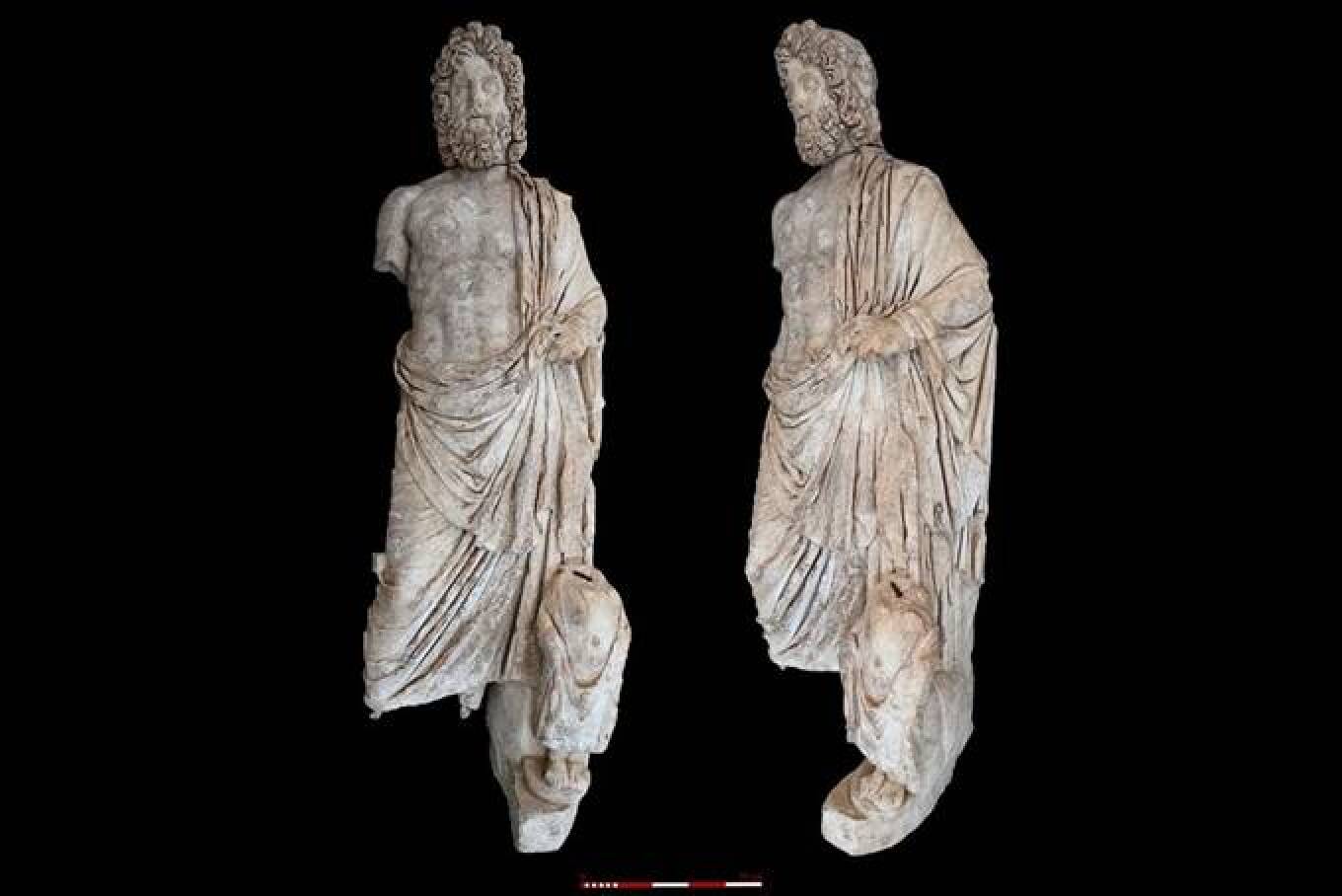
The sculpture depicts two figures who were directly associated with health in ancient Greek religion. Asclepius was worshipped as the god of medicine, while Telesphorus, usually portrayed as a youthful figure with a covered body and hood, symbolized recovery and the restoration of health after illness.
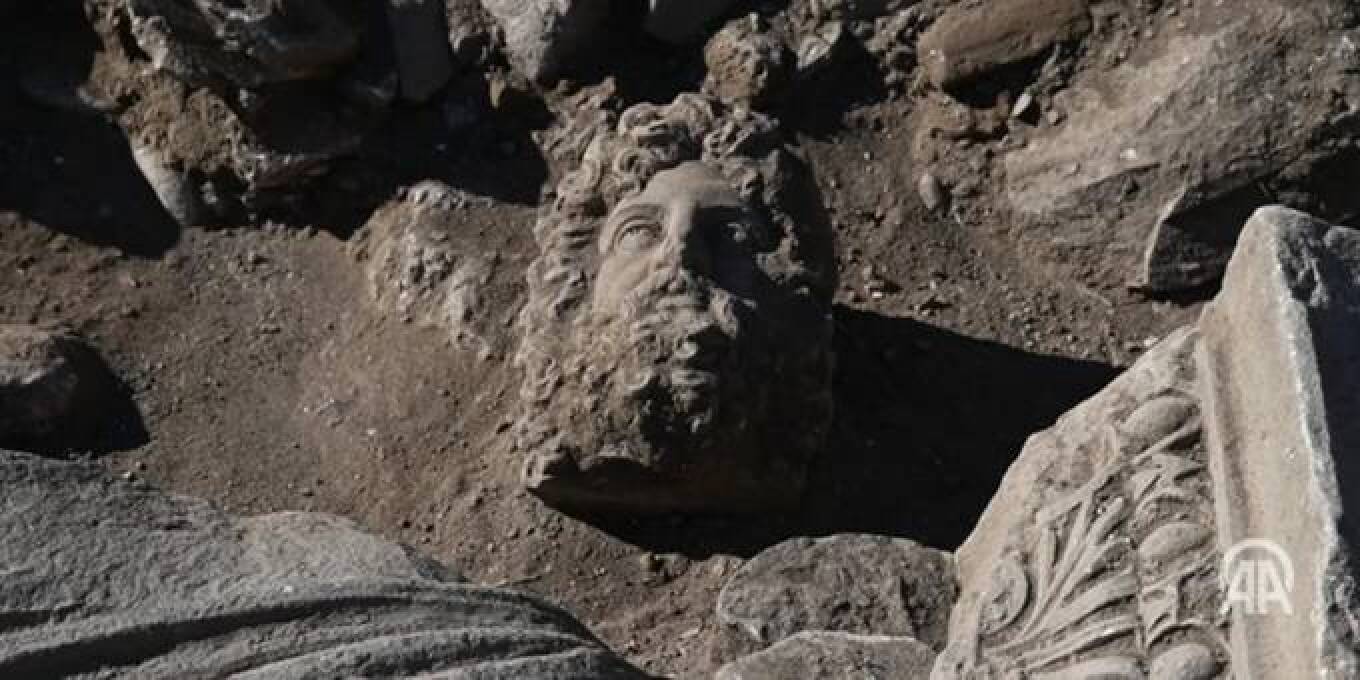
Their depiction together carries particular symbolic significance, connecting the process of treatment with the completion of recovery.
The sculpture is approximately 2.20 meters tall and, according to researchers, dates to the late 2nd century AD. It was discovered near Aspendos’ monumental gate, specifically along a heavily traveled road during the Roman period.
The exact location where it was found is considered important for interpreting the discovery. Its presence in a busy part of the city supports the view that the worship of Asclepius and the concept of health were not confined exclusively to isolated healing sanctuaries, but also had a place in public spaces and the everyday lives of the city’s inhabitants.
Residents and visitors to Aspendos would have passed through this area, which was connected to important public buildings, including the theater and the Agora.
Aspendos and its famous ancient theater
Aspendos was one of the most important ancient Greek cities of Pamphylia, in southern Asia Minor, approximately 40 kilometers east of present-day Antalya.
It was founded around 1000 BC by Greek settlers from Argos and developed into a major commercial center from the 5th century BC onward. For centuries, it ranked among the most important cities of Pamphylia, alongside Perge and Side.
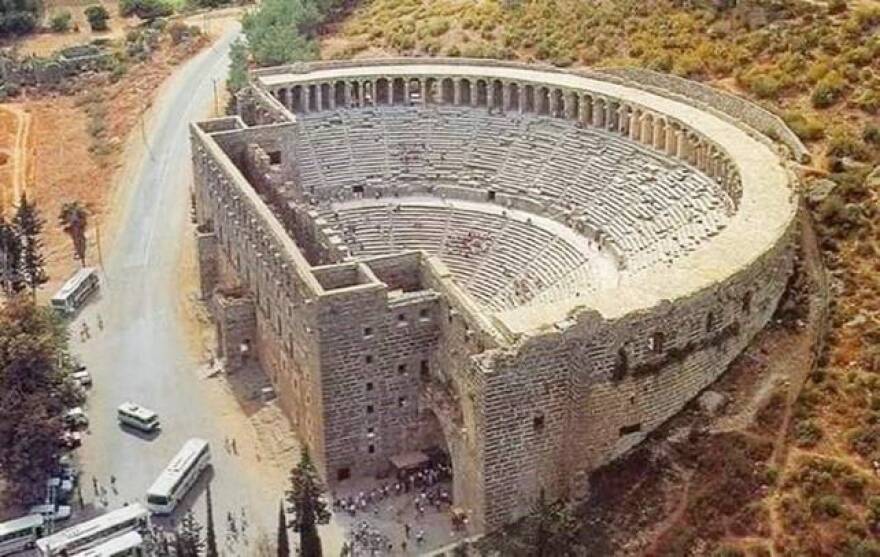
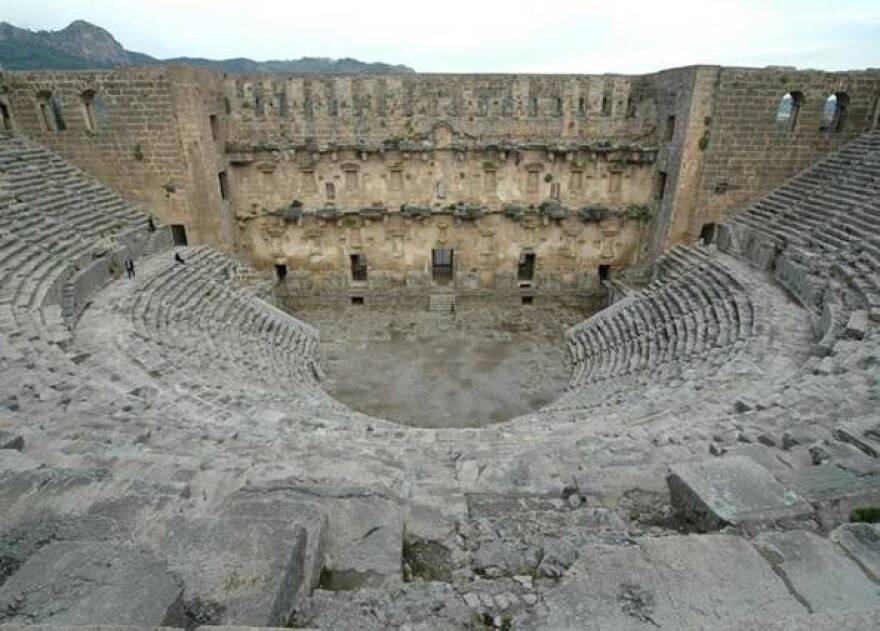
Its most famous monument is the ancient theater of Aspendos, one of the best-preserved ancient theaters in existence. It was built in 155 AD by the Greek architect Zeno and was donated by two wealthy merchants from the city.
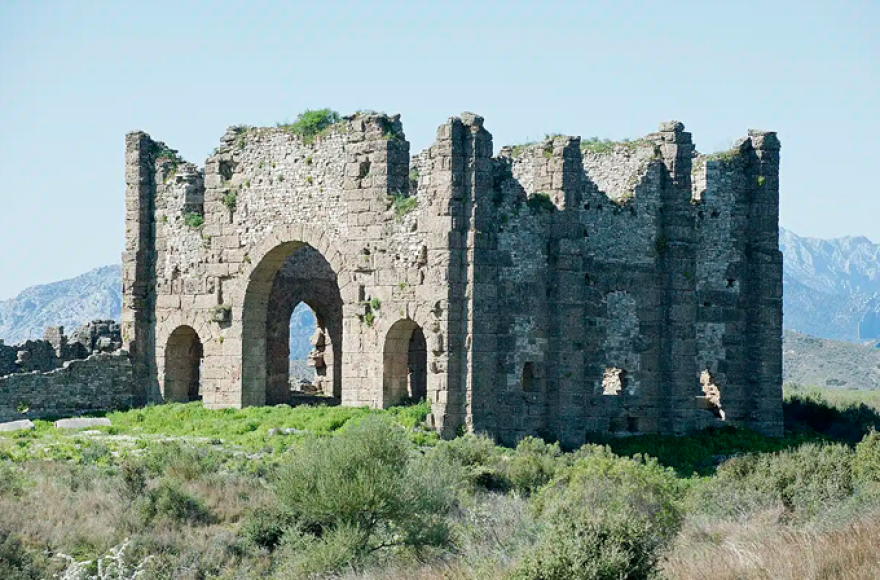
The archaeological site also preserves important remains and monuments, including the aqueduct, Agora, nymphaeum, basilica, bouleuterion, baths and gymnasium.
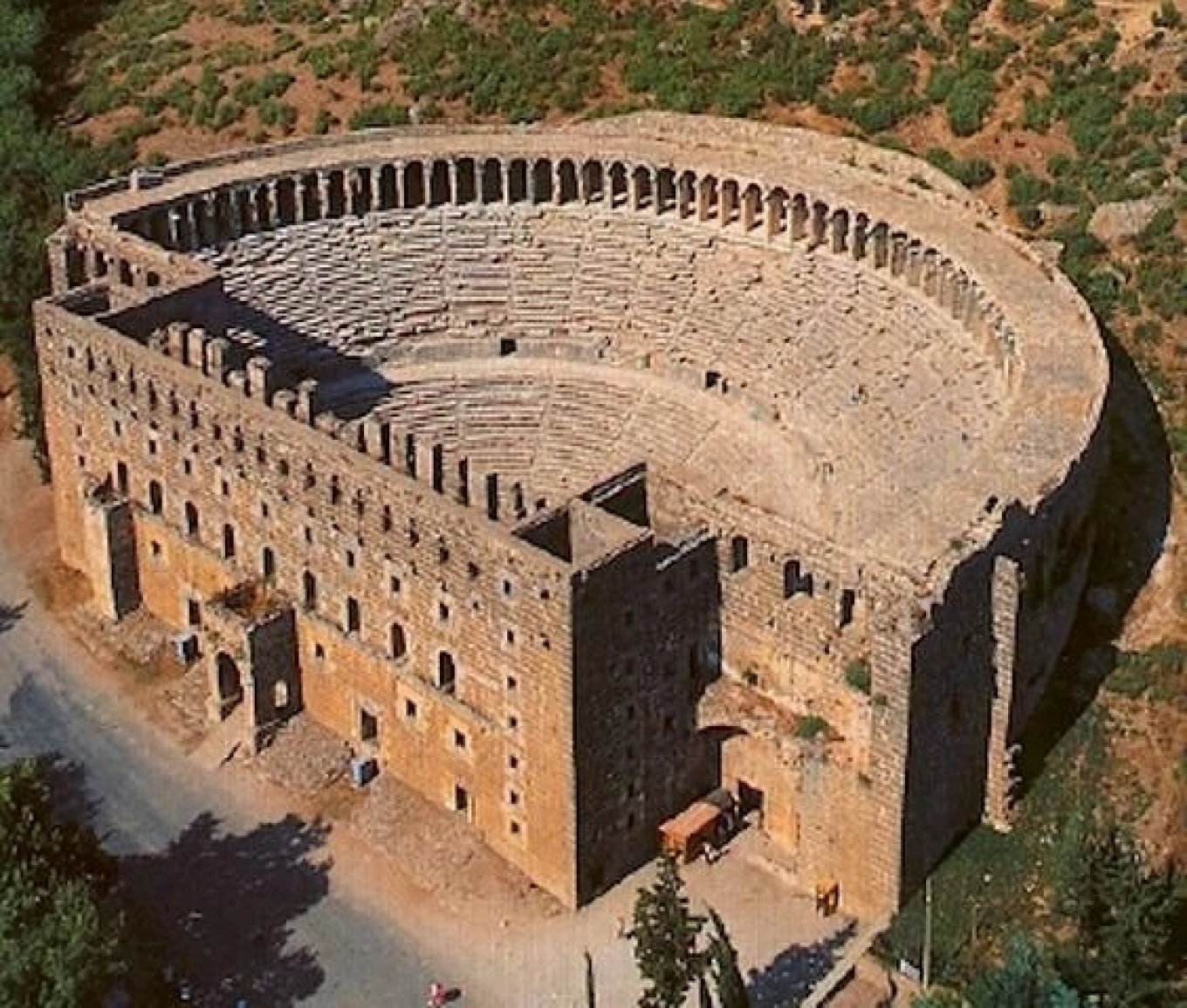
Since 2015, the ancient city, together with its theater and aqueducts, has been included on UNESCO’s Tentative List of World Heritage Sites.
According to the Turkish newspaper Hürriyet, the 2025 excavations were carried out as part of the Turkish Ministry of Culture and Tourism’s “Heritage for the Future Project.” The discoveries made during the excavations have contributed to a significant reassessment of our understanding of the history of ancient Aspendos.
Ask me anything
Explore related questions




