





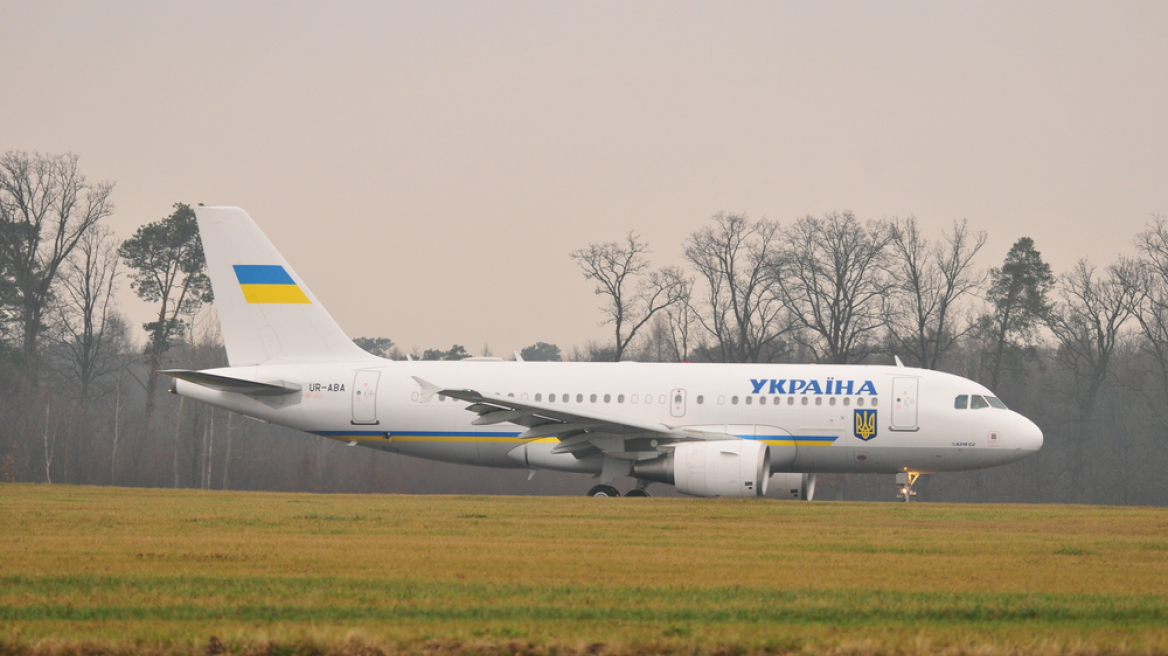
Volodymyr Zelensky has expressed his belief that Russia deliberately sent drones into Moldova while his presidential aircraft was in the country, claiming that a similar incident occurred on his return to Ukraine.
In an interview with CBS News, the Ukrainian president argued that the presence of his aircraft was the reason for the Russian activity in Moldovan airspace. “My presidential aircraft was in Moldova and that is why they attacked Moldova,” he said, adding that he was not certain that he himself was the target and leaving open the possibility that Moscow may have been attempting to intimidate him.
Zelensky’s claims come just days after the 8 September incident, when a Shahed-type drone violated Moldovan airspace and subsequently entered Romanian airspace. Moldova’s Defence Ministry had confirmed the violation, although it did not officially link the drone to the Ukrainian president’s flight.
A source who spoke to the Kyiv Independent claimed that the drone passed very close to Zelensky’s aircraft as it was taking off from Moldova bound for Norway. Norwegian Prime Minister Jonas Gahr Støre had also told NRK that the Ukrainian president’s aircraft “nearly got hit” by a drone.
Zelensky has now revealed that the incident was not an isolated one. As he said, on his return to Ukraine via Chișinău, one or two drones again entered Moldovan airspace. “We did not make it public. But when we were returning home, again via Chișinău, they did the same thing. I do not trust them. I believe they knew,” he told CBS.
“Putin does not want a few kilometers – He wants Ukraine”
Elsewhere in the interview with the US network, Zelensky appeared open to a ceasefire along the current front line, provided that Russia also stopped hostilities without preconditions and the process moved on to diplomacy.
“We are ready for that,” he said, arguing that an unconditional ceasefire could serve as the starting point for negotiations mediated by international partners.
The Ukrainian president rejected, however, the idea that there could be an agreement from which both Russia and Ukraine could emerge as “winners”.
“There is no win-win in this war,” he said, noting that once there had been loss of human life, such an outcome was no longer possible. In his view, the most important “victory” would not be for either country to be able to claim that it had prevailed, but for the war to end and human lives to be saved.
The issue of territory was also at the centre of his remarks, and remains the biggest obstacle to efforts to reach a peace agreement.
Zelensky rejected the assessment that Vladimir Putin could be satisfied with the ceding of specific Ukrainian territories. As he argued, the issue is not about “a few kilometres” of land. “We need to change Putin’s way of thinking,” he said, continuing: “He already has the biggest country in the world and he needs a few kilometres? He needs Ukraine. He wants Ukraine to be part of Russia.”
According to the Ukrainian president, this is also why Kyiv believes that a simple territorial concession could not, by itself, guarantee lasting peace. Ukraine, he said, needs credible security guarantees that would prevent Russia from attempting to seize the country again in the future.
Ready even to sit across from Putin
Zelensky also said he would be willing to meet the Russian president in person, provided such a meeting could bring the end of the war closer.
He made clear, however, that this was not something he personally wanted. “I would rather spend this time with my family,” he said, describing Putin as an “enemy”. He added, however, that even a meeting with an enemy could make sense if it led to genuine progress towards peace.
The Ukrainian president also reacted positively to the fact that US envoys Steve Witkoff and Jared Kushner eventually visited Kyiv, following their repeated contacts with Moscow. As he said, some of the US proposals remain confidential while they are being considered by both sides.
Energy ceasefire remains on paper
At the same time, Zelensky questioned whether the ceasefire on energy infrastructure, announced by Donald Trump on 14 September, is already in effect.
The US president had claimed that Russia and Ukraine had agreed to stop strikes on each other’s energy facilities. Kyiv, however, clarified that there was not yet a formal agreement and called for guarantees that Moscow was genuinely prepared to honour such a ceasefire.
Zelensky stressed that Putin does not respond to moves that he perceives as weakness. “Putin does not respect, does not see and will not even think about how to negotiate with weak people. That is why we respond. We never attack first,” he said.
Ask me anything
Explore related questions




