





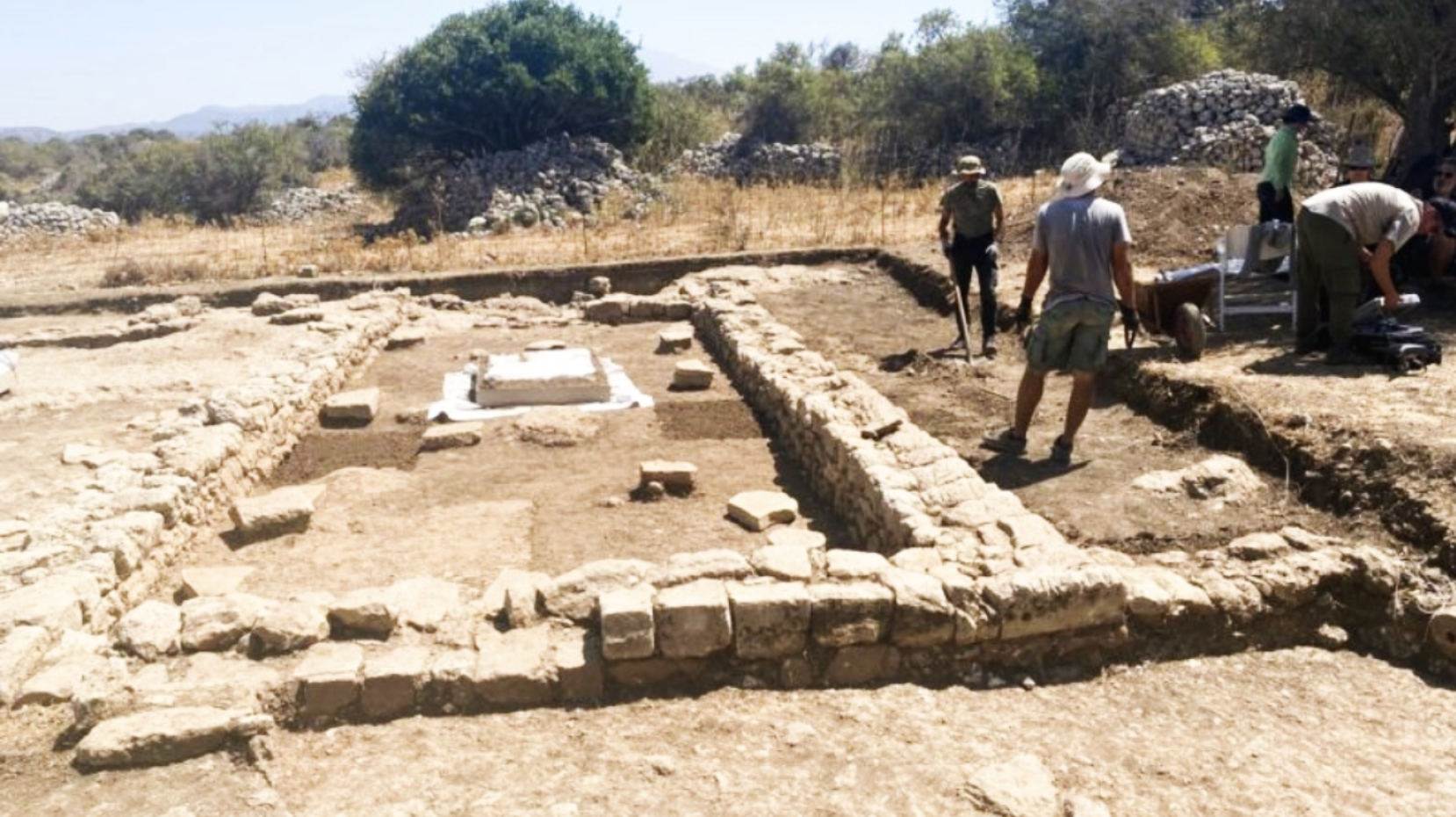
For years, a small sign on a road in Heraklion, Crete, puzzled local residents. It read “Onythe”, a name unknown to most people, which many considered simply a local peculiarity or a choice without any particular significance.
The reality, however, was very different, as reported by the local website creta24.gr. Onithe was not a random place name, but the name of an ancient city of Crete, an important settlement that for years remained in the shadows despite its significance.
The archaeological site is located south and east of Rethymno, above the village of Goulediana, in a location offering a unique view that allows visitors to observe much of central Crete.
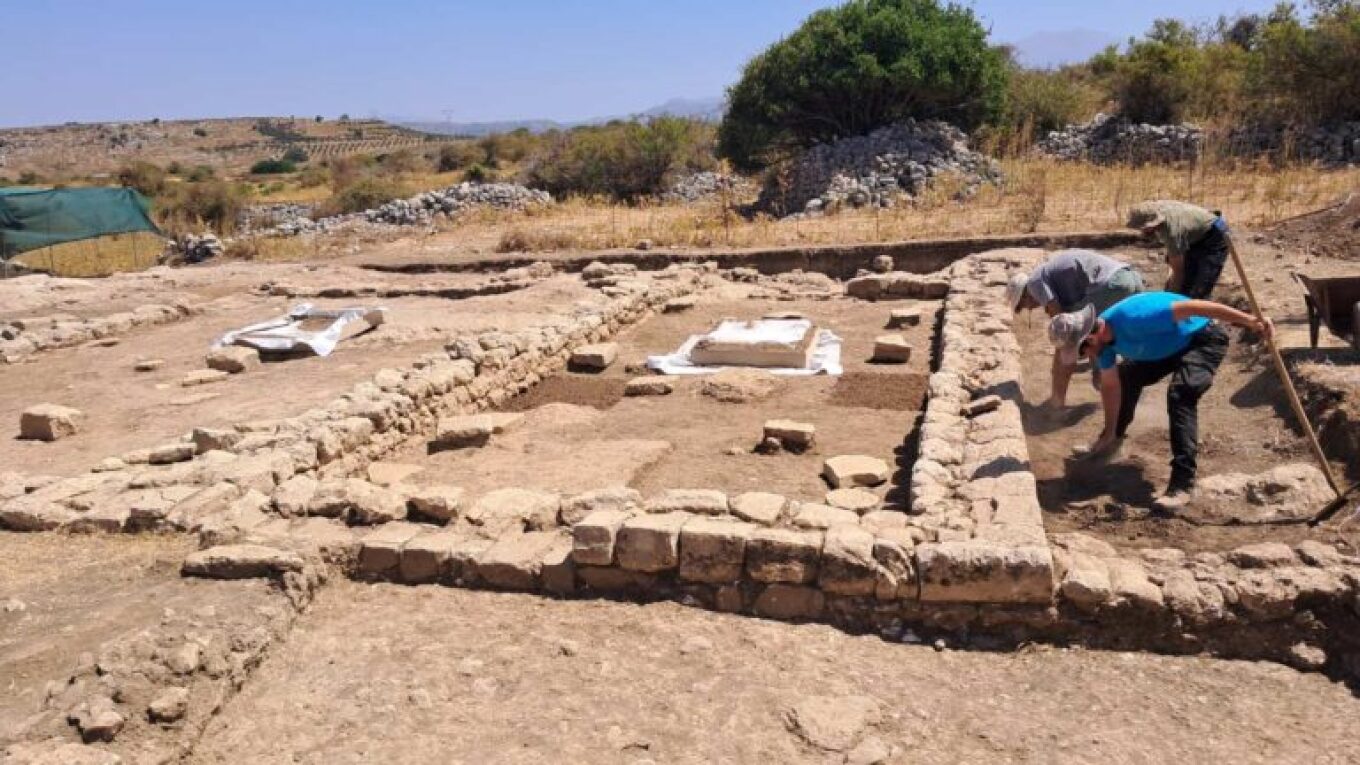
The excavations that have continued in recent years are gradually revealing a city with a long history, which appears to have been an important centre as early as the Archaic period and remained active through the Roman period.
A City with Thousands of Years of History
Human presence in the area dates back to the Neolithic period, in the 4th millennium BC, while the most significant finds are associated with the city’s period of prosperity during the Archaic period.
Archaeologists had known about the site since the 19th century, but the first organised excavations were carried out in 1952 by the renowned archaeologist Nikolaos Platon.
At the time, two large Archaic buildings were brought to light, known as “House A” and “House B”, with the former considered one of the most important examples of Archaic domestic architecture in Crete.
After decades of inactivity, systematic archaeological research resumed in 2018 by the Rethymno Ephorate of Antiquities and continues to this day.
The New Finds
The excavation is being led by archaeologist Kyriakos Psaroudakis, who is essentially continuing the work begun by Nikolaos Platon. As he explains, the focus of the research is a large complex dating to the Archaic period, specifically the 7th century BC.
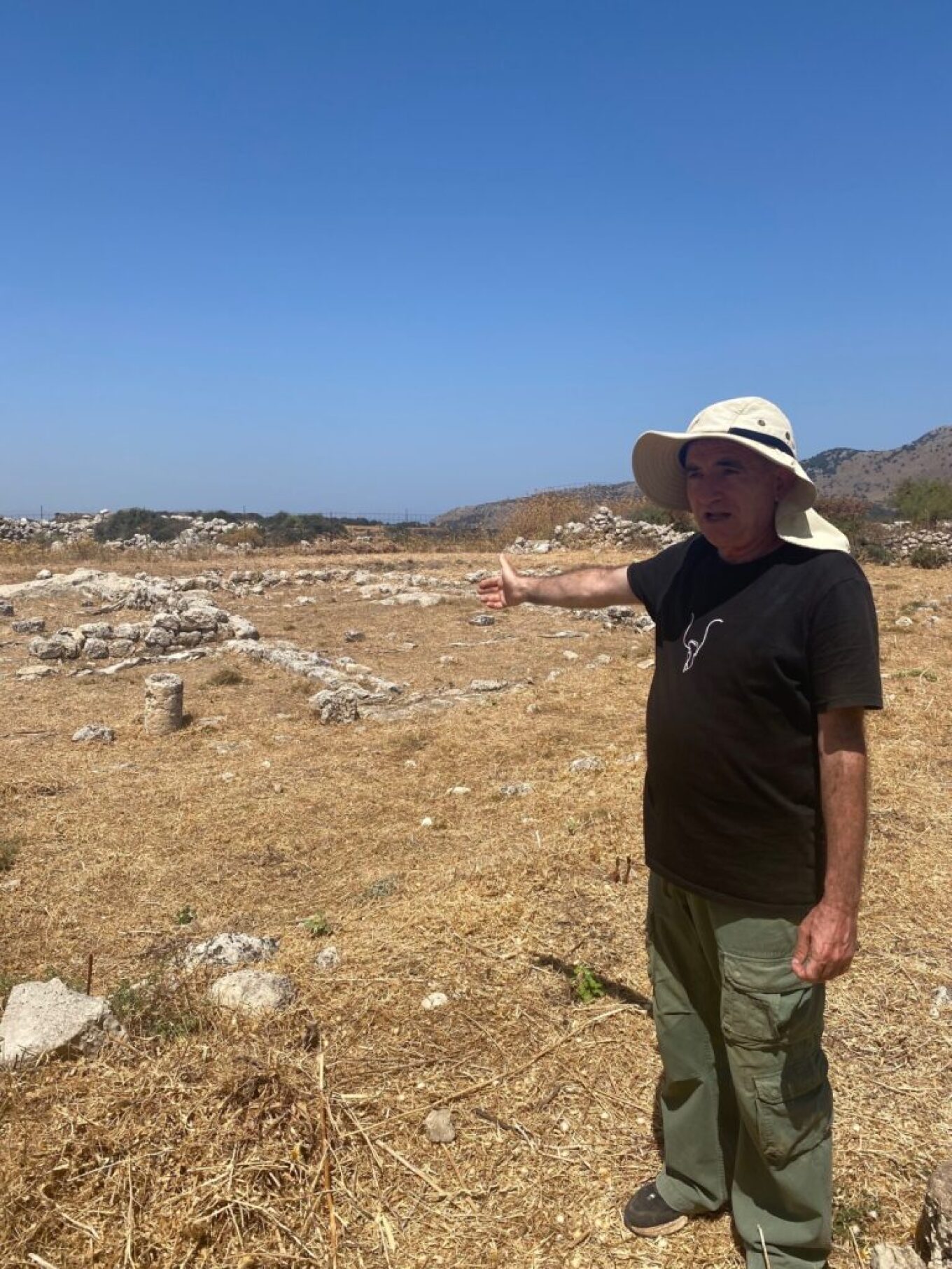
Kyriakos Psaroudakis
“This is an extensive building complex which, according to the archaeological evidence available so far, appears to have had a public or communal character,” Mr. Psaroudakis said, noting that the complex is linked to the early processes of urbanisation and the formation of the city-state in ancient Crete.
“We are trying to continue the excavation from where Platon left off, and through the five-year programme we hope to uncover a significant part of this city,” he stressed.
Significant remains have already been identified at the site, including an Early Christian basilica dating to the 6th century AD, an ancient fountain, as well as sections of a tower on the acropolis dating to the 4th century BC.
Residents Are Promoting Onithe
Local residents are also actively involved in efforts to promote the archaeological site, having established the “Friends of Onithe” Society.
The association’s aim is to make the history of the area known to the wider public and bring visitors closer to the archaeological finds.
As Manousos Psaroudakis, representing the association, explained, a digital platform has been created through which visitors can learn about the archaeological site’s locations, the excavations and the finds.
Systematic archaeological research is being carried out by the Rethymno Ephorate of Antiquities, with the participation of conservators and students from Greek and American universities. It is financially supported by the Region of Crete through the 2026–2027 Cultural Programme Agreement signed with the Ministry of Culture and the Municipality of Rethymno.
Ask me anything
Explore related questions




