






With the submission of the final payment request under the Recovery Fund, a multi-year cycle for Greece’s “Greece 2.0” programme is coming to an end. On the occasion of the submission, Prime Minister Kyriakos Mitsotakis visited the offices of the Special Coordination Service for the Recovery Fund on Panepistimiou Street.
Addressing the Service’s employees, the Prime Minister thanked them for their work over the past years and their contribution to implementing the programme within particularly strict deadlines.
Looking back at the history of the Fund, Kyriakos Mitsotakis referred to the five days of negotiations in Brussels over its creation, noting that Greece secured significant European support at the time, proportionate to the size of its economy.
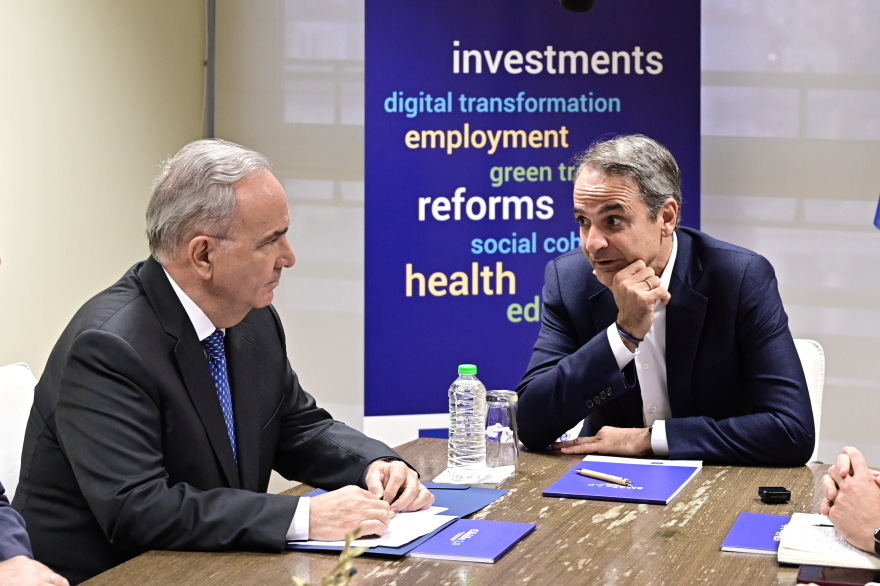
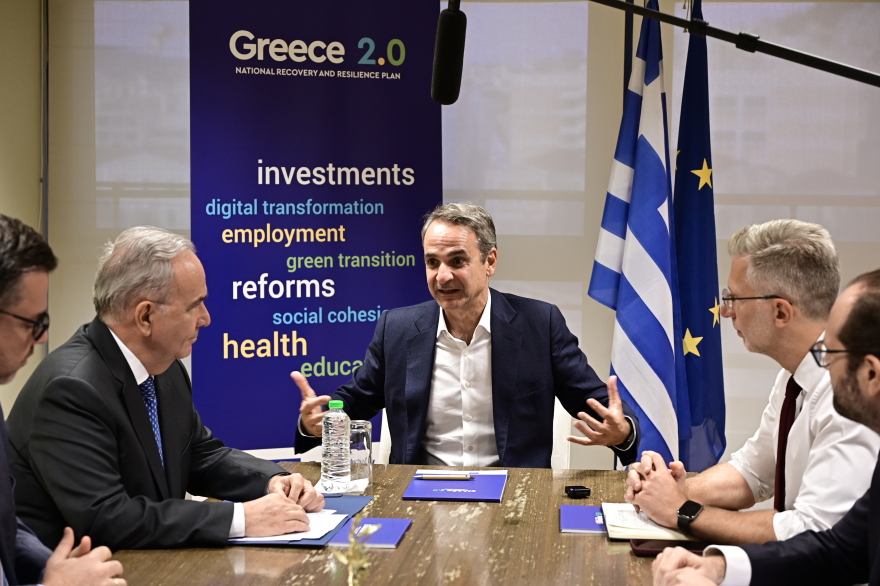
As he said, following the agreement, “the difficult work” began, involving the design of the Greek programme and the creation of the necessary structures and the special service for the Recovery Fund, without which, he noted, it would have been impossible for the country to reach its current position.
The Prime Minister made particular reference to the efforts of the Service’s staff, noting that he followed the progress of this “mammoth undertaking” on a daily basis, as well as the extremely tight deadlines that had to be met.
At the same time, he highlighted the expertise acquired by the public administration through the implementation of the Recovery Fund, describing it as an important legacy for making use of the next European funding programmes.
“We are, therefore, in a position today to press the button,” the Prime Minister said, thanking the Service’s staff for their contribution.
For his part, Alternate Minister of National Economy and Finance Nikos Papanathanasis said that the final request submits 123 milestones and targets for assessment, paving the way for the disbursement of €6.75 billion.
As he noted, with a total of 376 milestones and targets completed, corresponding to 176 investments and reforms, “Greece 2.0” is bringing €35.95 billion in European funding to the country.
Mr. Papanathanasis also referred to the loan component of the Recovery Fund, noting that it is mobilising €46 billion in financing for businesses through low-interest loans.
At the same time, he stressed that Recovery Fund resources are being directed towards projects and initiatives concerning infrastructure, healthcare, education, the digitalisation of the state and social cohesion, as well as investments and new jobs.
The Alternate Minister spoke of the completion of a “multi-year journey”, highlighting the contribution of the Special Coordination Service’s staff, the public administration, institutions and the market to the implementation of the programme.
“The Recovery Fund leaves behind projects, reforms and a valuable legacy for Greece in 2030,” Mr. Papanathanasis said.
Ask me anything
Explore related questions




