





The botched execution of Christa Gail Pike in Tennessee has not only opened a fresh debate on the death penalty in the United States but also put pentobarbital back in the spotlight. The powerful barbiturate was used to put the convicted killer to death, yet it failed to have the expected effect even after two doses were administered.
According to her lawyers, the 50-year-old was still alive after the second dose. She had lost consciousness, her heart was still beating and she could be heard snoring loudly before she was finally taken by ambulance from the prison to a hospital.
There is no further information on her condition for now, although experts have suggested that the delay in attempts to revive her may have caused brain damage.
According to the Independent, the incident is considered highly unusual even in the history of failed executions in the US. Robin M. Maher, executive director of the Death Penalty Information Center, described what happened to Pike as “unique and unprecedented”.
She said that at least seven cases have been recorded in which inmates survived execution attempts because the executioners were unable to gain intravenous access.
What sets Pike’s case apart is that the drug was administered, twice, without causing her death.
The “gap” in Tennessee’s protocol
According to the Independent, Tennessee’s protocol states that if the inmate has not died after the first set of syringes, a second must be administered. It does not specify, however, what should happen if the condemned prisoner is still alive after the second.
That is exactly what happened with Pike. By 8.26pm, according to journalists in the specially designated witness room, the second dose of pentobarbital had been administered.
The 50-year-old could still be heard snoring behind the closed curtain until 8.53pm, when the microphone was switched off and media representatives were asked to leave.
Earlier, while strapped to the execution gurney, Pike had remained awake and at one point lifted her head and asked correctional officers whether it was normal that her arm “felt like this”. It was not clear what she was referring to.
What pentobarbital is and why Biden’s administration withdrew it
Pentobarbital is a barbiturate, a class of drugs that suppress activity in the central nervous system.
Barbiturates were used for decades in medicine, including to treat epileptic seizures and severe convulsions. At high doses they can cause deep sedation, respiratory failure and ultimately death.
It was precisely this property that led several US states to use pentobarbital as the sole drug in lethal injections.
In late 2024, Tennessee adopted a single-drug execution protocol based on pentobarbital, abandoning its older three-drug combination.
The use of pentobarbital in executions had already provoked fierce scientific and legal controversy in the US. In January 2025, in the final days of the Biden administration, then Attorney General Merrick Garland withdrew the federal protocol that provided for pentobarbital as the sole drug in executions.
The decision followed a review of scientific and medical data by the Department of Justice, which concluded that there was “uncertainty” over whether the protocol could cause inmates unnecessary pain and suffering. Among the issues examined was the risk of acute pulmonary oedema.
The Trump administration later reinstated the single-dose pentobarbital execution protocol at federal level. The Department of Justice argued that the previous administration had misjudged the scientific evidence and that the substance causes rapid loss of consciousness.
Despite its limited availability, pentobarbital has been used in many cases of euthanasia or assisted suicide around the world.
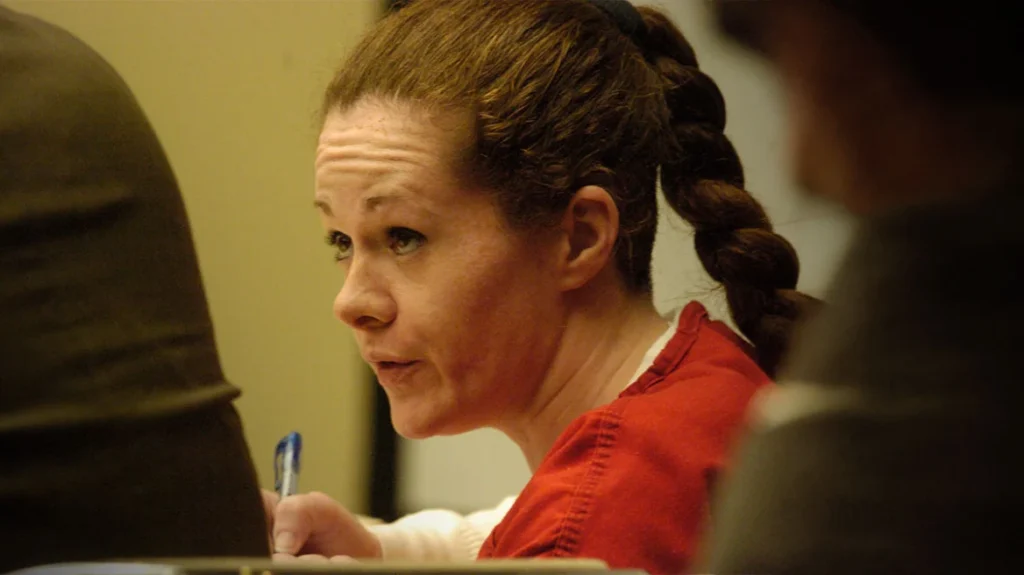
“I am leaving this world with love”
Shortly before the procedure began, Pike delivered what she believed would be her last words. “I will leave this world as I have spent most of my life, and that is with love,” she said, adding that she felt at peace. Her execution, however, was not completed.
The situation forced Tennessee Governor Bill Lee to suspend the remaining executions scheduled for 2026 and to order an independent, comprehensive review to establish exactly what went wrong. It was the state’s second botched execution in the same year.
The Tennessee Department of Correction insists that it followed every stage of the approved protocol.
Its spokeswoman told the Tennessean that the substance used in the lethal injection protocol “has proved consistently effective” and that the current protocol does not permit any additional procedures beyond those carried out on Wednesday evening.
Who is Christa Pike, the “Satanist killer” of a 19-year-old
Pike was 18 in January 1995 when, together with her then 17-year-old boyfriend and a friend, she lured 19-year-old Colleen Slemmer, a fellow student on the Job Corps vocational training programme, to a wooded area, where they tortured and then killed her.
The gruesome nature of the murder (the perpetrators carved a pentagram into the victim’s chest and removed a piece of her skull, which they kept as a souvenir of their crime) received widespread media coverage at the time.
Testimony showed that Pike regarded Slemmer as a rival because she had become obsessed with her boyfriend, Tadaryl Shipp. Pike and Shipp confessed to the crime and, a year later, were both convicted of premeditated murder.
Pike was sentenced to death, while Shipp received life imprisonment with the possibility of parole. Their co-defendant, Shadolla Peterson, who was 18 at the time of the crime and acted as a lookout, testified for the prosecution and was placed on probation.
Pike was also convicted in August 2001 of attempted murder over an attack on a fellow inmate, according to Tennessee correctional authorities.
In their 226-page petition asking the governor to commute the death sentence to life imprisonment without parole, her lawyers cited Pike’s experiences. She was a victim of violence in childhood, suffered repeated sexual abuse and neglect, and was raped twice, at the ages of 11 and 17. They also set out the diagnoses Pike received in prison for bipolar disorder and post-traumatic stress disorder.
Ask me anything
Explore related questions




