





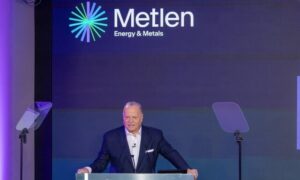
Evangelos Mytilineos, chairman and CEO of Metlen, has launched a scathing criticism of the European Commission over its failure to curb the massive export of aluminium scrap from the European Union. In a LinkedIn post, he warned of the serious consequences for the competitiveness of European industry, recycling and the green transition.
With the pointed statement that “the European Commission is once again driving secondary aluminium production facilities to despair”, the head of Metlen expressed his strong dissatisfaction with Brussels’ retreat from a commitment made last year to introduce targeted measures to curb aluminium scrap exports by the second quarter of 2026.
As he pointed out, despite a dedicated public consultation and official recognition of the strategic importance of retaining this raw material in Europe, the European Commission ultimately abandoned its original plan, opting instead for vague promises of a different legal approach that could prolong discussions for another year.
Mytilineos also cited figures illustrating the continued deterioration of the problem. EU aluminium scrap exports reached a record high of 1.27 million tonnes in 2025, up 50% compared with 2019. Even more strikingly, exports to the United States surged by 243% in just one year, between 2024 and 2025.
According to the head of Metlen, the continued outflow of these volumes deprives European recycling companies of valuable raw materials, limiting their ability to make new investments, expand production and reduce their carbon footprint. At the same time, it highlights the contradiction between the EU’s stated commitments to strategic autonomy, the circular economy and industrial resilience and the lack of meaningful action to retain critical materials within the European market.
He also placed particular emphasis on the approach taken by Europe’s trading partners, which, he said, are successively introducing export duties and restrictions to secure sufficient raw materials for their domestic industries. By contrast, the European Union continues, in his view, to defend a free-trade model that its competitors no longer apply on the same terms.
“Enough is enough!” he declared, calling on the European Commission to introduce effective measures immediately, covering all relevant products and export destinations. As he stressed, Europe cannot aspire to build a circular economy if it collects strategically important materials within its borders but then allows them to be exported.
The post and its full text
THE EUROPEAN COMMISSION IS ONCE AGAIN DRIVING SECONDARY ALUMINIUM PRODUCTION FACILITIES TO DESPAIR!
Last year, the European Commission committed to introducing a targeted measure by the second quarter of 2026 to stem the outflow of aluminium scrap from Europe. It even conducted a dedicated public consultation, explicitly recognising the importance of retaining aluminium waste within Europe for decarbonisation, strategic autonomy and industrial competitiveness.
However, this formal commitment was recently abandoned. Instead, we are now hearing vague promises of a different approach through alternative legal mechanisms, which could lead to another year of discussions in Brussels.
Enough is enough!
The problem of aluminium scrap exports from Europe cannot wait any longer.
The scale of the problem is already clear. EU aluminium scrap exports reached a record high of 1.27 million tonnes in 2025, marking a 50% increase compared with 2019. Exports to the United States alone rose by 243% in 2025 compared with 2024.
While we continue to debate, this strategically important secondary raw material is leaving the EU at a rapid pace, depriving European recycling companies of the raw materials they need to invest, reduce their carbon footprint and grow. This directly contradicts Europe’s commitments to the circular economy, critical raw materials and industrial resilience.
At the same time, our trading partners are taking action. One after another, they are imposing export duties, restrictions and other measures to retain scrap for their own industries. Once again, Europe appears determined to defend an idealised version of rules-based free trade that increasingly applies only to us.
The European Commission must now introduce an effective measure covering all relevant products and all export destinations.
Europe cannot build a circular economy by collecting strategically important materials within its borders and then allowing them to slip through its fingers!
Ask me anything
Explore related questions




