





A computer capable of performing in a single second mathematical calculations that would take a human being 2.7 billion years to complete will be inaugurated today at 10.30am in Lavrio, in the presence of Prime Minister Kyriakos Mitsotakis.
This is not simply another technological achievement boasting impressive performance figures, but an infrastructure project with the potential to transform Greece’s capabilities in science, the economy and everyday life.
From predicting the spread of devastating wildfires and enabling the early diagnosis of serious diseases to developing Greek artificial intelligence models, the Daedalus supercomputer aims to provide computing power that Greece has until now had to seek abroad.
With a measured performance of 85.69 petaflops, the new national supercomputer ranks 31st in the June 2026 TOP500 global supercomputer rankings, marking Greece’s first appearance on the list.
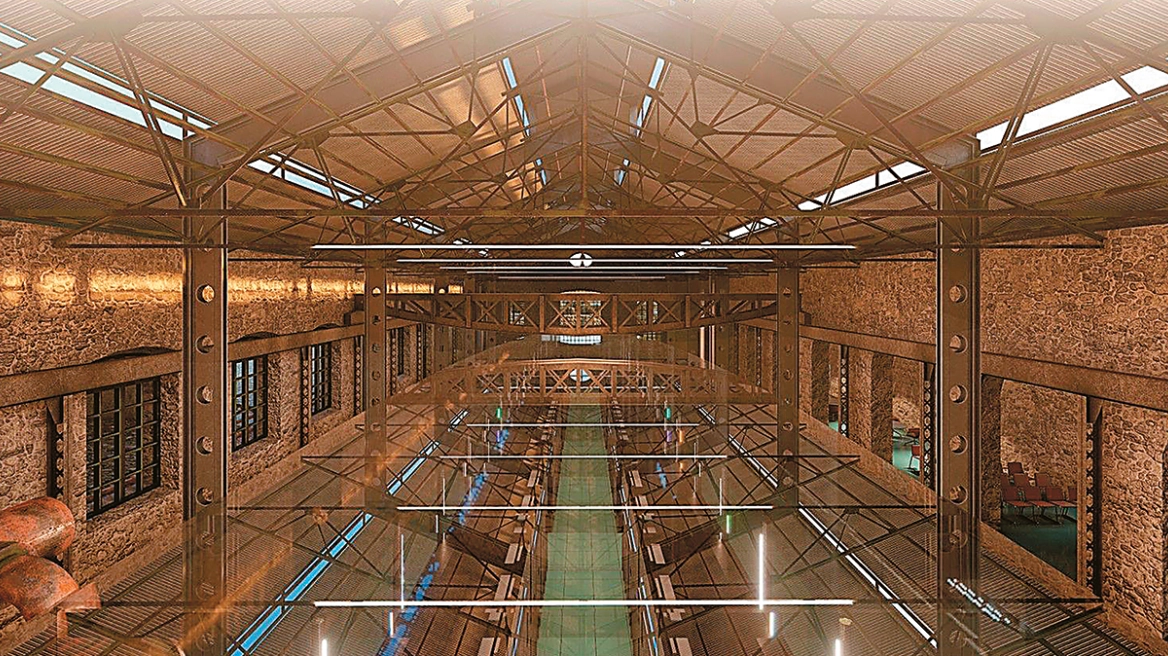
The project’s total cost amounts to €58.9 million, while its installation in a historic industrial building in Lavrio brings together two distinct eras of technological innovation. The real challenge, however, is not its position in the global rankings, but whether this unprecedented computing power can be turned into a tangible advantage for Greek society.
At the Lavrio Technological and Cultural Park, where electricity was generated for the mining industry more than a century ago, one of the country’s most important digital infrastructure facilities is now being established.
The inauguration will be attended by the Prime Minister and Minister of Digital Governance and Artificial Intelligence Dimitris Papastergiou, who previously outlined the project’s twofold objective to Proto Thema: placing Greece on the global artificial intelligence map and securing national independence in computing power.
85 quadrillion calculations per second
The scale of the undertaking is reflected in the figures. Daedalus achieved a measured performance of 85.69 petaflops, equivalent to approximately 85,690,000,000,000,000 floating-point mathematical operations per second.
This represents computing power comparable to that of approximately 85,000 powerful desktop computers.
To put this into perspective, calculations that Daedalus completes in one minute would take a conventional computer approximately two months.
The difference, however, is not merely one of speed. A supercomputer distributes exceptionally complex problems across thousands of computing units working in parallel, allowing enormous quantities of data to be processed and tasks that would otherwise take weeks or months to be completed.
Daedalus is a Hewlett Packard Enterprise (HPE) system equipped with NVIDIA GH200 Grace Hopper Superchip accelerators.
Each superchip combines a Grace processor with a Hopper graphics accelerator, enabling high performance in both scientific computing and the training of artificial intelligence models.
Cooling is provided through a direct liquid-cooling system, using a closed water circuit to remove heat from the chips.
The same family of accelerators is used in Germany’s JUPITER supercomputer.
Compared with ARIS, Greece’s national supercomputer operating since 2015, the upgrade is remarkable. When Daedalus was originally designed to deliver 30 petaflops, it was already expected to be 60 times more powerful.
Its final measured performance of 85.69 petaflops has widened that gap considerably.
The two systems are expected to operate in a complementary manner under the supervision of GRNET, Greece’s National Infrastructures for Research and Technology.
The project’s development began in 2022. On 1 July, agreements were signed between the Ministry of Digital Governance, GRNET and the National Technical University of Athens for the installation in Lavrio.
In November, a hosting agreement followed with the European High Performance Computing Joint Undertaking (EuroHPC), with Cyprus, Montenegro and North Macedonia also participating.
The original plan envisaged a supercomputer delivering more than 30 petaflops, with completion scheduled for 2024.
A tender launched in June 2024 raised the target to approximately 60 petaflops.
Ultimately, on 26 March 2025, a contract was signed with HPE for a system with an announced performance of 89 petaflops, almost three times the original target.
Greek company MainSys was separately awarded responsibility for constructing the data centre.
The project was not without complications. An appeal lodged by a small company with the Council of State temporarily suspended the process before being withdrawn, while the timetable was repeatedly revised.
The supercomputer was assembled and tested before being transported to Greece.
Its performance was recorded in the TOP500 rankings announced in Hamburg in June 2026.
It was transferred to Lavrio during the summer, and on 11 October Papastergiou announced that the power supply had been switched on and final adjustments were under way.
How Daedalus could transform everyday life
The real value of Daedalus lies in its practical applications.
Access is envisaged for universities, research centres, start-ups, small and medium-sized enterprises and public bodies.
European organisations and the countries participating in the consortium will also be able to use the system.
A central role will be played by PHAROS, Greece’s artificial intelligence factory.
While Daedalus provides the computing power, PHAROS will organise its use, offering tools, data and technical support.
The consortium, led by GRNET, includes the National Centre for Scientific Research Demokritos, the National Technical University of Athens, the Athena Research Centre, the Hellenic Corporation of Assets and Participations, the Centre for Research and Technology Hellas, Aristotle University of Thessaloniki, the National and Kapodistrian University of Athens, the Foundation for Research and Technology – Hellas, the University of Piraeus, the National Documentation Centre and IDIKA.
Its three main priorities are healthcare, the Greek language and culture, and sustainable development.
In civil protection, the supercomputer will be capable of running dozens of simulations simultaneously to predict how a wildfire might develop under different wind speeds and directions.
This would enable the relevant authorities to assess more accurately which areas could be at risk in two, six or twelve hours, and where firefighting resources should be deployed.
Similar applications could be developed for flooding, such as that caused by Storm Daniel, as well as heatwaves, droughts and extreme weather events, using more detailed meteorological and climate models.
In healthcare, training algorithms on X-rays and CT scans could help identify pathological findings.
Such systems could serve as a second diagnostic tool for doctors, particularly in regional hospitals with limited numbers of specialist medical staff.
Significant opportunities are also emerging in personalised medicine, biomedical research and drug development.
In industry, so-called digital twins allow businesses to simulate products and production lines, identifying potential problems before manufacturing begins.
In physics, chemistry and materials science, powerful computing capabilities can accelerate complex research processes.
The Greek language is another area of particular importance.
Processing large collections of Greek texts could lead to language models better able to understand its unique characteristics, rather than relying exclusively on systems designed primarily for English.
Such applications could improve the gov.gr digital assistant, automatic translation, the digitisation of historical archives, and services in public administration and cybersecurity.
Computing power within Greece
Installing Daedalus on Greek soil reduces the need to rely on expensive foreign cloud computing services.
Researchers and businesses will gain access to resources they previously had to seek outside the country, while sensitive data, including medical and government information, can be processed within Greece.
This represents a significant advantage in efforts to attract investment and scientific talent.
The availability of modern research infrastructure could encourage Greek scientists working abroad to return home and support the creation of highly skilled jobs.
A second supercomputer planned for Kozani
Papastergiou has described Lavrio as a potential “Silicon Valley of Greece”.
Meanwhile, the participation of Cyprus, Montenegro and North Macedonia strengthens Greece’s position as a regional computing hub.
Greece is among the first seven European countries selected to host an AI Factory, alongside Germany, Spain, Italy, Luxembourg, Sweden and Finland.
The next step is planned for Kozani, in northern Greece.
A tender for a second, equally powerful system is scheduled to begin in October 2026, with the aim of bringing it into operation by the end of 2027.
Daedalus will focus on training AI models, while the new machine will concentrate on their everyday application.
Also forming part of this technological ecosystem is Ikaros, the new computing system at the National Technical University of Athens.
The total cost of Daedalus amounts to €58.9 million, financed through the Greece 2.0 Recovery and Resilience Facility under NextGenerationEU and the European EuroHPC initiative.
Of this amount, €41 million relates to HPE’s contract for equipment, storage, software and training.
The remaining €17.9 million covers MainSys’s contract for the data centre, electromechanical installations, cooling, energy systems and restoration of the premises.
EuroHPC estimates the net acquisition cost of the supercomputer itself at €36 million and is covering 35% of the system’s cost.
The remaining 65% is being financed by the Greek side through the Recovery and Resilience Facility.
PHAROS has a separate budget of €30 million, funded equally by EuroHPC and national resources.
Its implementation period is 36 months, beginning on 1 April 2025.
For most users, access to Daedalus is expected to be free of direct charges, with applications assessed and computing hours allocated accordingly.
Detailed terms for commercial use by businesses have not yet been published.
Nevertheless, operating the supercomputer will involve considerable expenditure on electricity, cooling, maintenance and staffing.
The power station has an installed capacity of 6 MVA, while an annual operating budget has yet to be made public.
The Eiffel connection in Lavrio
The building housing Daedalus has a history of its own.
It is the former power station of the French Mining Company of Lavrio, an example of early 20th-century industrial architecture.
Its connection with Gustave Eiffel is mentioned in certain historical sources, although it is not regarded as an indisputable fact.
According to National Technical University of Athens professor Nikos Belavilas, the power station was designed by French architects in 1905 and was among the largest energy facilities of its time, alongside the one at Neo Faliro.
The presence of engineering expertise associated with Eiffel’s era is also evident in Lavrio’s French Pier, the metal jetty built in 1888 for loading mineral ores.
Eiffel himself referred to the project in 1889.
Following the decline of mining activity, the facilities were abandoned.
The National Technical University of Athens undertook their regeneration in the 1990s, with the first restoration work on the power station carried out in 1996–1997.
The main building covers an area of 1,500 square metres.
The installation follows a “box within a box” approach: the supercomputer is housed inside an independent, elliptical glass enclosure, preserving the original masonry walls and monumental overhead crane.
Visitors will be able to observe the system from specially designed viewing platforms.
And so, a building that witnessed the arrival of the electrical revolution in 1905 is now, in 2026, becoming home to the revolution in computing power.
Ask me anything
Explore related questions




