





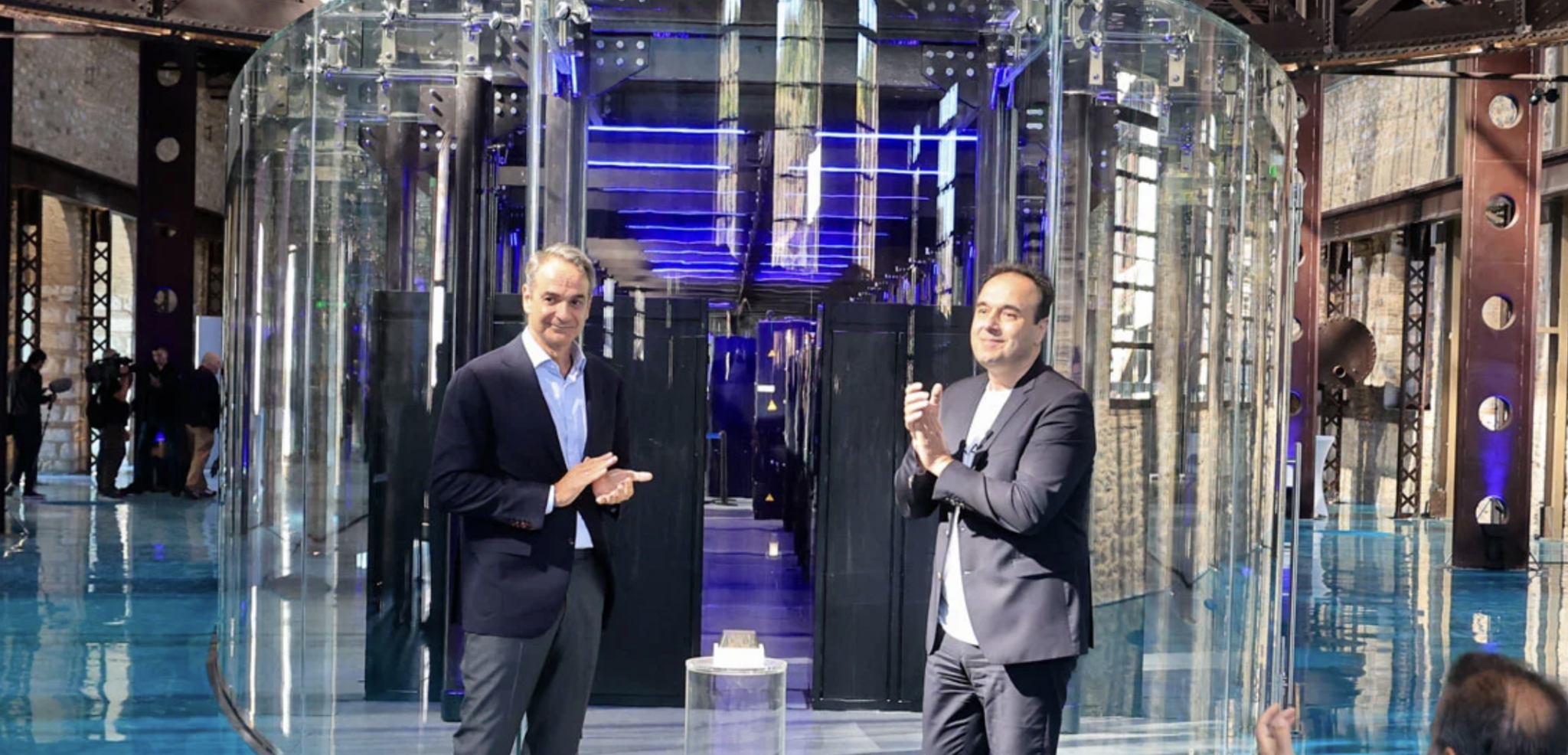
The Daedalus supercomputer officially begins operations today, with Prime Minister Kyriakos Mitsotakis attending an inauguration ceremony organised by the Ministry of Digital Governance in Lavrio.
Mitsotakis: We are at the forefront of the artificial intelligence revolution
“A great deal has changed since 2019. The journey from lagging behind to becoming a pioneer, particularly in the field of AI, remains fascinating. In 2019, we started with a simple idea: how could we use gov.gr to make communication between citizens and the state easier? It has been extremely well received by Greeks. But once AI became firmly established in our lives, we had to take the next step: how to make use of it and how to develop the infrastructure that would put us at the forefront of this revolution,” Mitsotakis said at the beginning of his discussion with journalist Timos Kouremenos.
Referring to Daedalus, the Prime Minister said it possesses enormous capabilities that have not yet been fully appreciated and that Greece has a responsibility to exploit them to the greatest possible extent.
He added that unless the country invests in technologies of this kind, it could become vulnerable to those who might seek to cut off its access to technology.
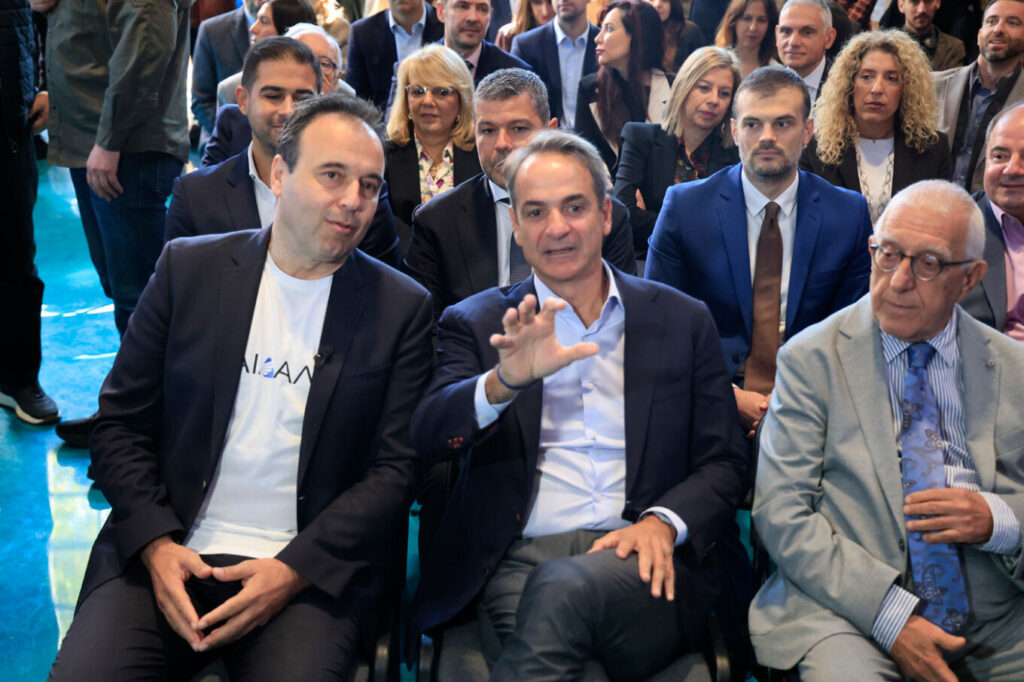
Mitsotakis also said that Greece has made a major leap forward in digital governance, overtaking countries that had previously been far ahead.
“There is admiration for the fact that a country with a relatively small economy has made such a leap,” he said, adding that these achievements demonstrate how artificial intelligence can enable a country emerging from an economic crisis to make significant advances.
“Greece has vast amounts of data, which serve as the fuel for the AI engine to develop applications. We are at the beginning of an exciting journey. The great challenge is how AI will make our lives easier and how we will control its negative consequences. We have the infrastructure to be among the leaders rather than constantly trying to catch up with the best,” Mitsotakis added.
He stressed that the countries capable of effectively addressing the dilemmas posed by artificial intelligence and controlling its negative effects would be the ones to make the greatest advances in the future.
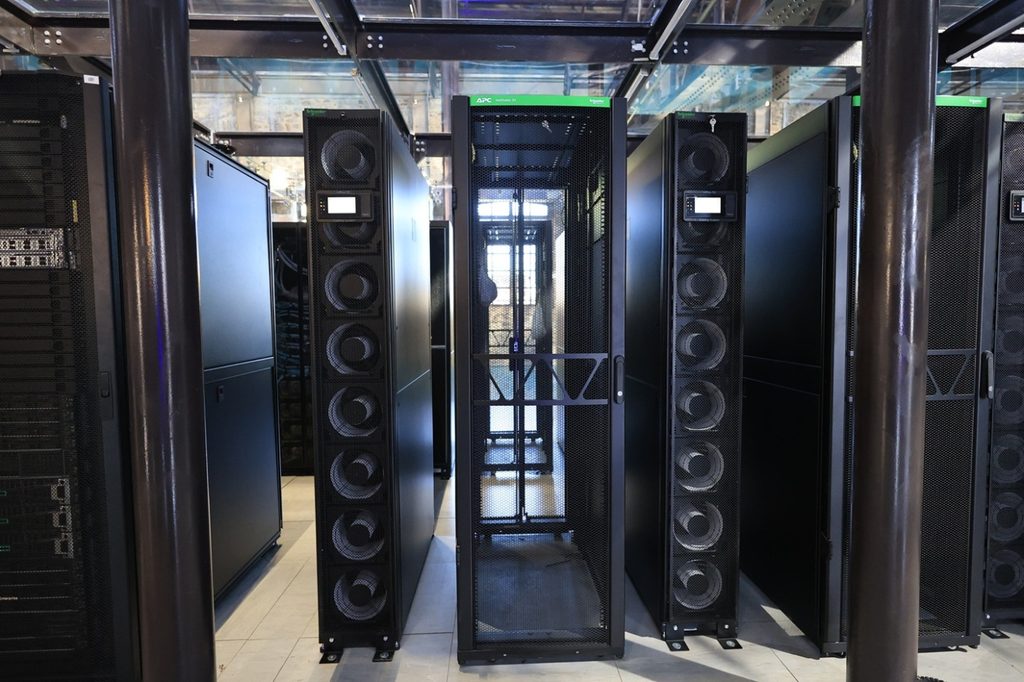
The capabilities of Daedalus
Daedalus is a supercomputer capable of performing, in a single second, mathematical calculations that would take a human being 2.7 billion years to complete, providing computational power that Greece has until now had to seek abroad.
The scale of the project is reflected in its performance figures. Daedalus achieved a measured performance of 85.69 petaflops, equivalent to approximately 85,690,000,000,000,000 floating-point mathematical operations per second.
This represents computing power roughly equivalent to that of 85,000 powerful desktop computers.
To put its capabilities into perspective, the calculations Daedalus can perform in one minute would take a conventional computer approximately two months.
The difference, however, is not simply one of speed. A supercomputer distributes extremely complex problems across thousands of computing units operating in parallel, enabling it to process enormous volumes of data and complete tasks that would otherwise require weeks or months.
Daedalus is a Hewlett Packard Enterprise (HPE) system equipped with NVIDIA GH200 Grace Hopper Superchip accelerators.
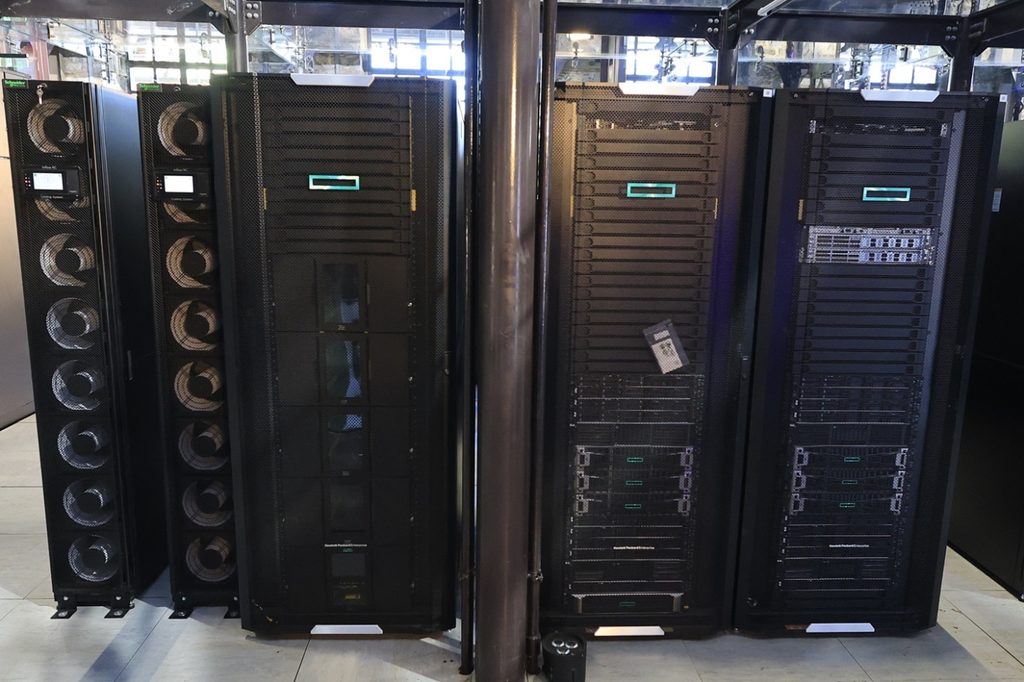
Each superchip combines a Grace processor with a Hopper graphics processing unit, delivering high performance in both scientific computing and the training of artificial intelligence models.
Cooling is provided through a direct liquid-cooling system, using a closed water circuit to remove heat from the chips.
Papastergiou: Greece is strengthening its resilience in the age of artificial intelligence
Papastergiou said the Lavrio facility brings together electricity, data and Greek talent to establish the country’s position in artificial intelligence.
“Until now, we believed that countries needed to be protected through infrastructure in areas such as energy and defence. Today, they also need to be equipped to meet the challenges of artificial intelligence. With Daedalus, Greece becomes the 14th country in the world to possess such infrastructure,” Papastergiou said.
He also announced that testing and configuration would follow, with the first services expected to become available in December.
The applications of Daedalus
The real value of Daedalus lies in its practical applications.
Access to the supercomputer is planned for universities, research centres, start-ups, small and medium-sized enterprises and public-sector bodies. European organisations and countries participating in the consortium will also be able to use its capabilities.
A central role will be played by PHAROS, Greece’s artificial intelligence factory.
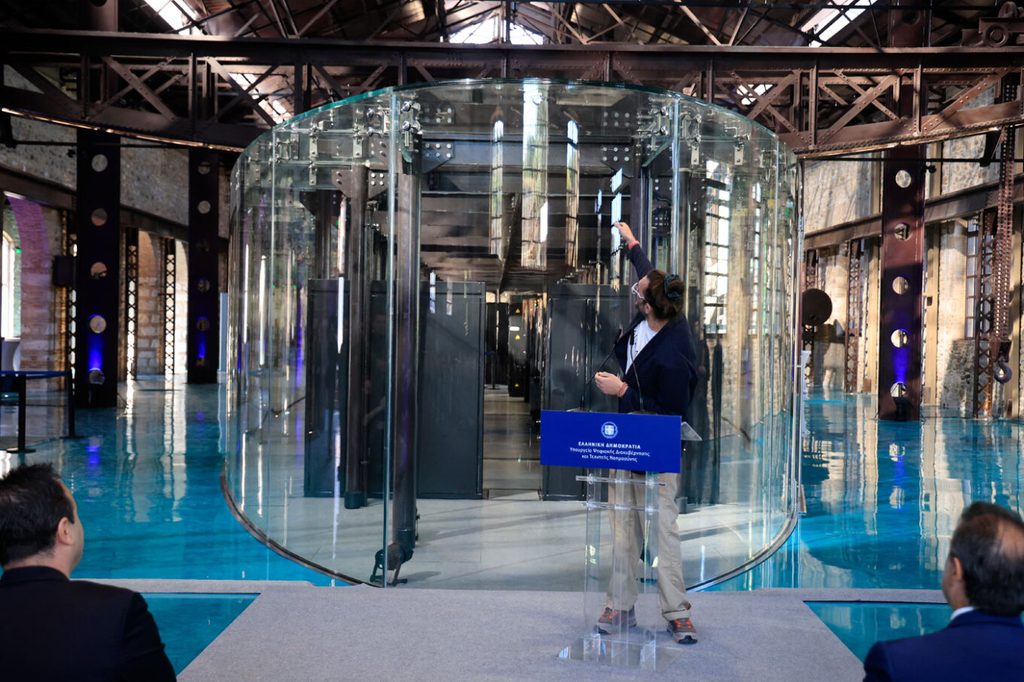
Journalist Timos Kouremenos, who hosted the inauguration ceremony, in front of the Daedalus supercomputer.
While Daedalus provides the computing power, PHAROS will coordinate its use by offering tools, data and technical support.
The consortium, led by the National Infrastructures for Research and Technology (GRNET), includes the National Centre for Scientific Research Demokritos, the National Technical University of Athens, the Athena Research Centre, the Hellenic Corporation of Assets and Participations (Growthfund), the Centre for Research and Technology Hellas (CERTH), Aristotle University of Thessaloniki, the National and Kapodistrian University of Athens, the Foundation for Research and Technology – Hellas (FORTH), the University of Piraeus, the National Documentation Centre and IDIKA, Greece’s e-Government Centre for Social Security Services.
Greece inaugurates national supercomputer "DAEDALUS" on Monday #Greece #DAEDALUS #Supercomputer #Technology #Innovation https://t.co/15k0wlrM0Z
— ANA-MPA news (@amna_newseng) October 19, 2026
Its three main priorities are healthcare, the Greek language and culture, and sustainable development.
In civil protection, the supercomputer can simultaneously run dozens of simulations predicting the development of a wildfire, taking into account different wind speeds and directions.
This would enable the relevant authorities to assess more accurately which areas could be at risk in two, six or twelve hours and where firefighting resources should be deployed.
Similar applications could be developed for flooding, such as that caused by Storm Daniel, as well as heatwaves, droughts and extreme weather events, using more detailed meteorological and climate models.
In healthcare, training algorithms on X-rays and CT scans could help identify pathological findings. Such systems could serve as a second diagnostic tool for doctors, particularly in regional hospitals with limited numbers of specialist medical staff.
Significant opportunities are also emerging in personalised medicine, biomedical research and drug development.
In industry, so-called digital twins allow businesses to simulate products and production lines, identifying potential problems before manufacturing begins.
In physics, chemistry and materials science, the supercomputer’s vast processing power can accelerate complex research procedures.
The Greek language is another area of particular importance.
Processing large collections of Greek-language texts could lead to the development of language models that better understand its specific characteristics, rather than relying exclusively on systems designed primarily for English.
Such applications could enhance the gov.gr digital assistant, automatic translation and the digitisation of historical archives, while also improving public administration services and cybersecurity.
Ask me anything
Explore related questions




