





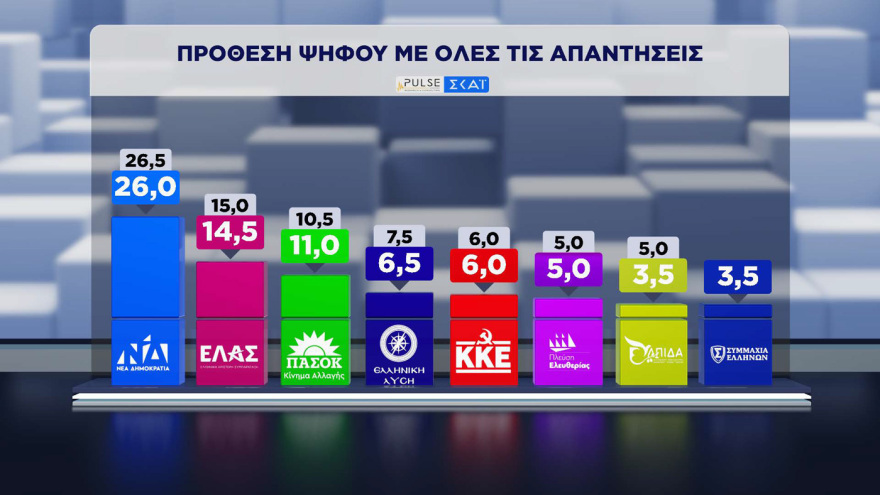
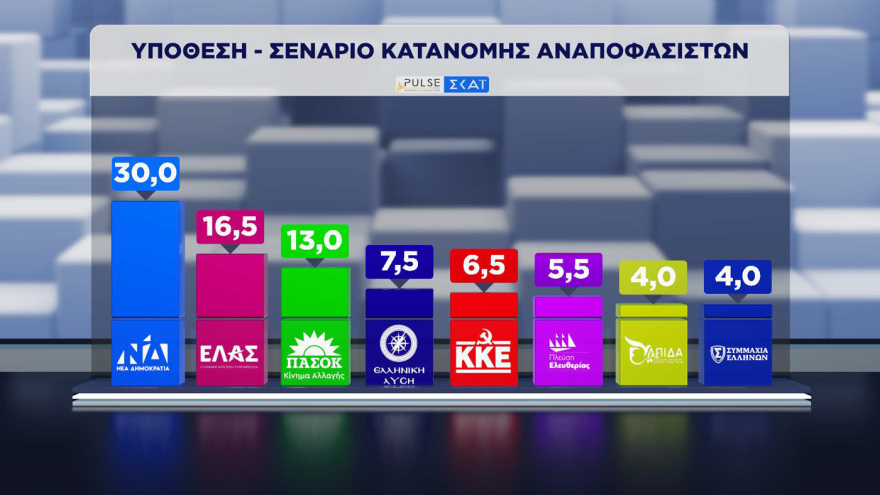
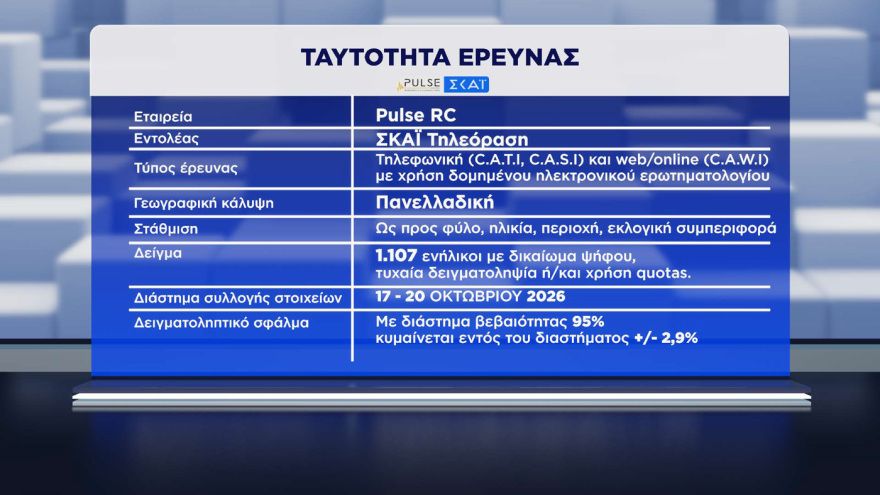
New Democracy (ND) stands at 30%, down from 30.5% in September, according to a Pulse poll presented on Skai TV’s main evening news bulletin. The governing party maintains a 13.5-percentage-point lead over ELAS, which has also lost half a point in voting-intention estimates, while PASOK has gained one point, narrowing the gap to 3.5 points from the five points recorded in September’s survey.
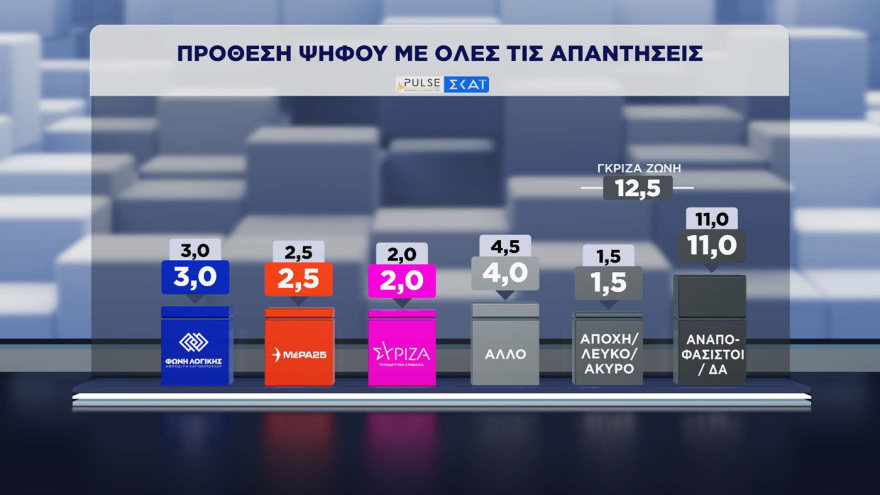
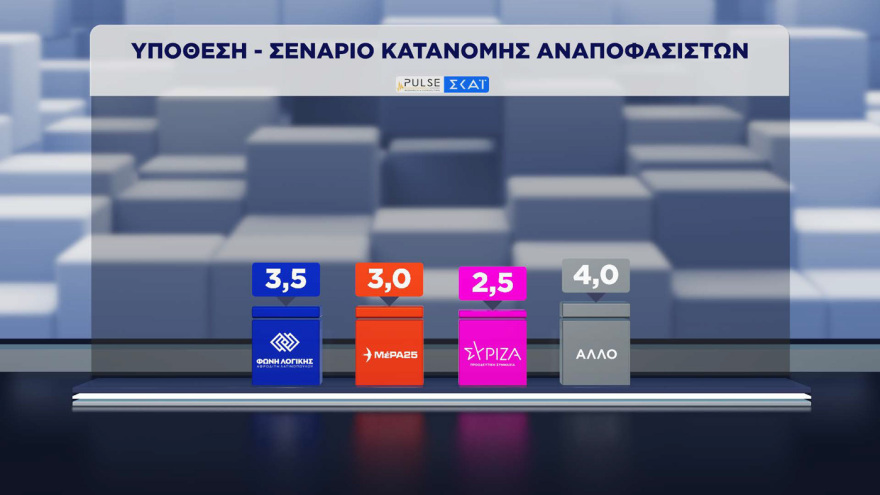
The Pulse poll points to a ten-party parliament, with Elpida for Democracy, the Alliance of Greeks – the party backed by Ilias Kasidiaris, who was convicted in connection with the criminal organisation Golden Dawn – Voice of Reason and MeRA25 all polling between 3% and 4% in voting-intention estimates.
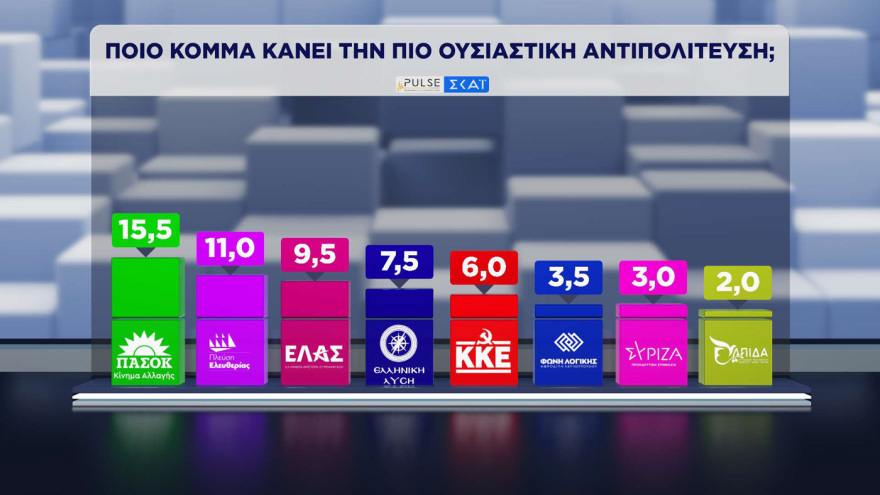
Among the other parties, Greek Solution has fallen by one percentage point in voting intention to 7.5%. It remains one point ahead of the Communist Party of Greece (KKE), which is steady at 6.5%, and Course of Freedom, on 5.5%.
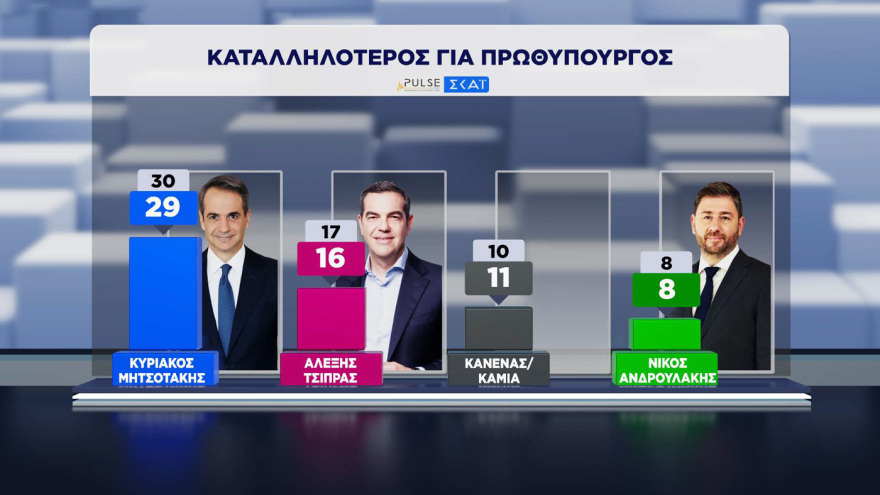
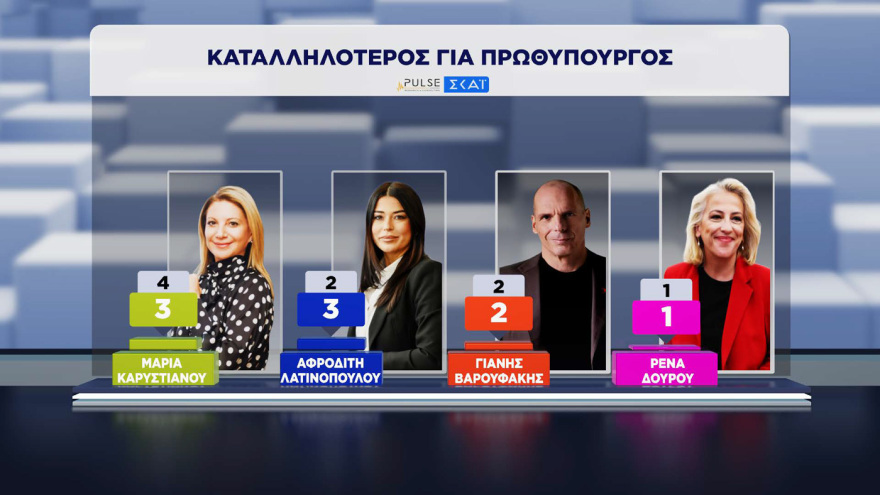
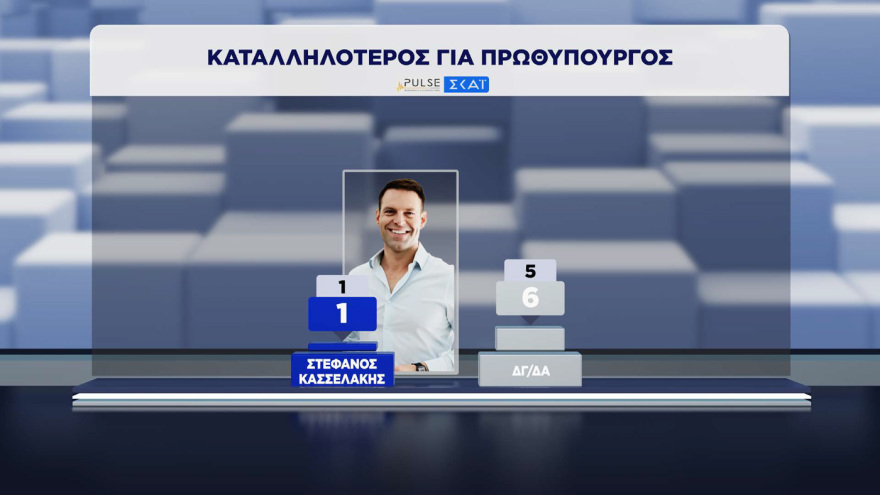
Kyriakos Mitsotakis and Alexis Tsipras have each lost one percentage point in ratings of their suitability for the premiership, with the gap between them remaining unchanged at 13 points. Mr Mitsotakis stands at 29% and Mr Tsipras at 16%, while Nikos Androulakis remains in single digits, on 8% – unchanged from September.
Support for single-party governments
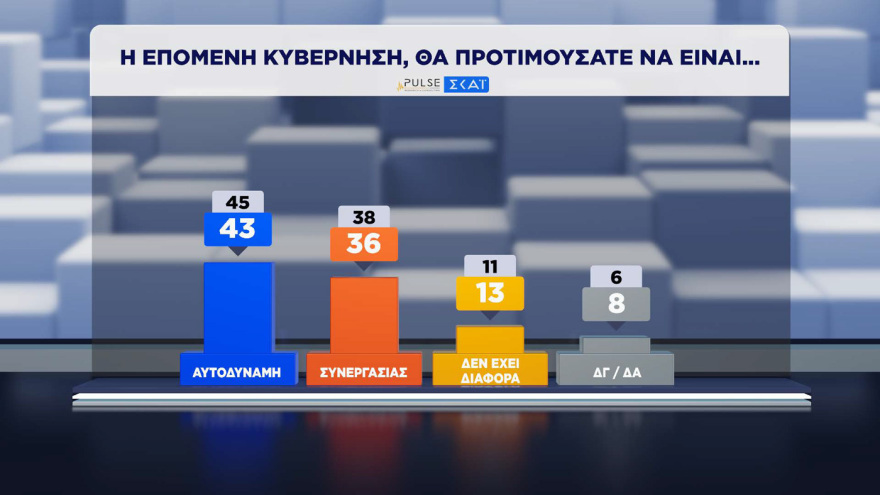
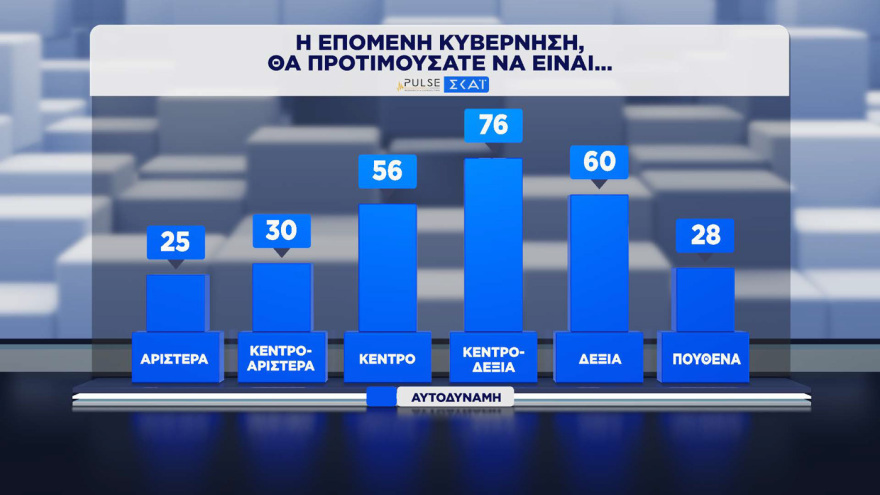
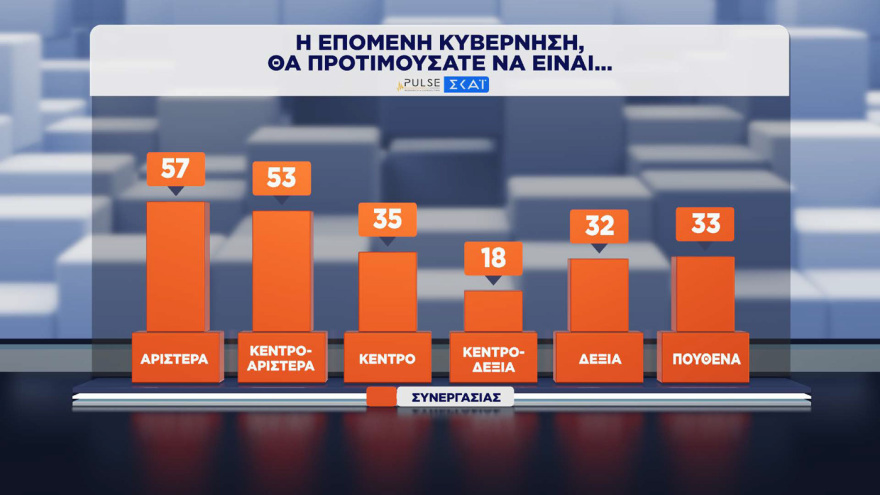
Asked about their preferences for the next government, 43% of respondents – down from 45% in September – said they wanted a single-party government, while 36%, compared with 38% in September, favoured a coalition.
Notably, preferences for the type of government, based on respondents’ self-described political orientation, lean towards single-party administrations among groups in which support for New Democracy is dominant. Single-party governments are favoured by 76% of centre-right voters, 60% of right-wing voters and 56% of centrist voters. By contrast, 53% of centre-left voters and 57% of left-wing voters prefer coalition governments.
The main criteria for voting
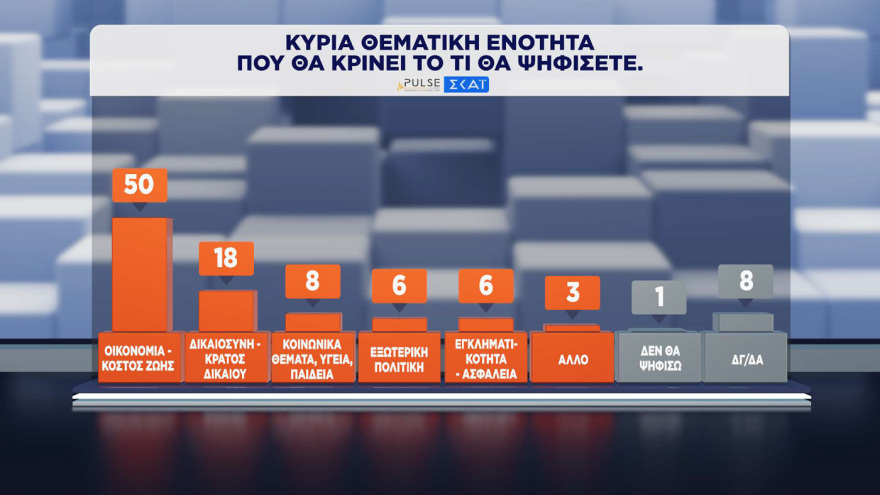
The main factor influencing voters’ choices remains “prospects”, cited by more than 50% of respondents for another consecutive month.
For one in five voters, the main considerations are concern and insecurity, while protest voting has fallen to 10%. Support-based voting also remains relatively low, at 9%.
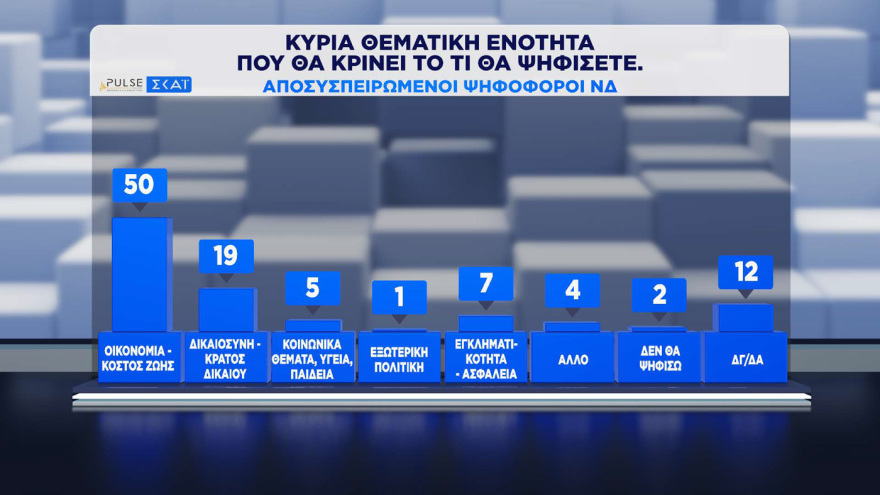
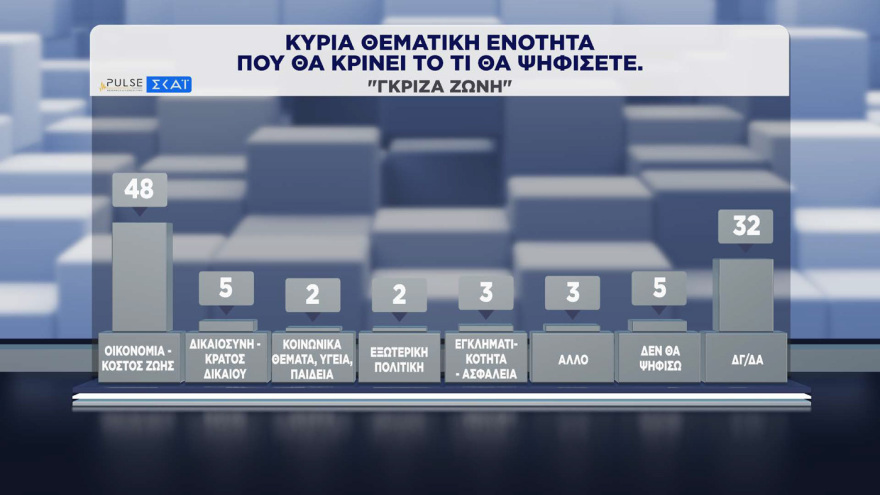
Pulse also examined the voting criteria of New Democracy supporters who have become disengaged from the party. Among this group, 49% identified future prospects as their main consideration, while 16% favoured protest voting.
The “Samaras party”
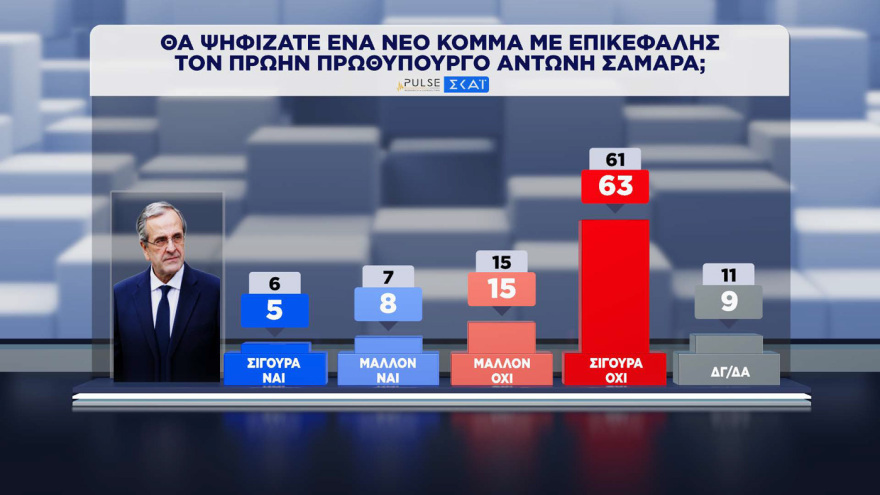
Potential support for a party led by former prime minister Antonis Samaras stood at 5%, down from 6% in September. Meanwhile, the proportion of respondents who said they would definitely not vote for such a party rose by two percentage points to 63%.
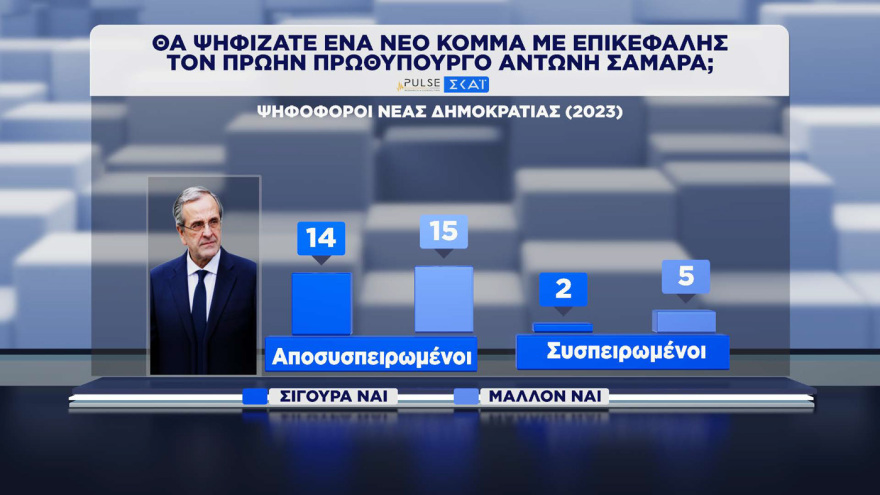
Pulse also measured the former prime minister’s appeal among disengaged New Democracy voters at 14%. Among those who said they intended to vote for the governing party, however, his potential support “plunged” to 2%.
Ask me anything
Explore related questions




