





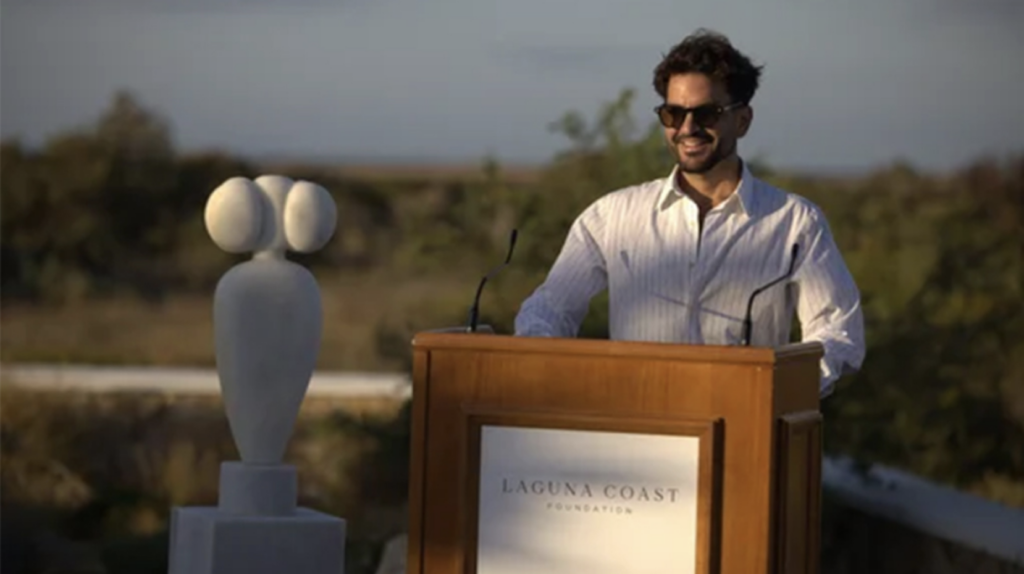
The 5th International IAG DENUCHANGE Workshop has concluded on the Greek island of Naxos, bringing together an international scientific community at Laguna Coast Resort as part of a collaboration between the National and Kapodistrian University of Athens (NKUA), the Laguna Coast Foundation, the International Association of Geomorphologists (IAG) and its DENUCHANGE and Virtual Trips in Geomorphology working groups.
Held from 5 to 9 October 2026, the workshop brought together scientists and researchers from 15 countries, including Poland, Israel, Italy, Norway, Romania, Ireland and Japan.
For several days, Naxos became an international meeting point for the scientific community, with discussions focusing on some of the most pressing environmental challenges of our time: climate change, coastal erosion, extreme natural phenomena, geomorphological evolution and the resilience of island and coastal ecosystems.
From international scientific knowledge to real-world fieldwork
The scientific programme included four thematic sessions, 16 oral presentations and 11 poster presentations, covering subjects such as hydrology, sediment transport, erosion, landscape evolution and the effects of climate change.
Particular emphasis was placed on connecting scientific research with the natural environment of Naxos.
Through field visits and research activities, participants were able to examine the island’s coastal dynamics, sensitive ecosystems and geomorphological processes first-hand.
Meanwhile, the Virtual Field Trip Laboratory highlighted the potential of digital technology and virtual reality in scientific research and education, with contributions from leading researchers around the world.
The workshop underscored the importance of interdisciplinary collaboration and transferring scientific knowledge from university laboratories into real-world natural environments.
Laguna Pilot Model: From sustainable tourism to regenerative development
One of the highlights of the programme was a presentation of the Laguna Pilot Model by Laguna Coast Foundation founder Antonis Pittaras, exploring the transition from sustainable tourism to regenerative island development.
The model proposes the gradual transformation of Laguna into a real-life living laboratory, where scientific research, technological innovation, environmental protection and tourism would be brought together through practical applications and measurable results.
The initiative builds on three years of work during which the Laguna Coast Foundation has developed environmental interventions and partnerships aimed at protecting the area’s distinctive natural ecosystem.
One example is the underground installation of part of the electricity network, carried out in collaboration with HEDNO, the Hellenic Electricity Distribution Network Operator. The intervention is intended to protect the landscape and reduce risks to birdlife.
Meanwhile, the Foundation’s broader environmental masterplan includes measures for biodiversity protection, environmental monitoring, scientific research, technological innovation and the promotion of the area’s natural and cultural heritage.
The goal is to establish a scientifically grounded model examining how tourism can not only reduce its environmental impact but also actively contribute to the protection and restoration of ecosystems.
In the longer term, the ambition is for the findings and practical applications developed at Laguna to be evaluated and, where feasible, adapted for use on other islands and in coastal destinations.
Antonis Pittaras: ‘Nature cannot be the price of development’
Laguna Coast Foundation founder Antonis Pittaras said co-organising the international scientific gathering represented an important milestone for the organisation.
‘Co-organising this international scientific meeting represents an important milestone for us. Three years ago, we started at Laguna with the conviction that nature conservation and tourism development could form part of the same solution.
‘Today, together with the international scientific community, we are taking the next step: turning practical interventions into measurable knowledge and examining how this knowledge could provide a new model for our islands.
‘Because nature cannot be the price of development. It must be part of the value that development creates.’
An international partnership with scientific and environmental ambitions
The Department of Geology and Geoenvironment at NKUA and the organising team played a key role in the scientific planning and successful delivery of the workshop. The team included Professors Niki Evelpidou and Asimina Antonarakou, as well as Dr Anna Karkani and Giannis Saitis.
Distinguished members of the international scientific community also participated, including Professors Achim A. Beylich and Zbigniew Zwoliński, leaders of the DENUCHANGE Working Group. The scientific proceedings were officially opened by NKUA Vice-Rector for Research and Innovation, Professor Efstathios Efstathopoulos.
The workshop was held with the support of the Municipality of Naxos and the Small Cyclades.
Beyond the exchange of scientific knowledge, the international gathering highlighted Naxos’s potential to serve as a site for applied research, scientific collaboration and the development of new approaches to the climate crisis.
For the Laguna Coast Foundation, co-organising the DENUCHANGE Workshop forms part of a broader strategy to connect science with the real economy, nature conservation and the future of island destinations.
Naxos is the starting point. Laguna is the first testing ground. The ambition is for knowledge generated in one place to provide solutions that extend far beyond its geographical boundaries.
Ask me anything
Explore related questions




