





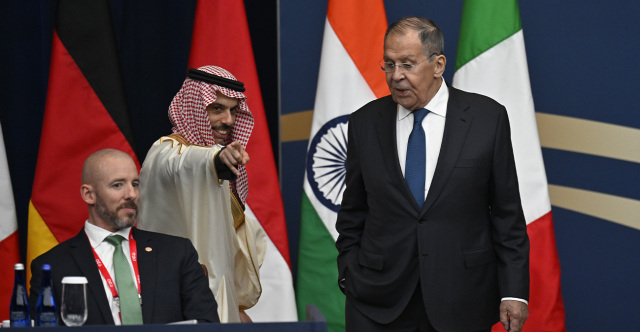
A diplomatic dispute erupted at the G20 foreign ministers’ meeting in Atlanta, United States, after European officials refused to take part in the traditional group photograph alongside Russian Foreign Minister Sergei Lavrov, prompting American organisers to cancel the photo session altogether.
The refusal by European ministers to appear in the same photograph as Russia’s top diplomat highlighted deep divisions among G20 members over the war in Ukraine and relations with Moscow.
According to Reuters, approximately one-third of the participants, including representatives from Australia and Canada, had raised objections to being photographed alongside Lavrov.
A US official said the State Department had decided to remove the traditional “family photo” from the meeting’s official programme to prevent it from becoming a spectacle or a source of confrontation.
German Foreign Minister Johann Wadephul was particularly explicit, making clear that European partners would not participate in a joint photograph with their Russian counterpart.
“Under no circumstances will there be a family photo with the European partners and Mr Lavrov together, because there is no normality in relations with Russia,” he told reporters ahead of the meeting.
Wadephul also stressed that disagreements with Moscow must be discussed at the negotiating table, without suggesting that European countries considered relations with Russia to have returned to normal.
Polish Foreign Minister Radoslaw Sikorski described the cancellation of the photograph as the right decision by the United States.
“I am not the only one who does not want to be photographed with Lavrov,” he said.
According to diplomatic sources, organisers had even considered holding two separate photo sessions before the final cancellation — one including Lavrov and another without the Russian foreign minister.
Ultimately, ministers proceeded directly to their opening session without the traditional group photograph.
Divisions over Russia and Trump’s decisions
The incident comes at a time when European governments have expressed reservations about Washington’s approach towards Moscow.
Recent decisions by US President Donald Trump, including the temporary lifting of certain sanctions against Russia and an agreement to purchase Russian diesel, have drawn criticism from Ukraine and its European allies.
European countries supporting Kyiv insist that Russia cannot be treated as though normal diplomatic relations have been restored while the war in Ukraine continues.
Lavrov’s participation in the Atlanta meeting had already prompted objections before proceedings began, as it represented another opportunity for Russian diplomacy to participate in an international forum hosted by the United States.
Despite the dispute, the summit went ahead as scheduled, with US Secretary of State Marco Rubio urging G20 countries to work together to address global challenges.
Opening the discussions, Rubio described a critical period for the international community, warning that a series of interconnected economic and geopolitical crises threatened fundamental pillars of the global economic order.
The agenda for the two-day meeting includes the war in Ukraine, developments in the Middle East, international trade, energy security and disputes over trade policies.
The foreign ministers’ meeting is taking place on October 30 and 31 under the US presidency of the G20, ahead of the leaders’ summit scheduled for December in Miami.
Ukraine is absent from the meeting after the United States restricted invitations to G20 members. South Africa was also not invited, despite being a member of the group.
Ask me anything
Explore related questions




