





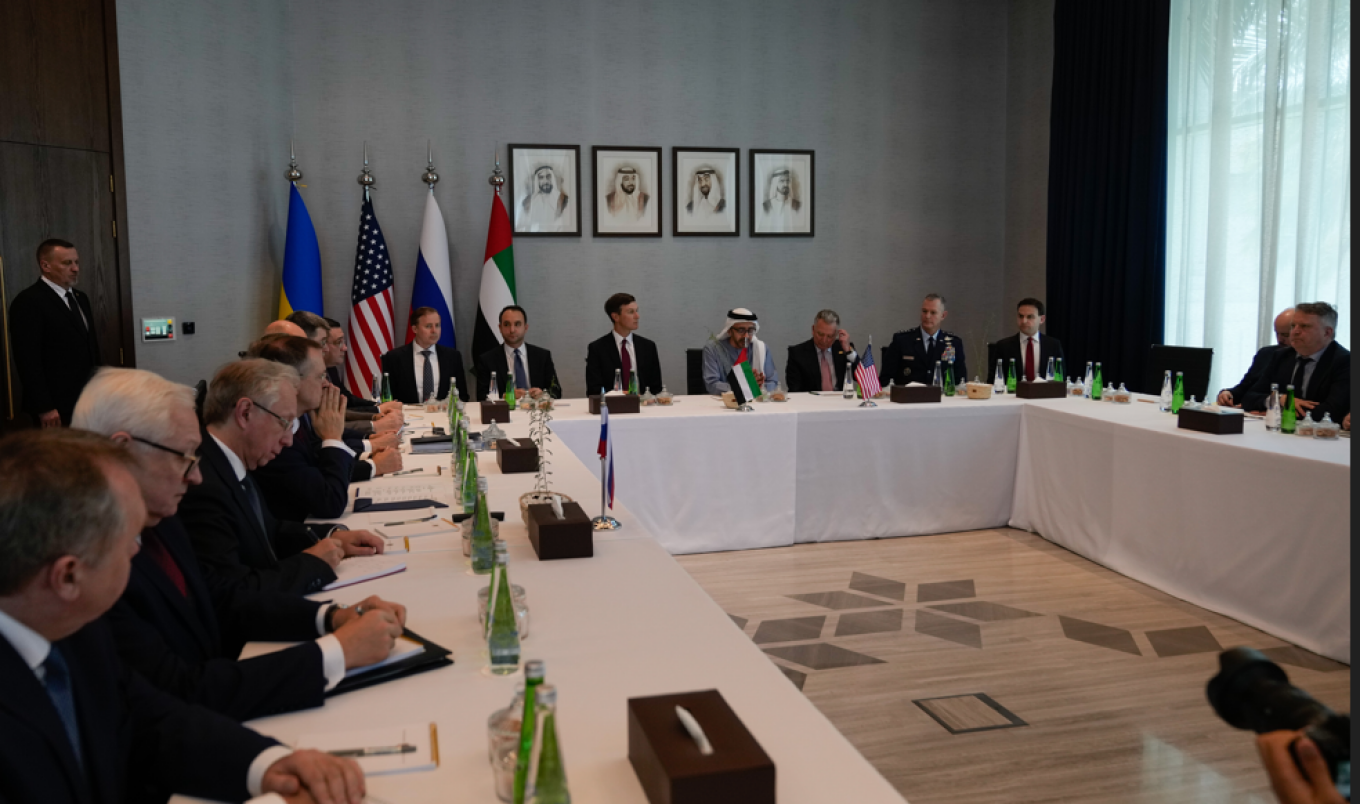
Russia is said to have put forward far-reaching demands in negotiations aimed at ending its war against Ukraine, including Finland’s withdrawal from NATO and the removal of the alliance’s military bases from the Baltic states.
According to a report by German newspaper Bild, cited by the Anadolu Agency, the proposals – reportedly presented to European representatives during talks in Abu Dhabi – extend well beyond Ukraine’s borders and seek to establish a “new European security order” as Moscow envisages it.
According to Bild, Russia wants to retain all Ukrainian territory currently under its occupation and take control of the remaining parts of the Donetsk and Luhansk regions that are still held by Kyiv.
At the same time, Ukraine would have to remain permanently unaligned, ruling out membership of NATO, while leaving open the possibility of joining the European Union.
Moscow is also demanding the demilitarisation of the Ukrainian Black Sea ports of Odesa and Mykolaiv, which would be barred from operating as naval bases. Separate arrangements would also guarantee freedom of navigation in the Black Sea and the Baltic Sea.
NATO’s presence in northern Europe
The proposals would also radically reshape NATO’s presence in northern Europe. Russia is reportedly seeking the removal of all alliance military bases from Estonia, Latvia and Lithuania, while Finland would be expected to leave the alliance and return to the status it held before joining.
However, Kremlin spokesman Dmitry Peskov later denied that Russia had demanded Finland’s withdrawal from NATO.
“I know nothing about this. No, no such conditions were put forward. This was certainly not discussed,” he said.
Demands extend to Moldova and Belarus
The reported proposals also concern Moldova’s political future. According to Belarusian newspaper Nasha Niva, Moscow wants the country to become a federal republic comprising Moldova, the autonomous region of Gagauzia and the Russian-backed breakaway region of Transnistria.
Under the proposal, if Moldova joins the European Union, Transnistria and Gagauzia would have to be given the opportunity to hold independence referendums.
In exchange for these wider concessions, Russia is reportedly offering to withdraw its nuclear weapons from Belarus and refrain from deploying intermediate-range missiles there, including the Iskander and Oreshnik systems. Moscow would also be willing to withdraw its troops from Transnistria, Nasha Niva reported.
Bild stressed that this plan is just one of several proposals circulating in informal negotiating circles, while it remains unclear which, if any, are personally backed by Russian President Vladimir Putin.
During his meeting on Thursday with US envoys Steve Witkoff and Jared Kushner, Putin reiterated Moscow’s uncompromising demands, rejecting any presence of foreign troops in Ukraine following a peace agreement. He also warned that any European forces deployed as part of post-war security arrangements would become “legitimate military targets” and that the war would resume immediately.
Putin also rejected proposals for demilitarised or “grey” zones between Russian and Ukrainian forces, insisting that “state borders” should be the only dividing line.
The Institute for the Study of War (ISW) interpreted the statement as a reaffirmation of Moscow’s demand for full control of the Donetsk, Luhansk, Kherson and Zaporizhzhia regions – including territories Russian forces have never captured.
At the same time, Moscow has shown no willingness to exchange occupied territory. Russian presidential aide Vladimir Medinsky said Russia rejects territorial swaps and will continue expanding the so-called security zone in the Sumy and Kharkiv regions, which it invokes to justify its presence in Ukraine’s border areas.
Ask me anything
Explore related questions




