×
GreekEnglish

×
  • Politics
  • Diaspora
  • World
  • Lifestyle
  • Travel
  • Culture
  • Sports
  • Cooking
Tuesday
10
Mar 2026
weather symbol
Athens 13°C
  • Home
  • Politics
  • Economy
  • World
  • Diaspora
  • Lifestyle
  • Travel
  • Culture
  • Sports
  • Mediterranean Cooking
  • Weather
Contact follow Protothema:
Powered by Cloudevo
> World

Scientists discover earth-like planet! (video+photos)

Not known if it has an atmosphere

Newsroom August 25 09:25

An Earth-size planet that could boast water, even an ocean, has been found circling the star nearest our sun, hinting that the conditions for life could exist next door.
The find, reported in a study published Wednesday in Nature, has scientists excited.
“An absolutely amazing discovery,” says Victoria Meadows of the University of Washington. “This will be the most accessible, closest planet in the habitable zone to our solar system.”
“The excitement is that it’s around the closest star to our sun,” says Rory Barnes, also of the University of Washington, adding that it’s “exciting, too, to realize perhaps the next star over has a planet with life on it.”
Announced after a search by astronomers from around the world, the new planet circles a small star called Proxima Centauri. That star, though invisible to the naked eye, is only 4.2 light-years — about 25 trillion miles — from Earth, making it our nearest stellar neighbor.
The specs of the new planet, called Proxima b, sound much like Earth’s. It is 1.3 times the mass of the Earth or bigger. It is probably rocky, like Earth, and not a Jupiter-like ball of gas. And it’s just the right distance from its star that it would be warm enough for liquid water to pool on the surface, assuming the planet has an atmosphere. Picking out the planet has taken some of the most powerful telescopes in the scientific arsenal. The first signals of a world orbiting Proxima Centauri were recorded more than a decade ago, and more such signals have continued to trickle in – but never enough to be convincing. So astronomers recruited multiple telescopes to stare at the star earlier this year.
To determine whether organisms thrive on Proxima b, scientists will need to take a picture of the planet itself. Analysis could reveal molecules that would be telltale signs of life.
No existing instrument could snap such pictures. But such technology is under design, and the new discovery will likely galvanize construction of observatories that could take a portrait of this new world. The planet is even close enough that perhaps someday robots could reach it.
A space mission to reach exoplanets won’t be ready until the “coming centuries,” says David Armstrong of Britain’s University of Warwick. “But the first one we’ll send it to will be this.”

Source: usatoday.com

>Related articles

ABC News: The US intercepted encrypted Iranian messages to “sleeper cells” in foreign countries (video)

How quickly will the war in Iran end? Trump and Netanyahu…“picking petals off the daisy,” while Europe risks a new recession

Turkish teen charged in failed ISIS-inspired bomb attack during NYC pro-migration protest (video)

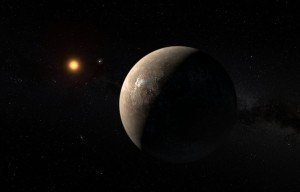
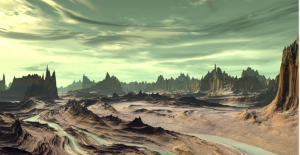
This artist’s impression shows a view of the surface of the planet Proxima b orbiting the red dwarf star Proxima Centauri, the closest star to the Solar System. The double star Alpha Centauri AB also appears in the image. Proxima b is a little more massive than the Earth and orbits in the habitable zone around Proxima Centauri, where the temperature is suitable for liquid water to exist on its surface.

This artist’s impression shows the planet Proxima b orbiting the red dwarf star Proxima Centauri, the closest star to the Solar System. The double star Alpha Centauri AB also appears in the image between the planet and Proxima itself. Proxima b is a little more massive than the Earth and orbits in the habitable zone around Proxima Centauri, where the temperature is suitable for liquid water to exist on its surface.

Ask me anything

Explore related questions

> More World

Follow en.protothema.gr on Google News and be the first to know all the news

See all the latest News from Greece and the World, the moment they happen, at en.protothema.gr

> Latest Stories

ABC News: The US intercepted encrypted Iranian messages to “sleeper cells” in foreign countries (video)

March 10, 2026

How quickly will the war in Iran end? Trump and Netanyahu…“picking petals off the daisy,” while Europe risks a new recession

March 10, 2026

Musk is the richest man in the world for another year – His fortune stands at $839 billion

March 10, 2026

Forbes: these are the Greek billionaires on the 2026 list

March 10, 2026

The first black vultures born in artificial nests in the Dadia forest

March 10, 2026

Are mini nuclear reactors the energy future of Greece? How they work and how they differ from “classic” reactors

March 10, 2026

Turkish teen charged in failed ISIS-inspired bomb attack during NYC pro-migration protest (video)

March 10, 2026

Aramco: Catastrophic impact on the oil market if the blockade in the Strait of Hormuz continues

March 10, 2026
All News

> World

ABC News: The US intercepted encrypted Iranian messages to “sleeper cells” in foreign countries (video)

After the death of Ayatollah Ali Khamenei, U.S. law enforcement authorities detected encrypted messages of “possible Iranian origin” that were relayed through multiple countries

March 10, 2026

How quickly will the war in Iran end? Trump and Netanyahu…“picking petals off the daisy,” while Europe risks a new recession

March 10, 2026

Turkish teen charged in failed ISIS-inspired bomb attack during NYC pro-migration protest (video)

March 10, 2026

Strait of Hormuz: The maritime chokepoint driving up freight rates, insurance costs, and energy prices

March 10, 2026

EU’s shift away from nuclear power was a “strategic mistake,” says von der Leyen

March 10, 2026
Homepage
PERSONAL DATA PROTECTION POLICY COOKIES POLICY TERM OF USE
Powered by Cloudevo
Copyright © 2026 Πρώτο Θέμα