

×
GreekEnglish

×
  • Politics
  • Diaspora
  • World
  • Lifestyle
  • Travel
  • Culture
  • Sports
  • Cooking
Friday
06
Feb 2026
weather symbol
Athens 15°C
  • Home
  • Politics
  • Economy
  • World
  • Diaspora
  • Lifestyle
  • Travel
  • Culture
  • Sports
  • Mediterranean Cooking
  • Weather
Contact follow Protothema:
Powered by Cloudevo
> technology

This worm grew a second head after a trip to space

In 18 years of working with these worms, this specific research team has never encountered the phenomenon

Newsroom June 14 01:05

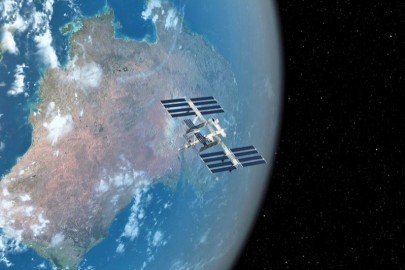
There are all kinds of experiments going on aboard the International Space Station, but they all probably don’t produce results as strange as this one. An article published today in the journal Regeneration details a recent experiment in which an amputated flatworm grew two heads — twice.

Planarian flatworms are known to have extraordinary regenerative properties. They can regrow complex organs, including a central nervous system, from small pieces of their bodies. In order to study how space travel might affect these regenerative abilities, the scientists sent a group of worms up to the International Space Station; half were amputated, with their heads and tails cut off, and half were normal.

The worms stayed aboard the ISS for five weeks, after which they were observed for 20 months on Earth. This was when scientists noticed something very strange: One of the 15 amputated worms actually grew two heads. While this has occurred in fully Earth-bound worms, it’s incredibly rare — in 18 years of working with these worms, this specific research team has never encountered the phenomenon.

>Related articles

What qualities does a good astronaut have for the mission to the Moon? The requirements of NASA

Espionage in space too: Russian vehicles have allegedly intercepted communications from critical European satellites

Research reveals that the inhabitants of Messa Mani constitute a unique genetic “island” in Europe

The team once again amputated the worm (seriously, what did this worm ever do to them?) and it grew another double head from the cut end. This has led the scientists to hypothesize that space travel has made some fundamental change to the worm’s regeneration abilities.

It’s not quite clear yet what implications this study has for humans, though it does support the idea that our bodies are permanently changed by space travel. These worms will help further examine the risks of space travel, but even more important than that, they may help scientists discover how to extend worms’ regenerative properties to humans. After all, being able to regrow a limb would be pretty useful in deep space travel.

Source

Ask me anything

Explore related questions

#ISS#nasa#nature#science#space#technology#worm
> More technology

Follow en.protothema.gr on Google News and be the first to know all the news

See all the latest News from Greece and the World, the moment they happen, at en.protothema.gr

> Latest Stories

Epstein case rocks Hollywood: Jay Z, Leonardo DiCaprio, George Clooney, and the “Interesting girls of Copenhagen”

February 6, 2026

Olympiacos – Virtus Bologna 109-77: Returned to winning ways with an out-of-this-world performance

February 6, 2026

AHI President highlights U.S.–Greece relations and hosts key Hellenic leaders in Washington

February 6, 2026

The dethroning of Bitcoin: Prices in free fall as Trump-driven euphoria expires

February 6, 2026

Regional and international developments discussed at Dendias–Indian Foreign Minister meeting

February 6, 2026

AHEPA Mourns the Passing of Former AHEPA Canada President Nicholas Spillios

February 6, 2026

Athens’ journey from the 1821 Revolution to World War II told through three documentaries

February 6, 2026

The Commission targets TikTok for its addictive design that harms children

February 6, 2026
All News

> technology

From Tesla to Disney, 4 companies are preparing humanoid robots for the market: What they can do, how much they will cost

They fold clothes, serve coffee, work in factories and are getting ready to enter our homes — the four most advanced robots moving closer to everyday life

January 4, 2026

The AI-powered English edition of Proto Thema, built on AI infrastructure by Cloudevo

October 30, 2025

AI Takeaways: A New AI Tool by Cloudevo for Concise News Presentation

October 2, 2025

Semantic Search: A New Artificial Intelligence Application by Cloudevo 

October 2, 2025

How Cloudevo Designs Reliable Artificial Intelligence Dialogue Systems

October 1, 2025
Homepage
PERSONAL DATA PROTECTION POLICY COOKIES POLICY TERM OF USE
Powered by Cloudevo
Copyright © 2026 Πρώτο Θέμα



