





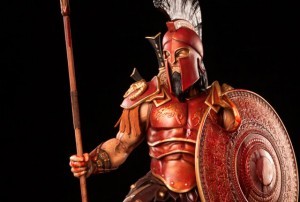
In the long history of man, many cultures have had their long-established mythological traditions consisting of different gods and goddesses. Some of them are famous for exerting substantial violence both to their allies and enemies. Even though they were extremely violent, these deities were worshiped to a great extent. Here’s the list of the Gods of War:
Ares – the Greek god of war is said to have slain one of Poseidon’s sons
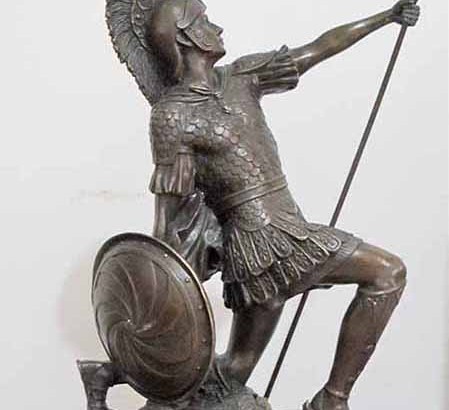
Being a son of Zeus and Hera, two very important gods in the Greek mythology, Ares played an important role in the world of ancient gods. The trait that symbolises him the best is his courage and valour in battle, but he was also known for taking the law into his own hands. Since he was often a law unto himself, he is associated with several violent acts of his. Namely, according to legend, Ares slew Halirrhothios, one of Poseidon’s sons, for his attempt to rape his daughter Alkippe. Ares killed him before the act was completed. As a result, Poseidon was furiously angry with Ares, thus putting him on trial before the gods Olympus. Nevertheless, Ares was set free and his murder justified.
Huitzilopochtli – An Aztec deity known for killing 400 siblings
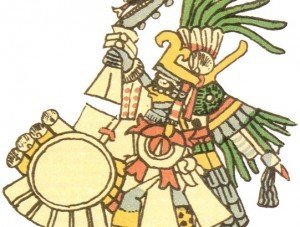
Huitzilopochtli was the key figure behind the founding of Tenochtitlan, which was the capital city of Aztecs. The legend has it that when his mother, an Aztec goddess Coatlicue, was pregnant, 400 stars, who were her sons and daughters, conspired to kill her. When they conflicted, Huitzilopochtli killed Coyolxauhqui and the rest of his 400 siblings. Despite that, Huitzilopochtli was demanding for more. In order to please him, Aztecs sacrificed war prisoners by opening the chests of the victim and ripping out their still beating hearts. Cruel as it may sound, but these human sacrifices were done in order to secure success in war, rain and good harvest.
Moloch – Children were thrown into fire alive as a human sacrifice
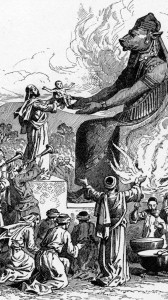
Moloch, also called Ba’al of Ba’al Moloch, was a deity which was worshiped by nations that lived in the ancient Middle East such as Phoenicians, Israelites, and Carthaginians. This deity also made its way to the Bible for its unscrupulous and bloodthirsty rituals. In order to be accepted by Moloch, the citizenry was inclined to human sacrificing. His favorite gifts included children. Some say that people would place their own child into the fire. After the burning of the body, some would collect the remaining bones and put them under the doorstep, which would ensure fertility and well-being for the entire family.
Huehueteotl – A particularly sadistic Aztec god
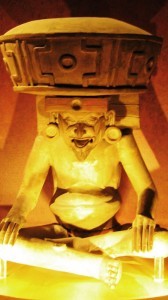
Compared to Huitzilopochtli, this Aztec deity can be said to set the standards of cruelty. A god of death, warmth and cold, Huehueteotl was the one who handled the light during the dark ages and food during the famine periods. Aztecs sacrificed a person to this god by drugging the victim, roasting him alive, and tearing his heart out and burning the remains. According to some evidence, victims were thrown into a fire, dragged out of the fire with the hooks, had their hearts ripped out and bodies thrown back into the fire.
Kali – A vicious Indian goddess of destruction
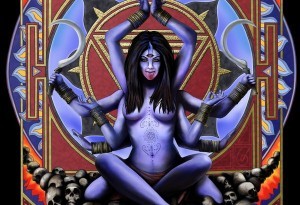
Comparing to all other deities we have mentioned in our list, this deity still receives some sacrifices. From time to time, there are people who sacrifice in the name of Kali in order to appease their goddess. This is particularly symptomatic of rural provinces in India. In pursuit of appeasing the goddess, the sacrificing methods were numerous. The ways of killing the victims varied. Some of them were beheaded and hacked to death while other were either strangled or dismembered. Sometimes, the sacrificing ritual included more than one method of killing the victim.
Chac – the Mayan god of rain, lightning and water
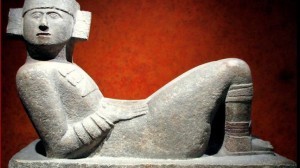
Chac was depicted as a reptilian who was fond of fishing. Even though fishing calmed him down, his thirst for blood demanded human sacrifice. These sacrifices included deep wells into which people were thrown to ensure the rain and harvest. Chac was believed to live at the bottom of the sinkhole. The wells mentioned here can still be found at Chichen Itza, which was one of the most important cities of Maya.
Inti – the Incan god of sun
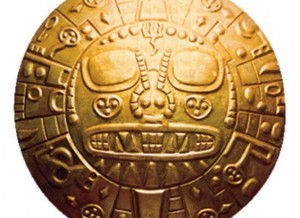
This deity of Incas accepted many gifts such as treasures, animals, plants and people. In the case of denying Inti the human victims, people would be doomed to bad luck and no light. Children were often used in a ceremony of sacrifice called capacocha. To appease the deity, the child had to be healthy, beautiful, strong and pure. Then, the child would be fostered for years to come before the eventual murder. Afterwards, the ceremony would take place at the summit of the mountain, where accompanied by the priests, parents and chieftains, the child would be killed. The most usual methods of killing the child were blow to the head, burying the victim alive or strangulation.
source: ancientfacts.net
Ask me anything
Explore related questions




