

×
GreekEnglish

×
  • Politics
  • Diaspora
  • World
  • Lifestyle
  • Travel
  • Culture
  • Sports
  • Cooking
Thursday
11
Dec 2025
weather symbol
Athens 11°C
  • Home
  • Politics
  • Economy
  • World
  • Diaspora
  • Lifestyle
  • Travel
  • Culture
  • Sports
  • Mediterranean Cooking
  • Weather
Contact follow Protothema:
Powered by Cloudevo
> Culture

Colonizing the Cosmos – Astor’s electrical future

During US’s Gilded Age the future seemed to pulse with electrical possibility. "A Journey in Other Worlds' is a scientific romance in which visions of imperialism haunt a supposedly “perfect” future

Newsroom November 2 10:00

If we time travelled back to America’s Gilded Age, the closing decades of the nineteenth century, what would the future look like? The economy was booming as cities expanded and industrialization gathered pace. Railways spread across the country, fuelling westward expansion with the opening of the First Transcontinental Railway in 1869. European investors flooded this growing market as they jostled to cash in on American prosperity, and American speculators made their own fortunes, too. Day by day, the United States seemed to be accelerating into the future promised by industry. Nikola Tesla, reminiscing in later years about his 1884 arrival in New York, remembered thinking that America was “more than one hundred years AHEAD of Europe and nothing has happened to this day to change my opinion.”1

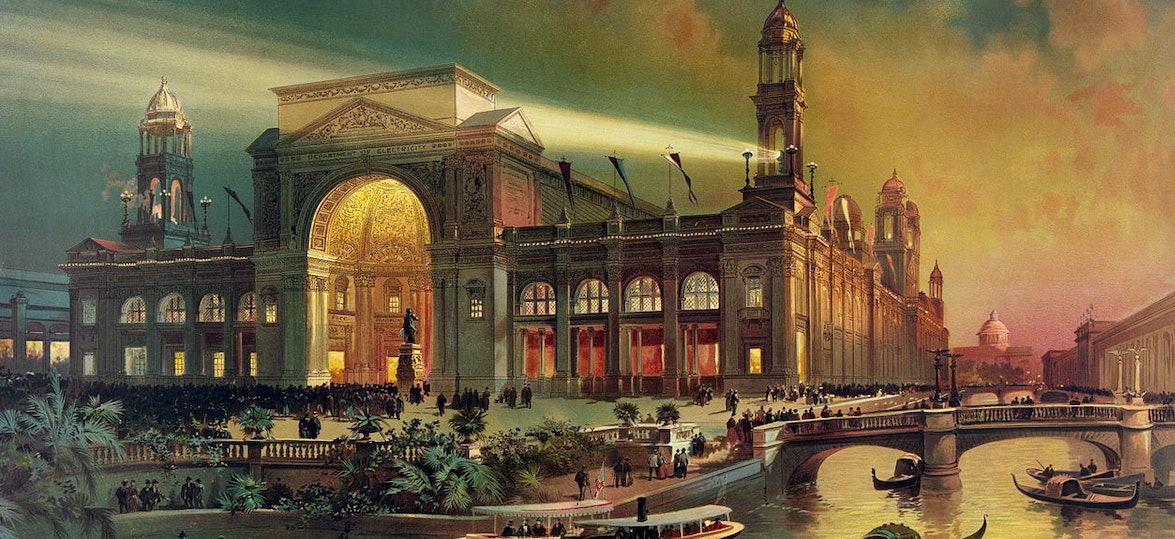
This new tomorrow was to arise through the power of innovation. In 1876, Americans celebrated a century of independence with the Centennial Exhibition in Philadelphia. The huge Corliss steam engine that dominated the main exhibition building was forty-five feet tall and, through a series of shafts more than a mile in length, powered almost every other machine present. At this same event, Alexander Graham Bell’s telephone was exhibited for the first time. And American ingenuity showed no signs of abating. Almost twenty years later, viewing Chicago’s Columbian Exposition in 1893, commentators believed they were seeing the stuff of which the future would be made — it was “a shining vision, serenely awaiting the admiration of the world”.2 What did the privileged elite of the Gilded Age, those who often funded and stood to profit most from this vision, make of all this? How would they think about their own place in the future that technological ambition and innovation seemed to offer?

See Also:

>Related articles

Traveling to the US becomes more difficult: Tourists from 42 countries – including Greece – will need to show a five-year social media history to enter the country

Lavrov: There is not even a thought of attacking Europe, but we will respond if they deploy in Ukraine

Cyprus launches national operation for the yacht with Israelis missing in the Mediterranean

What neuroscientists have learned about rejuvenating the aging brain & what you can do too

Luckily, one of them told us exactly how he imagined the century to come. In 1894, New York publishers D. Appleton and Company released A Journey in Other Worlds: A Romance of the Future, written by John Jacob Astor IV, one of America’s wealthiest men. The Astor clan had originally made their fortune in the fur trade, and had added to their millions through investment in land and property. In 1897, John Jacob would build the Astoria Hotel in New York, next door to the Waldorf, owned by his cousin William. The hotel was both a symbol of the Astor family’s wealth and a honeypot for New York’s fashionables (Tesla himself lived there until he was turfed out for failing to pay his bills). It’s Astor’s authorship that makes the book such a fascinating insight into the Gilded Age’s fantasies about its prosperous tomorrows.

Read more: Public Domain Review

Ask me anything

Explore related questions

#colonization#cosmos#electric#future#novel#world
> More Culture

Follow en.protothema.gr on Google News and be the first to know all the news

See all the latest News from Greece and the World, the moment they happen, at en.protothema.gr

> Latest Stories

The Hellenic Competition Commission maps the food market

December 10, 2025

Traveling to the US becomes more difficult: Tourists from 42 countries – including Greece – will need to show a five-year social media history to enter the country

December 10, 2025

The battle for Vouliagmeni Beach: Who are the 4 strong contenders, preferred investor expected in early 2026

December 10, 2025

Amphipolis: The polychromy of the Kasta Tumulus comes back to life with the help of research and technology – When it will open to the public

December 10, 2025

Seven clinics in Greece received sperm from the Danish donor carrying the cancer gene

December 10, 2025

Dead next to the garbage: The truth about the horror of occupied Athens

December 10, 2025

Man who attacked Ariana Grande thrown out of Lady Gaga concert

December 10, 2025

Outbursts during the briefing of ND MPs on farmers – “If checks weren’t conducted, we would have lost the funds,” said Tsiaras

December 10, 2025
All News

> Greece

The Hellenic Competition Commission maps the food market

The goal of these investigations is to strengthen and enrich the dialogue with all public and private stakeholders on Greece’s competition policy. They may also lead to proposals for new regulatory interventions, according to the Competition Commission

December 10, 2025

Greece, the best country for retirees: The “easy living” and the seven reasons that make it an attractive destination for pensioners

December 10, 2025

Clashes with sticks and tear gas at the Rio–Antirrio blockade – Farmers lifted the toll barriers

December 10, 2025

Powerful inmates are running Cyprus’ prisons, says the Council of Europe’s Committee for the Prevention of Torture

December 10, 2025

Georgiadis: Destampasidis and Marangeli acted with intent and received millions in the U.S. with contradictory testimonies in Greece

December 10, 2025
Homepage
PERSONAL DATA PROTECTION POLICY COOKIES POLICY TERM OF USE
Powered by Cloudevo
Copyright © 2025 Πρώτο Θέμα



