





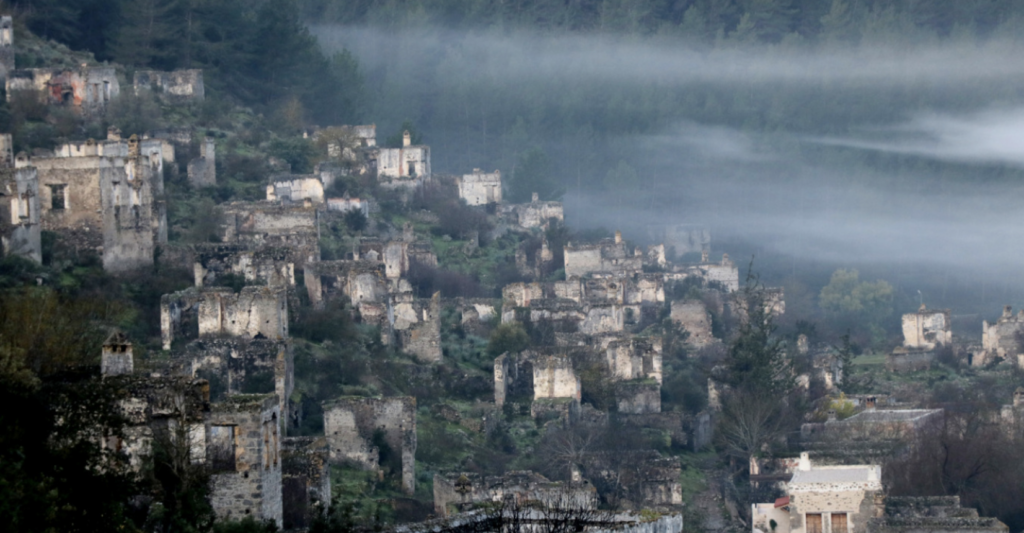
Kayaköy, also known as Livissi, emerges like a photograph from the past on a mountainside in southwestern Asia Minor. This Greek village, abandoned for almost 100 years, caught the attention of CNN, which visited and explored its history.
In the American media’s report, it is mentioned that at the beginning of the 20th century, the village was nothing like the haunted image it presents today, as it was home to over 10,000 Greek Orthodox Christians. The history of the village is filled with sorrow and loss, reflecting the dark periods the region experienced at the dawn of the last century.
Kayaköy, previously known as Levissi, was a thriving village where Greek Orthodox Christians and Muslim Turks lived together. The indigenous Greek residents, many of whom were artisans, had developed a culturally rich community, while the Muslims were primarily involved in agriculture. The two communities lived side by side until the Greco-Turkish War broke out, leading to the Asia Minor Catastrophe and the displacement of millions of Greeks who had lived there continuously for 3,000 years.
The village was destroyed in 1923, with the population exchange between Greece and Turkey following the signing of the Treaty of Lausanne. The Greek residents of Kayaköy were forced to leave their homes and relocate to Greece, while Muslims from the Kavala area in Greece took their place. However, the new inhabitants did not find their new home welcoming, as the village had already suffered significant damage, and the houses were painted blue, a color believed to protect against scorpions and snakes.
Aysun Ekiz, whose grandparents were among the few who chose to remain in the village, narrates the story of the village and the events of that period. Her grandparents recalled how the Greek residents left with tears in their eyes, not wanting to abandon their homes. Some even left their children behind, believing they would return. However, they never did.
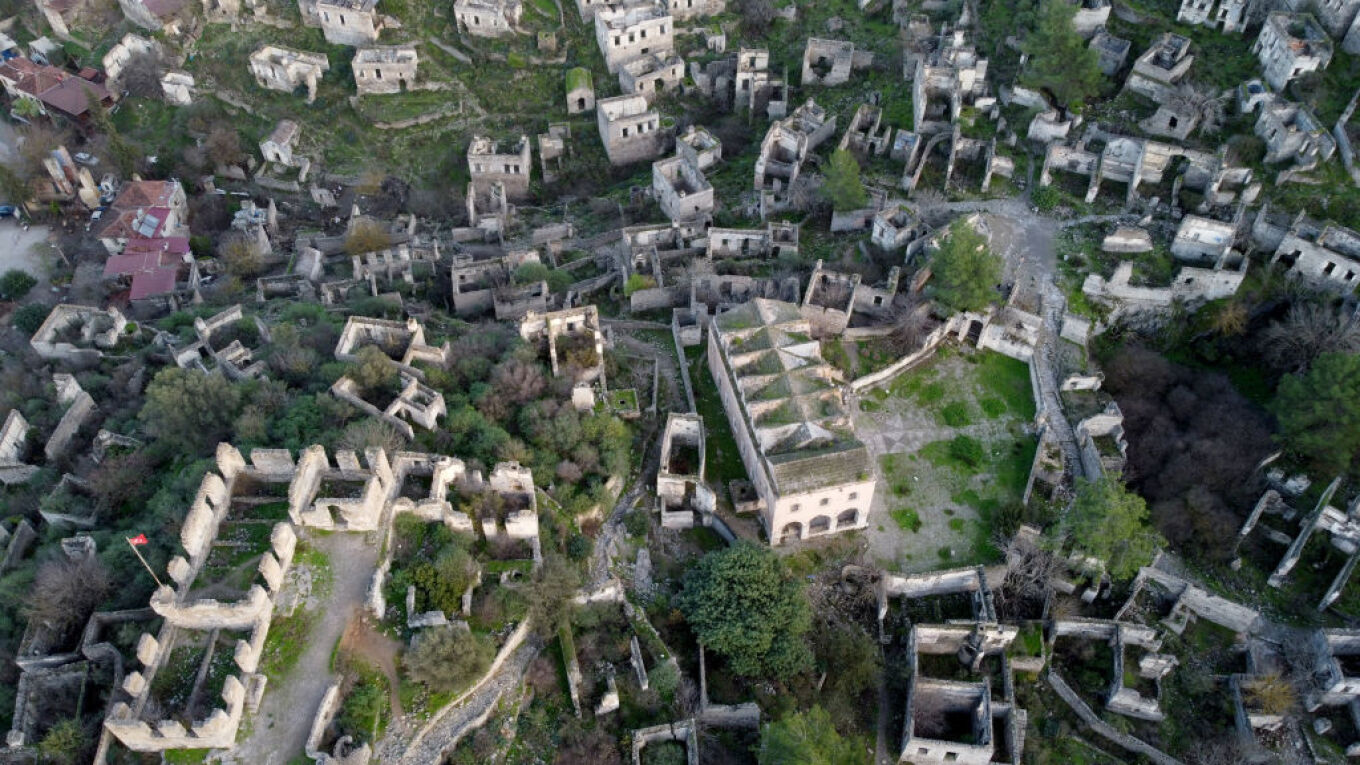
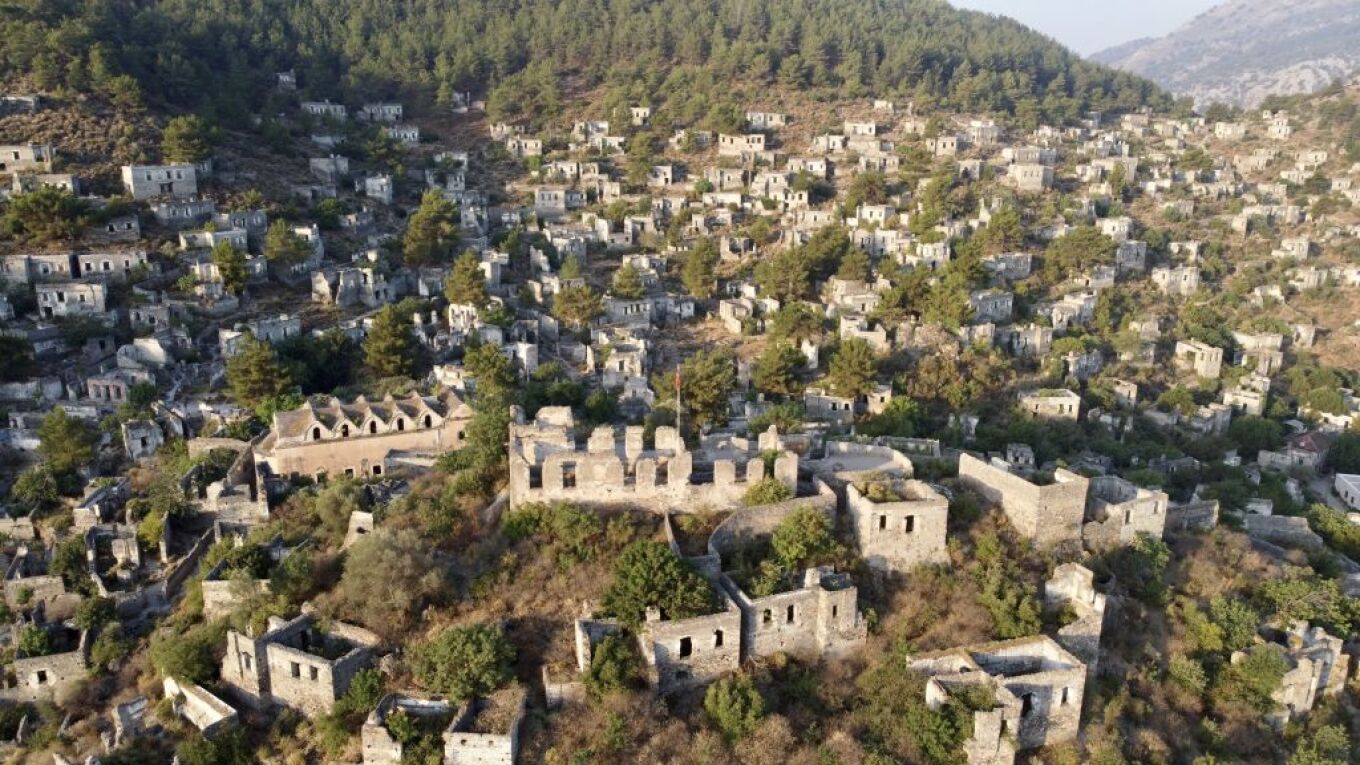
Today, Kayaköy stands as a living monument to the tragic events that occurred a century ago. Its houses, now in ruins and overgrown with vegetation, stand silently, testifying to the lives that once existed there. Despite the abandonment, the structural remains are still remarkable. The walls of many houses, although crumbling, still retain traces of blue paint, while the water cisterns remain intact.
Ekiz, who now works in a small restaurant near the village’s main entrance, describes how residents had to carry drinking water with donkeys. She also mentions the lack of basic sanitation infrastructure, with residents using old clothes instead of toilet paper, which were then burned or scattered in gardens as fertilizer.
Despite the poverty and hardships, Kayaköy was once a thriving commercial center, more important than the neighboring port of Fethiye (Makri or Telmessos in Greek), which today is a bustling urban area and popular tourist destination. Ekiz points out that despite the dense construction, each house in Kayaköy was built so as not to block sunlight from neighboring houses, a sign of the care and consideration that existed in the community.
Among the most impressive buildings in the village is the Upper Church, a large building with pink walls and arched ceilings. Unfortunately, the building is sealed off due to its dangerous condition, but visitors can enjoy some views of it from various angles in the village. At the highest point of the village, the ruins of the old school offer a view of the central church and the houses surrounding it. Today, a Turkish flag flies above the building, a symbol of the new era that followed the destruction and displacement of the Greeks.
Can Ulaş Öztimur, a visitor from Ankara, describes Kayaköy as “a dark mirror of our past.” Öztimur notes that although most of the residents have long since left, the sense of what happened in the village remains alive through the ruins.
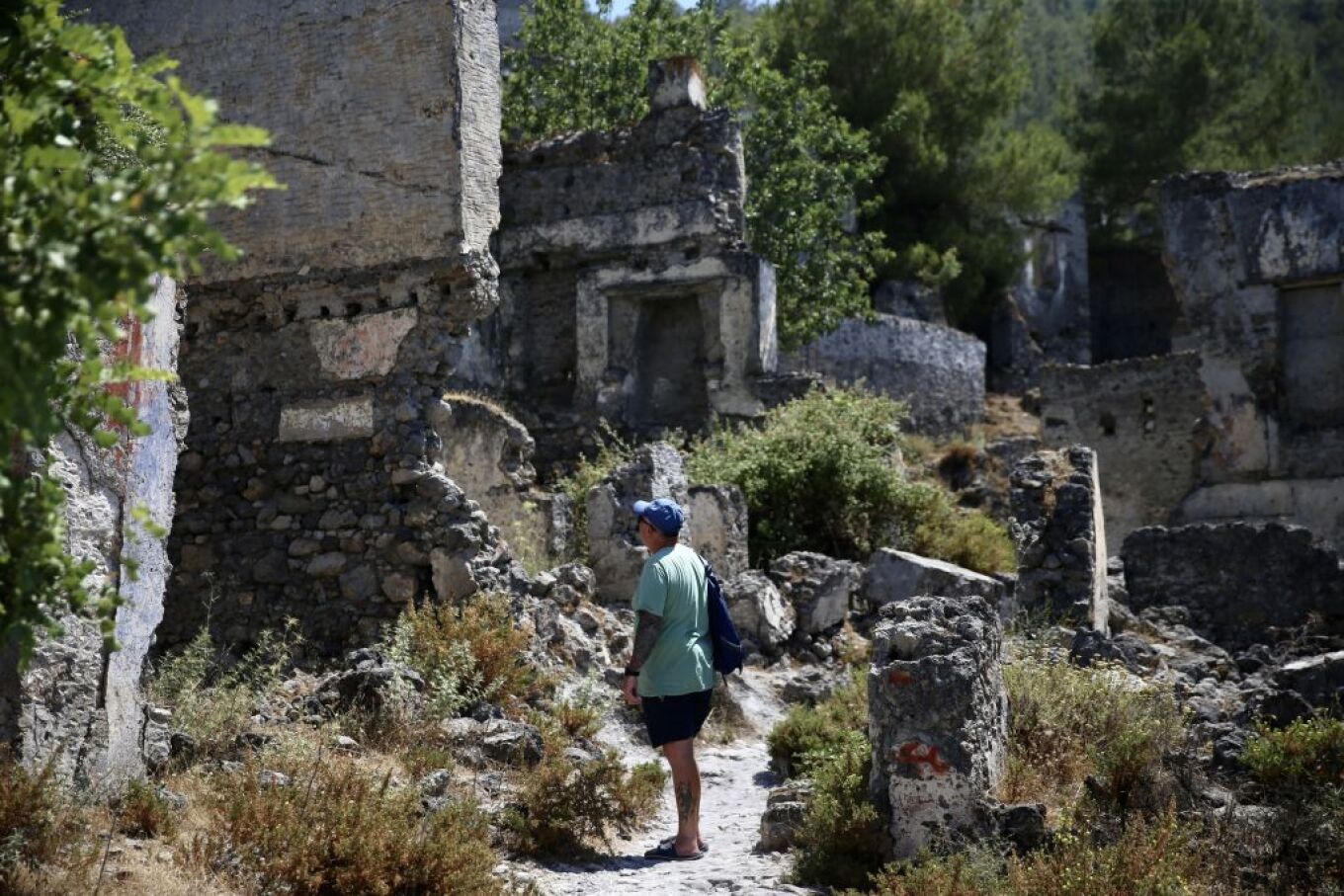
Despite the challenges they faced, the remaining residents of Kayaköy managed to preserve some of their traditions. The hiking trails that pass through the village and lead to neighboring towns are popular with tourists, offering an experience steeped in the past. The narrow streets and alleys of the village can confuse visitors, often leading to dead ends, while the open doorways and staircases invite exploration, though authorities ask visitors to avoid entering dangerous buildings.
It’s worth walking up to the village’s smallest church, located on top of a hill. The climb is challenging, but the view from the top is stunning. The church, small and simple, resembles the traditional chapels found on the Greek islands, with its characteristic dome and small windows. Inside the church, now empty, visitors can imagine what life was like in the village a century ago.
Below the church, the hills covered with dense forests lead to the azure waters of the Aegean, a view that has remained almost unchanged since the days when Kayaköy was alive. Although abandoned, the village continues to captivate visitors with its history and beauty, offering a unique opportunity for reflection on the past and the legacy left behind by its former residents.
Ask me anything
Explore related questions




