





With a “heavy agenda” of weapons programs over a 12-year period, the KYSEA (Government Defence & Foreign Affairs Council) meets today at 12:00 noon, in the wake of of the stigma that Kyriakos Mitsotakis had given in the Parliament a few days ago, but also of the more detailed briefing provided at the end of last week at the closed-door meeting of the Arms Affairs Committee by Nikos Dendias.
Mitsotakis had referred to a program of more than 25 billion that takes the Armed Forces into the next day and includes a comprehensive plan that goes beyond the procurement of weapons systems such as the Rafale, Belharra (FDI) frigates or the US fifth-generation F-35 fighter jets.
In fact, the 12-year planning includes the new realities of war, with Greece being asked to design new systems such as the anti-drone “Achilles’ Shield” dome that aims to be operational by 2027.
A critical parameter of the new arms planning is also the active participation of the Greek defense industry in each program, with Nikos Dendias saying from the Delphi Forum that there is a mandate to the Directorate General of Defense Equipment to ensure the participation of Greek industry at least 25% in each new arms program.
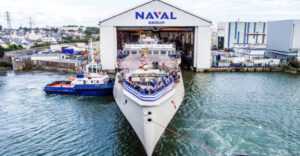
Dendias is also expected to inform the GSC of Greece’s intention to exercise the option provided for in the original agreement with the Naval Group for the supply of a fourth FDI frigate, as he announced, which he visited the day before yesterday with his counterpart Lecorni.
The cable
All the geopolitical facts of the period will, of course, will be put on the agenda, as at every bi-monthly meeting of the KYSEA. The “elephant in the room” of the meeting, on the other hand, is the Greece-Cyprus-Israel electrical interconnection cable, which seems to be significantly delayed, given the objections that Turkey continues to raise, rhetorically and on the field.
Developments in recent days do not bode well for the project, given that Israel does not seem to be “on fire” as it is for other issues in the region, while Cyprus is also concerned about the viability of the project under the current circumstances. Speaking from the Delphi Forum, Giorgos Gerapetritis said that surveys will proceed “in due course”, but many question whether the “due course” actually signals the burial of the project along the EastMed.
The maritime spatial plan
Note that in the coming weeks or even days the Greek authorities must also submit the maritime spatial planning to the Commission following its conviction by the European Court of Justice in February, which means that the provisions for the Greek continental shelf, as well as the agreements with Egypt and Italy on the EEZ, must be included in it.
On this delicate issue, due to Turkey’s stubborn opposition, there is consultation between the foreign and environment ministries so that the necessary ministerial decisions can be issued. Besides, according to competent sources, the official work from the Ministry of Environment has long been passed. According to protothema.gr, the issue has been a matter of intense concern to the Maximou building in the past few days, hence the presence of Foreign Minister George Gerapetritis and Environment and Energy Minister Stavros Papastavrou for discussions.
Ask me anything
Explore related questions




