





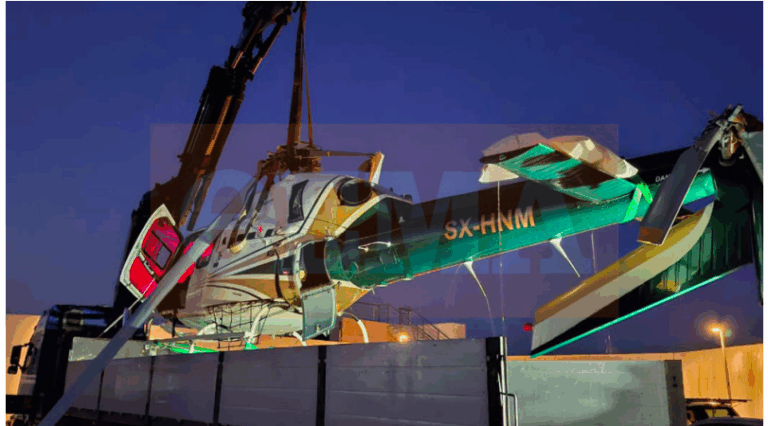
Speaking to Proto Thema, Mayor of Vari-Voula-Vouliagmeni and licensed Boeing 767-300ER pilot Grigoris Konstantellos reiterated longstanding concerns over the suitability of the designated takeoff point at the Astir Marina. Although the site is legally registered, it does not qualify as a certified heliport.
“It’s licensed and technically within regulations, but it doesn’t comply with standard aviation protocols,” Konstantellos said. “It’s located on a 12-meter-high plateau, very close to obstacles, and positioned in the part of the bay where the strongest winds occur.”
The mayor’s stance on the issue has been consistent for years. Back in 2018, he publicly raised red flags over both the operational and spatial limitations of the site. “We had pushed for it to be relocated to its previous position before the marina’s redevelopment. That location was safer. We made our concerns clear, but the operators insisted on using the space because it was available and otherwise unused.”
Not a Heliport – What the Law Says
Under current Greek and European regulations, helicopter takeoff and landing zones—technically known as ZAP (Zones for Aircraft Operation)—do not require full licensing. They only need to be declared to the Civil Aviation Authority (CAA). Flights conducted from these areas are carried out at the sole responsibility of the pilot.
“This isn’t a heliport,” Konstantellos emphasized. “According to newer European legislation, a hangar is no longer required. However, markings, lighting, a windsock, a fire safety system, and security personnel during operations are mandatory.”
No Windsock, Difficult Wind Conditions
While a windsock wasn’t legally required at the site, its absence likely complicated the takeoff. “Even though there was no obligation, if one had been installed, it could have given the pilot a clearer understanding of wind direction and intensity,” said Konstantellos.
Data from the Windy app shows that at approximately 14:30—the time of the incident—northeasterly winds were blowing at 7 to 12 knots. Combined with the terrain and elevation, these conditions may have made maneuvering more difficult.
“I believe the pilot overestimated his capabilities,” Konstantellos added. “He took off nose-first, leaving the wind to hit the tail—likely a crucial mistake.”
Helicopter Salvaged, All Passengers Safe
The helicopter was lifted from the sea on Sunday night, just hours after the crash. All five people on board—the Greek pilot and two American couples en route to Mykonos—escaped unharmed. Emergency services, including the coast guard, fire brigade, and ambulance crews, responded swiftly.
Reports also suggest a second group of American tourists had been scheduled to depart shortly after in a helicopter operated by a different company. That flight was canceled following the accident.
Footage Under Review
Proto Thema obtained exclusive video of the crash, now under review by aviation experts to determine the cause. Preliminary assessments point toward pilot error.
Ask me anything
Explore related questions




