





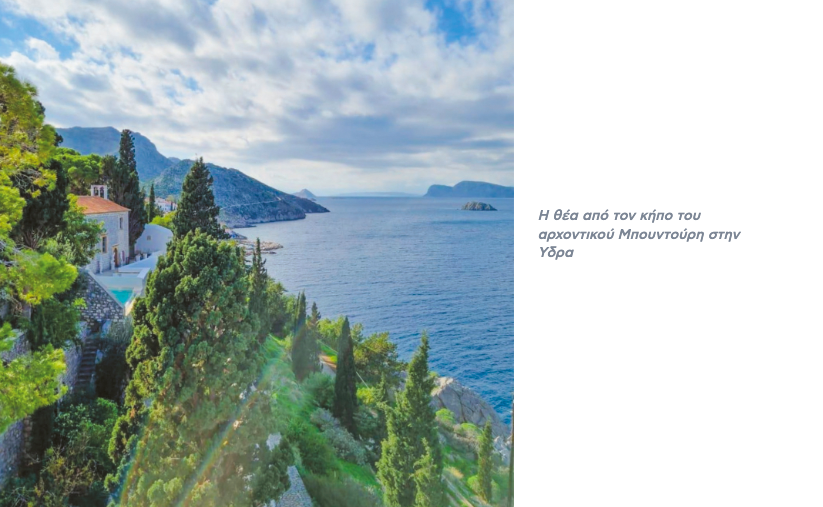
Four years ago, visitors entering the Bountouri mansion were left speechless for a moment. The view from what is considered the last grand mansion of Hydra was unique. The art pieces filling both the interior and exterior spaces of the residence were equally remarkable.
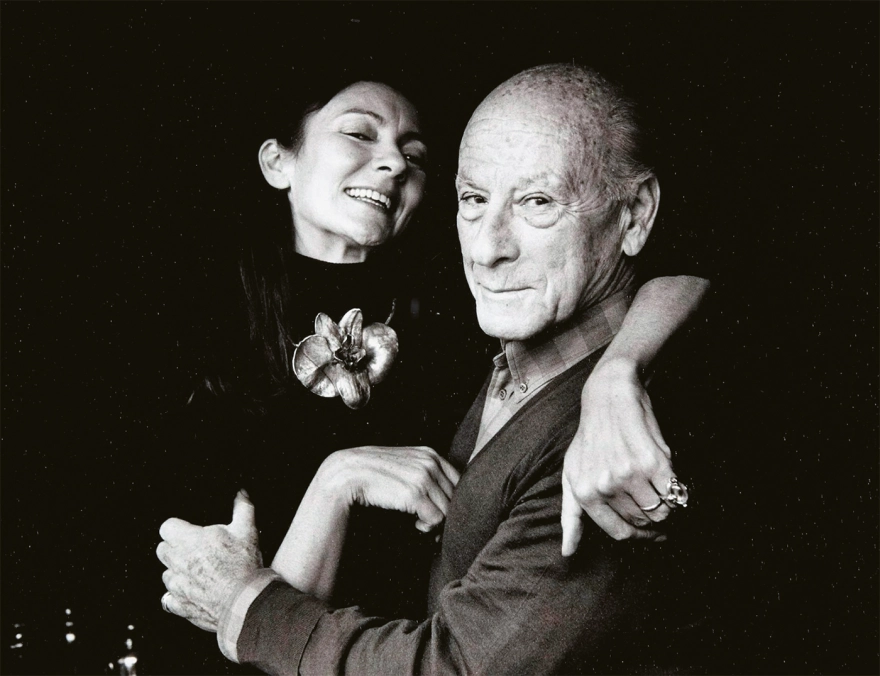
All these were carefully chosen by Pauline Karpida, widow of Konstantinos Karpidas, a key founder of Archirodon, a major construction firm influential in the Middle East and the USA. He had purchased the Hydra summer home in the mid-1990s, aware of his third wife’s deep affection for the island and her passion for art.
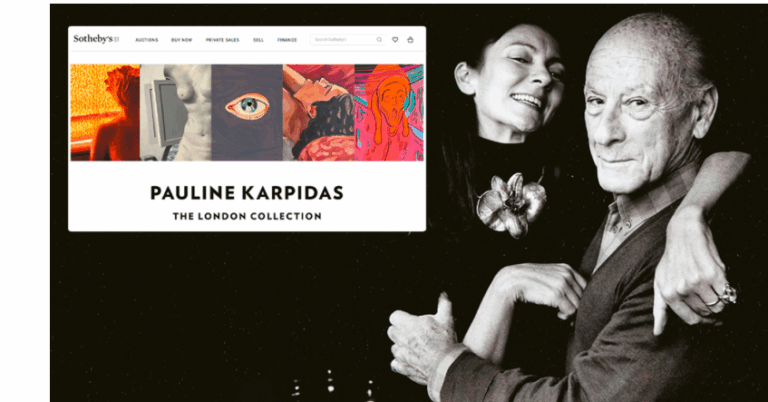
That passion is reflected in her vast collection of surrealist artworks, much of which will be auctioned next September through Sotheby’s.
Sotheby’s Announces €70 Million Auction for Pauline Karpida’s Picasso Collection
The auction features works that once held prominent places in Karpida’s iconic London residence. Pauline stated about the sale:
“Since my journey into the world of art began, I have had the honor to meet wonderful people who made this collection possible—from Alexander Iolas, who opened my eyes and became my mentor, to many incredible artists. I have always seen myself as a temporary guardian of their creations and feel this is the right moment for these works to find new guardians.”
However, she emphasizes that this sale does not mark her departure from the art world.
“This is certainly not the end; I will continue to live among art, read books, collect new works, and support artists.”
This has been her lifelong commitment since Alexander Iolas, the Alexandrian gallerist and collector, entered her life.
The Largest Private Collection
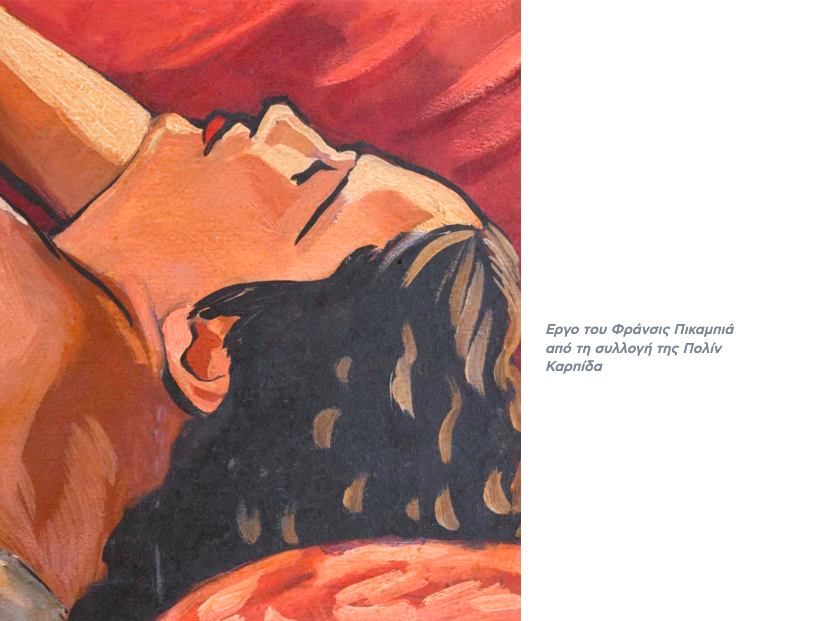
Visitors to Pauline Karpida’s London home saw not only an elegant residence but also iconic artworks by Andy Warhol, Pablo Picasso, René Magritte, Max Ernst, Salvador Dalí, and the duo Claude and François Lalanne.
The artworks were harmoniously integrated with the house’s spaces. Handmade furniture and sculptures by Pauline’s artist friends created the feeling of a private museum.
Now permanently based in New York, Pauline has chosen to sell her predominantly surrealist collection from her London residence.
According to Sotheby’s, this is the largest private collection of surrealists in Europe. The sale is expected to reach close to €70 million. Pauline Karpida is regarded as one of the most inspired international collectors, driven not only by love and understanding of art but also by deep respect and affection for the artists behind the works.
Following in the footsteps of great collectors—some experts even call her the “European Peggy Guggenheim”—she forged close relationships with artists and built an exceptional collection through friendship and collaboration.
From Manchester to Hydra
Pauline was born into a typical working-class family in Manchester and grew up in a poor neighborhood among the ruins left by World War II.
After finishing her secretarial studies, her restless spirit led her away from dreary Manchester to Athens. She traveled with very little money and soon began working, opening a small boutique named “My Fair Lady,” importing unique fashion pieces.
At age 23, Pauline first visited Hydra and instantly fell in love with its aura. Soon after, fate brought her together with Karpidas.
He was a mature and very charming man, already twice divorced. Their love was sudden and intense. They married and began living a vibrant social life in Greece and abroad.
Their shared love for Hydra culminated in the purchase of the historic Bountouri mansion, their summer refuge.
Set on 4.5 acres of gardens, olive trees, and cypresses, the mansion is a beautiful 18th-century Genoese architectural landmark of the island.
Pauline left her mark by filling the mansion with superb artworks, guided by the discerning eye she developed thanks to one influential person.
The Alexandrian Mentor, Loss, and Paris
Her introduction to Alexander Iolas came through her husband, who was already a collector. She could not have imagined then how deeply she would be drawn to art.
Iolas encouraged her to visit exhibitions of both famous and emerging artists, urging her to immerse herself in the worlds of Dalí, Warhol, and others.
“To understand what happened in the 20th century,” he said, “you must visit every museum in every city, read artist biographies, and meet curators, gallerists, and dealers.”
With Iolas’s help, Pauline created an exquisite and broad collection, guided by an infallible instinct.
Many pieces were displayed in her Hydra home, where she hosted artists annually every July from 1996 to 2017.
The death of her husband deeply affected her, prompting the sale of the emblematic Hydra residence two years ago to a Greek family living in Switzerland.
In October 2023, Sotheby’s Paris held two days of auctions dedicated to the 242 works from the magical Hydra home—often described as a temple of art and design—which all sold. The auction raised €35,590,282, more than double the original estimate. Now the London collection of 250 works is set to be auctioned in September.
The Record-Breaking Warhol Screenprint
Sixteen years ago, one item became a landmark for Pauline Karpida. In November 2009, Sotheby’s London auctioned Andy Warhol’s “200 One Dollar Bills,” a screenprint created in 1962—reportedly the first of its kind.
Though Karpidas was not passionate about modern art, favoring painters like Renoir, he trusted his wife’s instinct. She acquired the piece in 1986 for £385,000.
Twenty-three years later, no one could have predicted the value would soar, tempting her to sell it. Sotheby’s convinced her it was a rare chance to achieve a very high price.
The final sale shocked everyone at €43.8 million—125 times its purchase price.
British tabloids declared: “Warhol works his magic again. Two hundred one-dollar bills now worth endless millions!” The buyer’s identity remains secret, as the new owner wished to remain anonymous.
Determined to own the piece, the buyer doubled his bid in the final round, refusing to lose it.
The purchase was made by phone, likely from a private auction room.
“This painting is not only a seminal pop art work, but also has a perfect provenance,” said Alex Rotter, Sotheby’s head at the time.
“It was sold by Warhol’s dealer to the legendary collector Robert Scull and later auctioned by Sotheby’s to its last owner, Mrs. Karpida.”
This proved that Iolas, who discovered Warhol, was an exceptional mentor who taught Pauline to see what others missed in a work of art.
Ask me anything
Explore related questions




